Who Has More Legs: House Centipede or Centipede?
Someone posted the question online: does a house centipede have more legs than a centipede? The answer is weirder than you'd expect — because "centipede" turns out to be a whole family of animals with wildly different leg counts, from 15 pairs all the way up to 191.
The House Centipede: 15 Pairs, Grown Over Time
Meet the house centipede first. An adult has 15 leg-bearing segments, each carrying one pair of legs — the pair on the very end breaks off easily (the one in this photo already lost it). Its back plates are unusual: only eight plates, which do not match the segments underneath. So even with every leg gone, you could still recognize it.
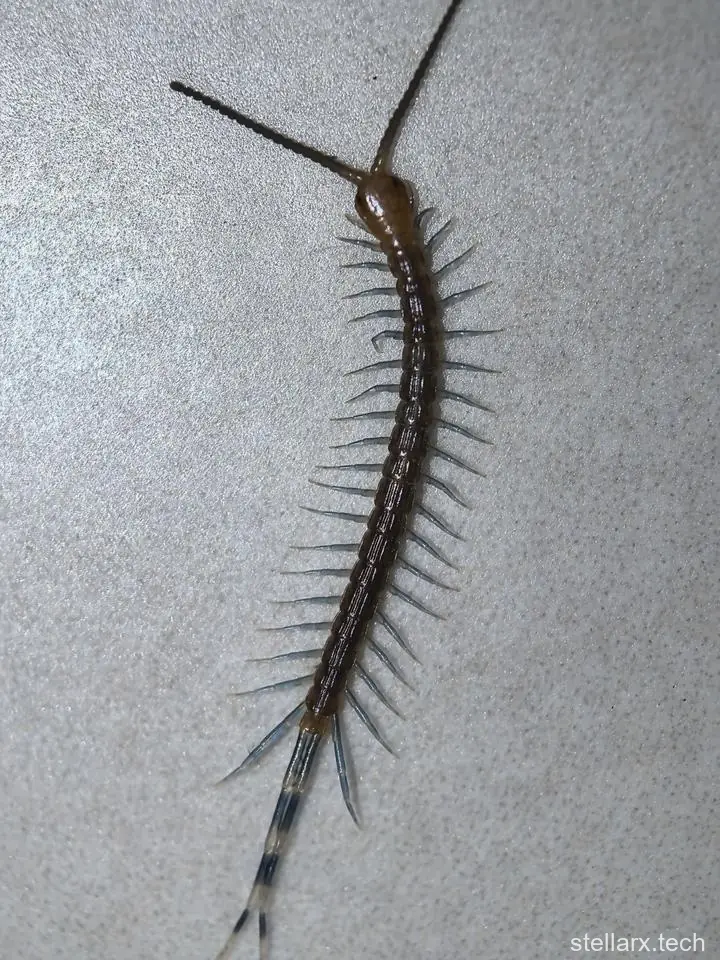
House centipedes also grow new segments as they age — but only until adulthood. A freshly hatched one has just four pairs of legs, an accidental spider costume. Juveniles are rarely seen.
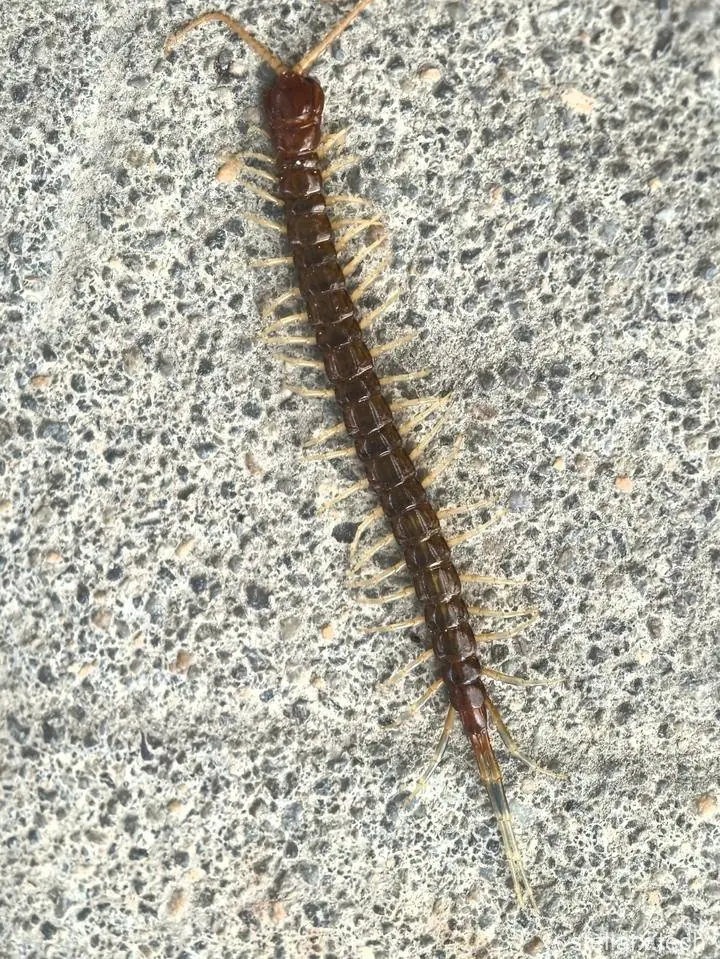
The Centipede: 21 or 23 Pairs, Fixed at Birth
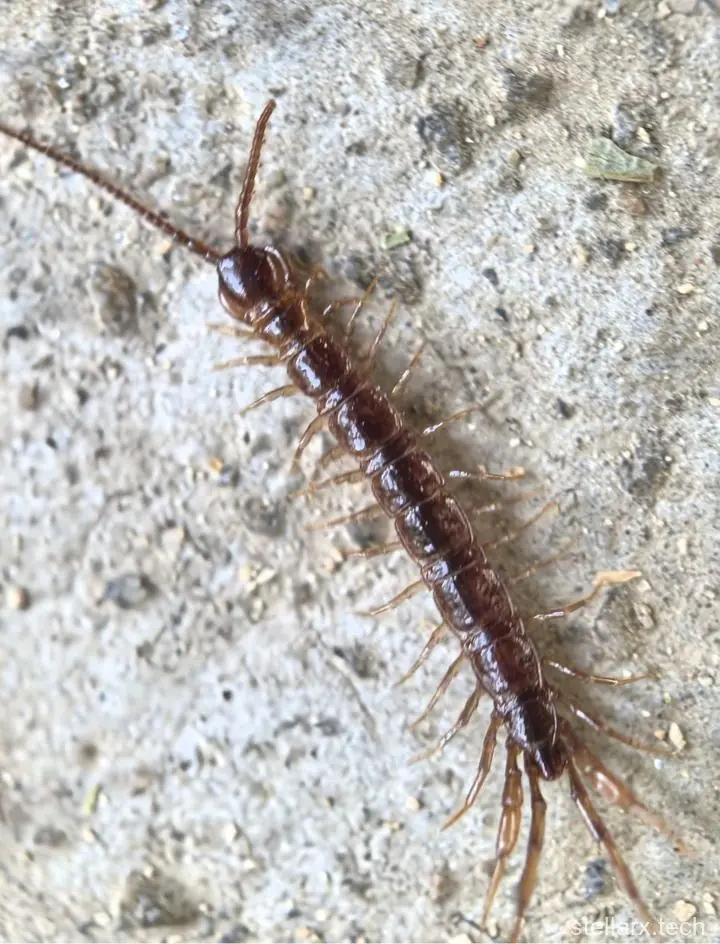
Most centipedes have 21 pairs of legs; some have 23. That number is fixed from birth. The juvenile in this photo is a rough-eared centipede (Otostigmus scaber); the other common type, the sharp-jawed centipede, carries 23 pairs.
Those "Legs" Near the Head
Both house centipedes and centipedes have one extra pair of special legs at the front — venomous, claw-like, used for hunting. Strictly speaking they are not counted as real legs, and this is how the animals inject venom: not through fangs, but through these legs.
The Question Doesn't End There
The family gets stranger.
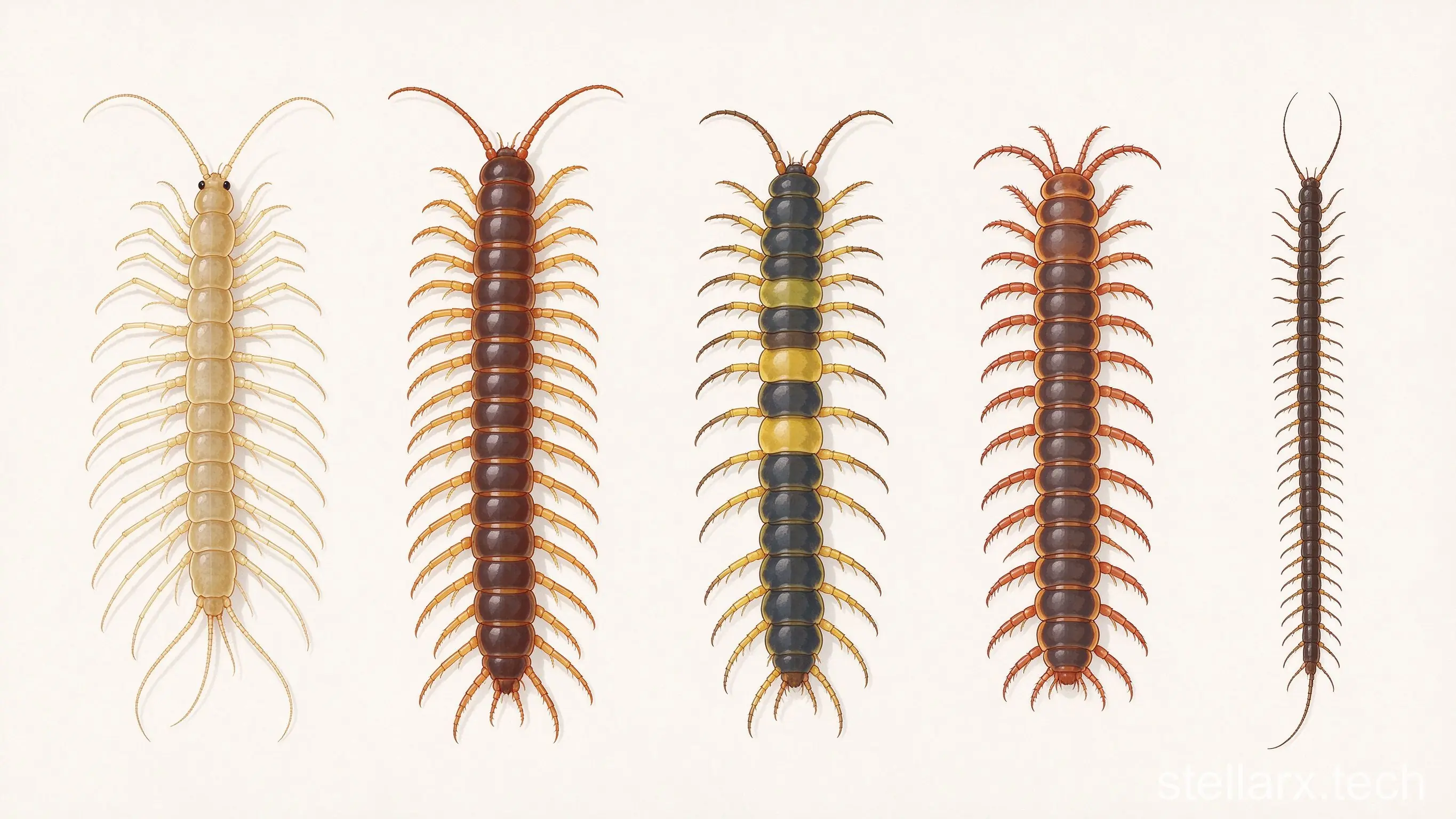
Stone centipedes also have 15 leg-bearing segments and 15 pairs of legs, but their back plates alternate large and small — except where two large ones sit together, which looks bizarre up close. After house centipedes, they are the most primitive group.
Cup centipedes are living fossils: only two species survive, found in Tasmania and New Zealand. They hatch with 12 pairs of legs and grow to 15 after a single molt — halfway between primitive and modern patterns.
Soil centipedes are the newest branch, and they somehow unlocked the segment limit. They can carry anywhere from 27 to 191 pairs of legs — always an odd number, for reasons nobody knows. The count is fixed at birth and never changes after molting. Burrowing in soil has deformed them oddly: long, thin, flattened, with very short legs — and a head shaped like an extended shovel.
A Glorious Family
Apart from the rather unfortunate cup centipedes, every major group is doing well today, with real diversity and a niche of its own. House centipedes and centipedes even found a way to coexist with us — the naked apes. Not bad for a family whose members disagree about everything from leg counts to body plans.
Want to see what the same arthropod body plan looks like under a microscope — segments, legs, and all? WWAI includes a Culex mosquito specimen where body segments and wing veins are clearly visible. Just search "WWAI" in your app store and download it today.

References:
[1] Centipede anatomy and leg counts. Britannica. https://www.britannica.com/animal/centipede
[2] Scutigeromorpha (house centipede). Encyclopedia of Life. https://eol.org/pages/6377
[3] Centipede. Wikipedia. https://en.wikipedia.org/wiki/Centipede
[4] Geophilomorpha: the soil centipedes. Wikipedia. https://en.wikipedia.org/wiki/Geophilomorpha
All illustrations are AI-generated.
Related reading

Ugly Allies: Why Homeowners Are Torn Between Fear and Gratit…
- Ancient Food Was Never Pure: Urine, Lye, and Fake Fish
- When Lockdown Laziness Grew Glowing Algae
- Why a Tick Bite Can Make You Allergic to Red Meat
- Who Has More Legs: House Centipede or Centipede?
- Vibrio vulnificus: Seafood Pricks That Can Turn Fatal
- This Dolphin Makes Fish Vomit to Steal Their Food
- Mercury in 'Baby Cod': A Toddler's Label Trap
- Male Lactation Is Real: Why Females Nurse
- Where the 1.6–2.2 g/kg Protein Rule Comes From
- Why Cockroaches Aren't as Tough as You Think

全部评论