Vibrio vulnificus: Seafood Pricks That Can Turn Fatal
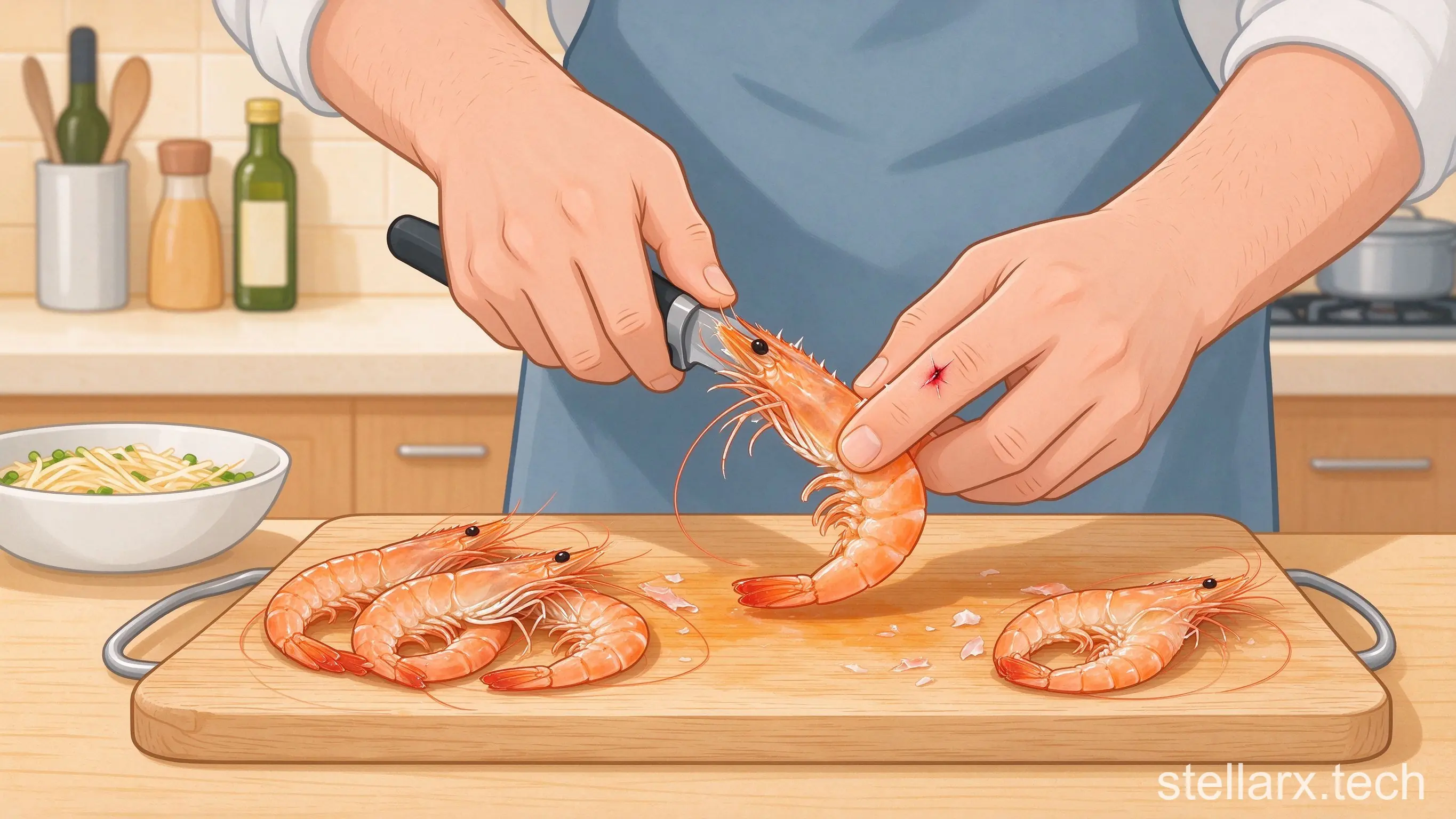
It is fishing season colliding with a holiday week, and the seafood cravings are running high: salt-and-pepper mantis shrimp, garlic butter scallops, chili crab. But while you enjoy the feast, one danger deserves your attention: someone handling seafood got pricked, and within a single day their condition deteriorated — amputation and even death became a real possibility.
The Culprit: Vibrio vulnificus
The culprit is Vibrio vulnificus, a bacterium that lives mainly in warm seawater. Fish, shrimp, crabs, and shellfish can all carry it. Infection can happen when an open wound touches contaminated seawater or aquatic products — or when you eat contaminated seafood raw.
It is sometimes called a "flesh-eating bacterium," but it does not actually eat flesh. What it does is worse in a practical sense: in severe infections it rapidly destroys tissue, causing necrosis, sepsis, and life-threatening illness.

The numbers show why it is taken seriously. In the United States, 150–200 infections are reported to the CDC every year, and about 20% are fatal. Overall mortality averages roughly 35% — and for people with liver disease or weakened immunity, it climbs to 50–60%, compared with about 16% in people without underlying disease. Delays in antibiotic treatment raise mortality toward 100%.
"I've Been Pricked Before — Nothing Happened"
First, don't panic. Getting pricked by seafood does not mean you are infected; V. vulnificus infections are uncommon. What matters is that even a small wound gets proper care, and that you do not shrug off anything unusual — especially not with a "let's sleep on it and see tomorrow."
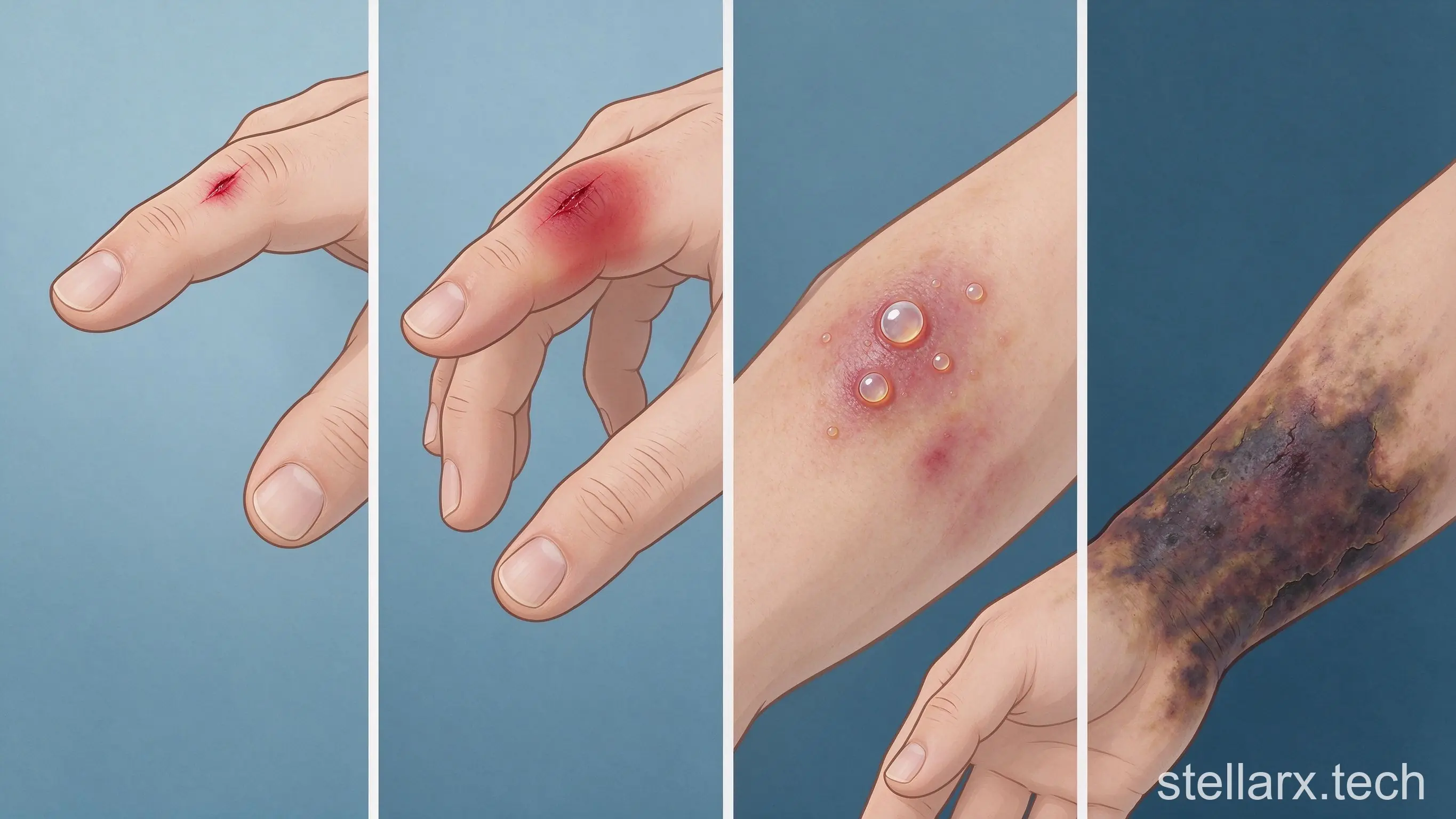
Seek medical attention immediately if you notice any of these:
Severe pain at the wound with rapidly spreading redness and swelling.
Blisters or blood blisters, or the skin darkening around the wound.
Fever, chills, nausea, or vomiting.
Dizziness, weakness, or any change in consciousness.
Do not wait for all the symptoms to line up. When you see a doctor, say it plainly: "I handled seafood / came into contact with seawater, and I have a wound." People with liver disease, diabetes, or weakened immunity need to be especially alert.
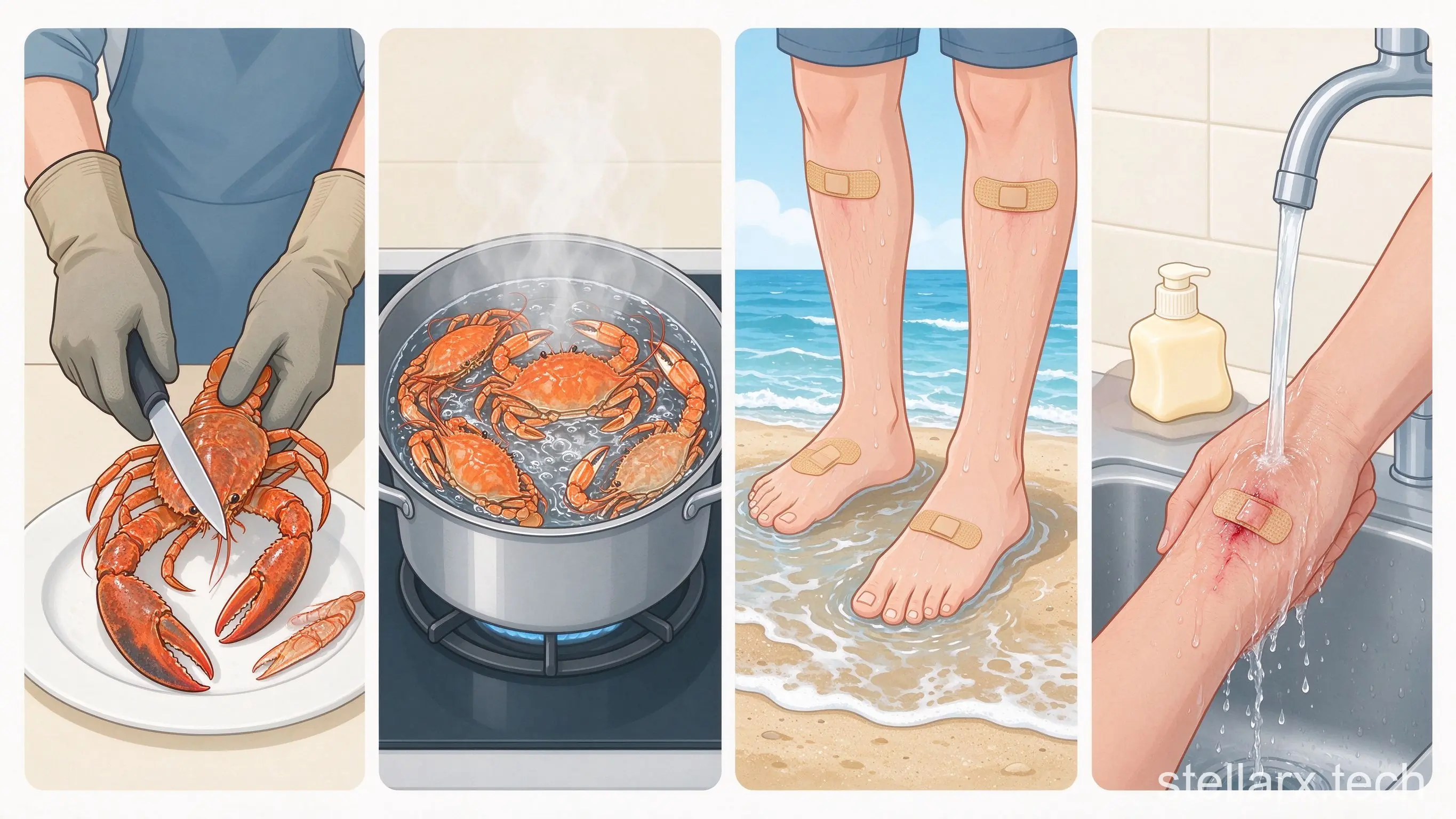
Enjoy the Feast — These Four Habits
Wear gloves before cooking. Use sturdy, waterproof gloves when handling aquatic products, and lean on scissors and pliers. Gloves can be pierced too — never try to break open crab claws or shrimp heads with bare hands.
Cook seafood thoroughly. Marinating in alcohol, soaking in vinegar, or dipping in wasabi does not replace full cooking. Keep cutting boards and knives separate for raw and cooked food.
Keep wounds out of seawater. If you have cuts or scrapes on your hands or feet, avoid contact with seawater, raw seafood, and its drippings when you go to the beach.
Clean any prick immediately. Wash the wound with soap and running water. If the wound is deep, has foreign material in it, or you are in a high-risk group, get medical evaluation — don't just slap on a bandage and move on.
The holiday is here. Eat the seafood well, but don't drop the protection. Send this to whoever cooks the crab and whoever is heading to the beach — so everyone eats happily and stays safe.
Want to see what the bacteria behind all this actually look like — up close, under a real microscope? WWAI includes a Vibrio cholerae specimen where comma-shaped bacteria are clearly visible. Just search "WWAI" in your app store and download it today.

References:
[1] U.S. Centers for Disease Control and Prevention. Severe Vibrio vulnificus Infections in the United States Associated with Warming Coastal Waters (HAN 497). https://emergency.cdc.gov/han/2023/han00497.asp
[2] Vibrio vulnificus Infection. StatPearls / NCBI Bookshelf. https://www.ncbi.nlm.nih.gov/books/NBK554404/
[3] Vibrio vulnificus in Taiwan. Emerg Infect Dis 2004;10(8). https://wwwnc.cdc.gov/eid/article/10/8/04-0047_article
[4] Notes from the Field: Severe Vibrio vulnificus Infections During Heat Waves. MMWR 2023. https://pmc.ncbi.nlm.nih.gov/articles/PMC10843064/
All illustrations are AI-generated.
Related reading
Why Constipation Happens: A Colon Story
- Ancient Food Was Never Pure: Urine, Lye, and Fake Fish
- When Lockdown Laziness Grew Glowing Algae
- Why a Tick Bite Can Make You Allergic to Red Meat
- Who Has More Legs: House Centipede or Centipede?
- Vibrio vulnificus: Seafood Pricks That Can Turn Fatal
- This Dolphin Makes Fish Vomit to Steal Their Food
- Mercury in 'Baby Cod': A Toddler's Label Trap
- Male Lactation Is Real: Why Females Nurse
- Where the 1.6–2.2 g/kg Protein Rule Comes From
- Why Cockroaches Aren't as Tough as You Think
全部评论