Why Cockroaches Aren't as Tough as You Think
Before we answer "why cockroaches survive anything" — let's ask whether they actually do.
In reality, the cockroach has no special survival power worth talking about. It does not survive "extreme environments."
The Only Cockroaches That Live With You
First, which cockroaches even live indoors? The answer surprises most people: almost none of them. Most large cockroach species only wander into buildings while foraging or laying eggs, then leave the same night. They prefer open, well-ventilated, water-rich, vegetation-dense habitats.
Across all cockroach species, only two — the German cockroach (Blattella germanica) and the brown-banded cockroach (Supella longipalpa) — truly live indoors long-term. And even they need a steady supply of water and food. Without it, they die.
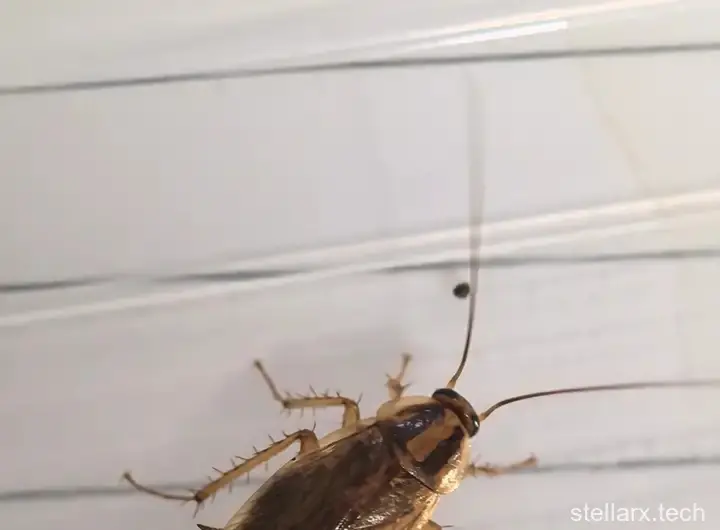
The German cockroach is the one most people see at home. This one, photographed by the answer's author, carries an egg case (unfertilized — nothing ever hatched).
The "Headless Survivor" Is Every Insect
The famous claim: "a cockroach can live after its head is cut off." Technically true — but it hides a bigger fact: every insect survives decapitation for a while.
Two systems make this possible. First, insects have an open circulatory system with low blood pressure. Even a large wound does not cause fatal blood loss; the wound seals quickly and rarely gets infected. Second, an insect's nervous system is not a single brain. It has three main nerve centers (ganglia), and the body keeps running on its default motor programs — walking, grooming, simple movements — even after the head's center is gone.
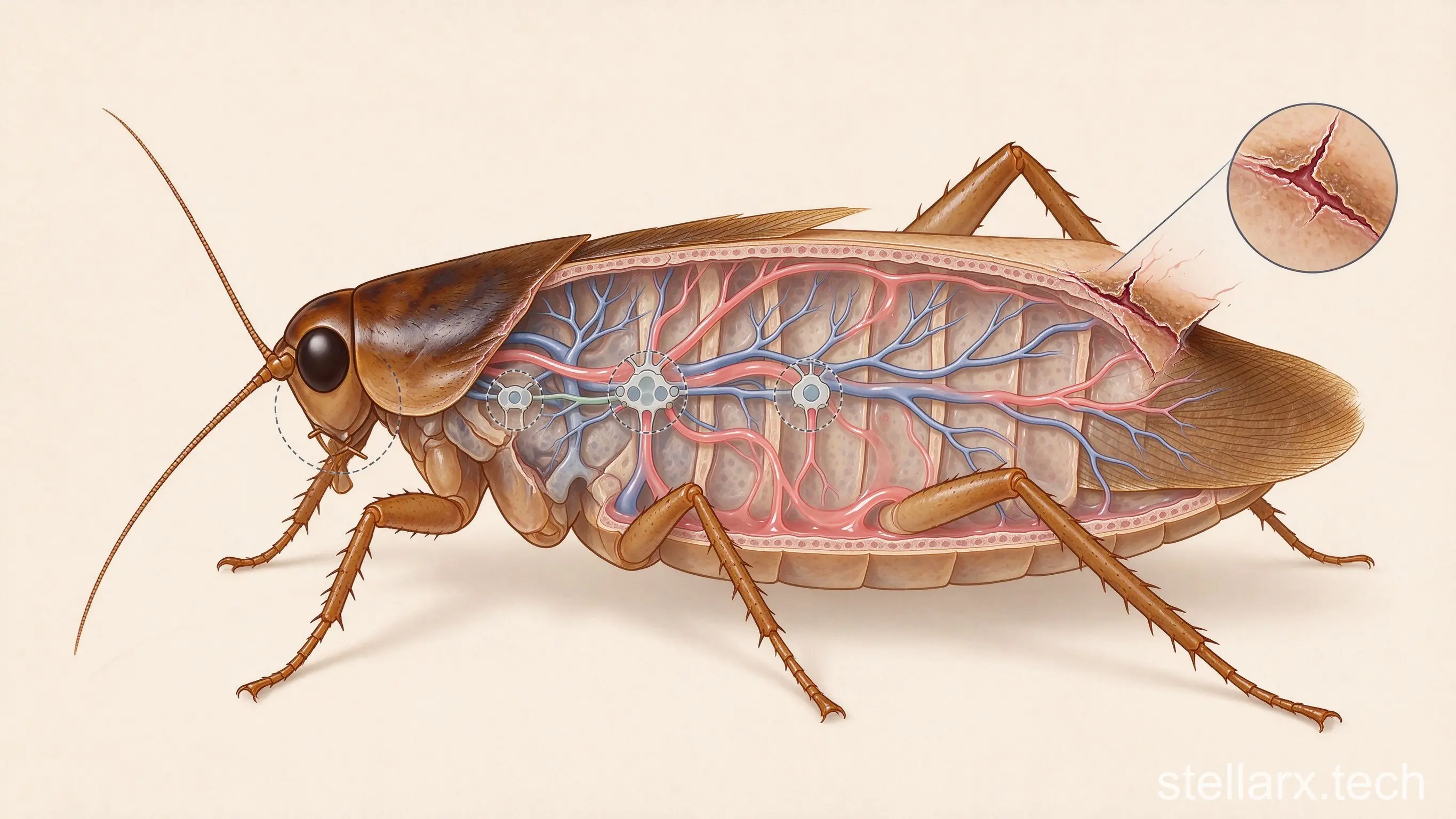
But it dies eventually. In the wild, a headless insect has no senses, no memory, and no judgment — it is usually killed by predators or infection long before starvation or thirst arrives.
And the other claim — that broken legs regrow? That is true of molting, and it is a trait shared by all arthropods. A cockroach that has reached adulthood no longer molts. No more regrowth.
The Radiation Myth, Measured
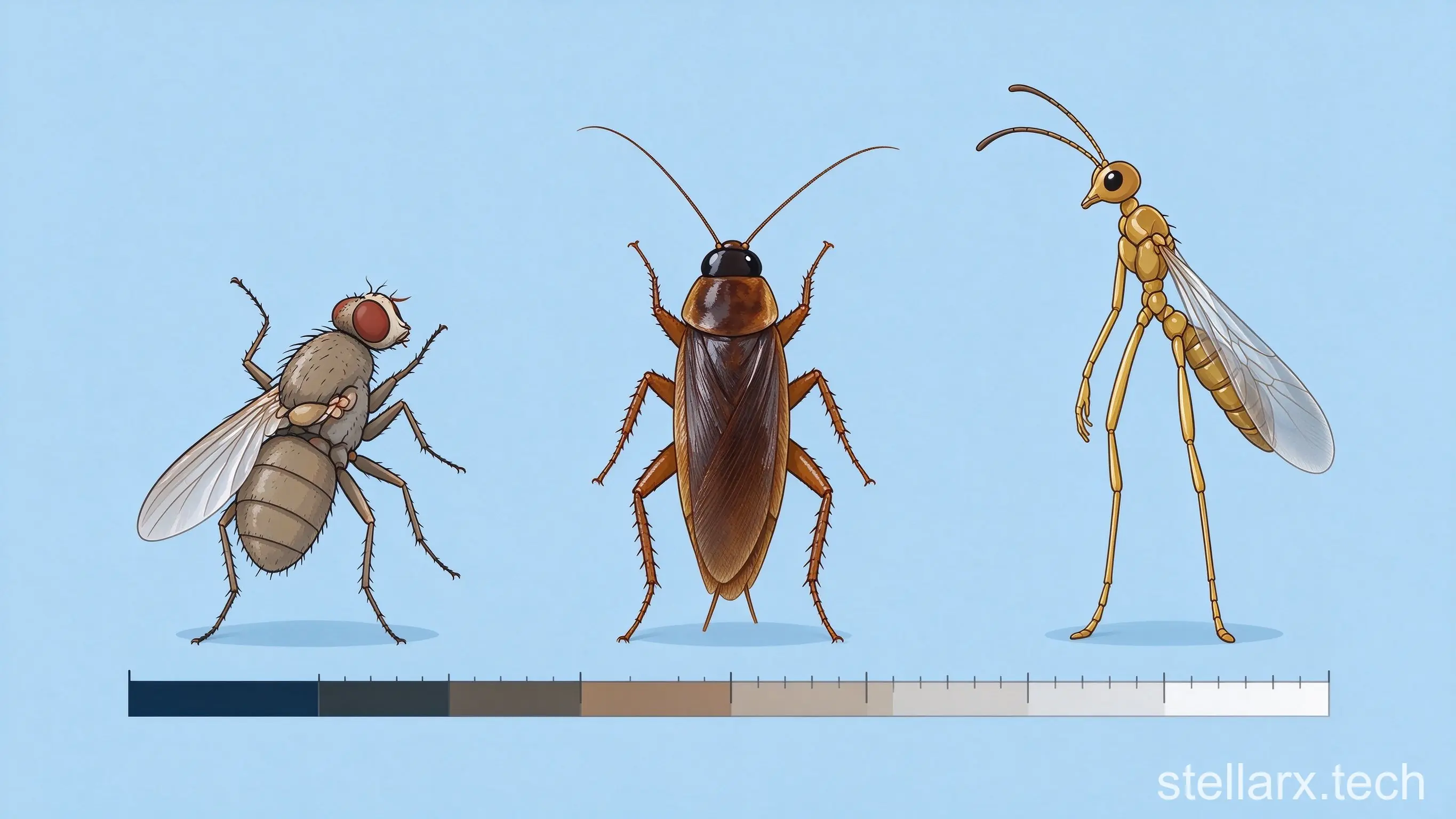
The classic myth: cockroaches shrug off radiation. The reality: insects in general tolerate radiation far better than mammals do — and the cockroach's resistance is among the weakest in its class: roughly one-tenth of the fruit fly's, and less than one two-hundredth of the braconid wasp Habrobracon hebetor.
Nobody calls those two everyday insects "indestructible."
Why "Hard to Kill" Is a Misreading
The truth is, household cockroaches are fragile: without food and water they die quickly, and they are terrified of predators. They only survive in cities because human buildings shelter them.
So why does it feel like they are invincible? Because of how people kill them. The cockroach body is flat. Stomping it with a shoe works poorly — like trying to crush a fallen leaf. It feels tough, not because the leaf is strong, but because the force is aimed wrong. Rub it sideways, change the direction of the force, and it pops like a thin shell.
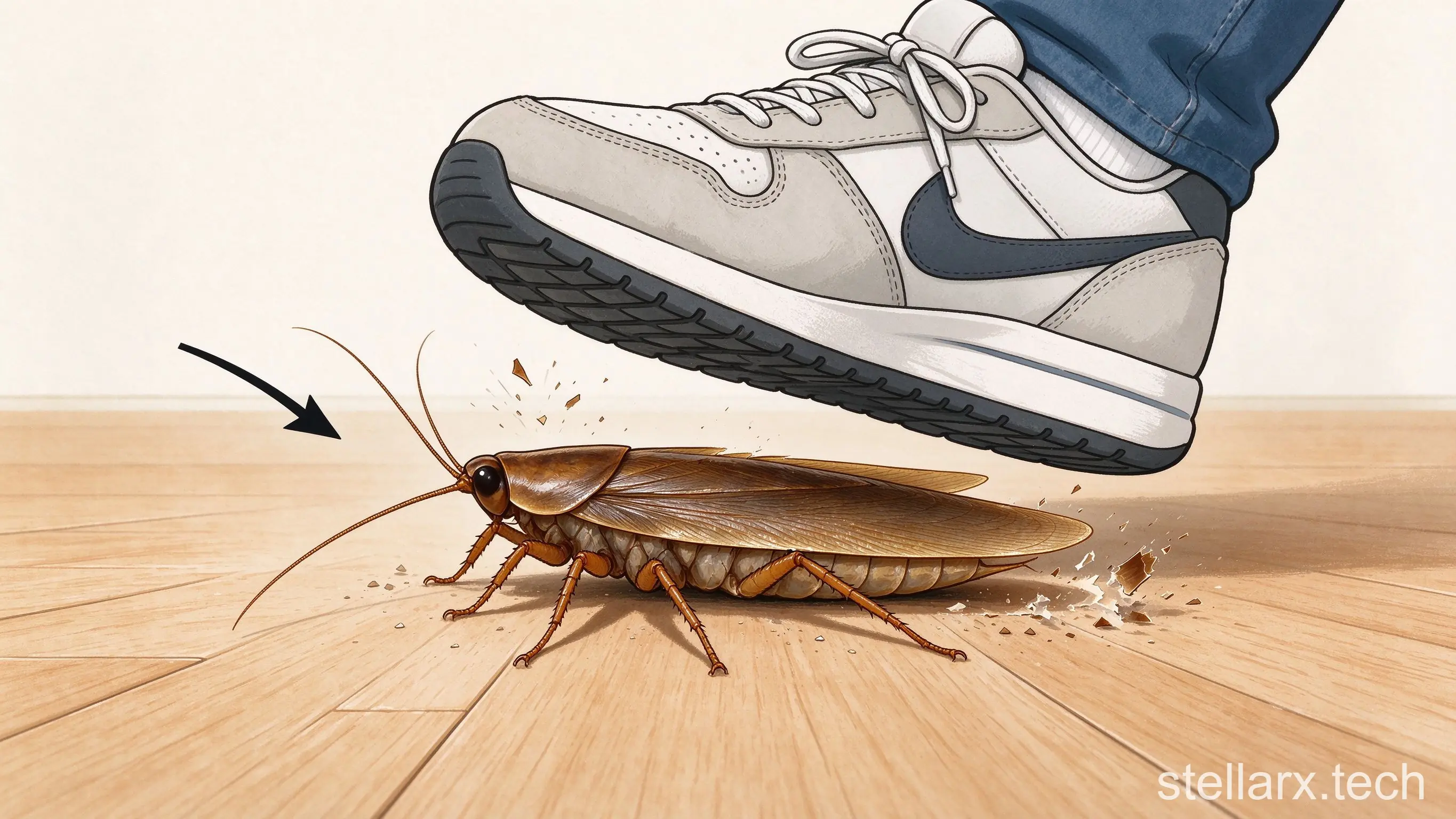
Their bodies are soft and fragile, with no real defense against physical force. They get even more vulnerable during molting — and cockroaches develop slowly, molting many times, with egg cases that can take a month and a half to hatch.
The cockroach may be the most misunderstood insect group in existence.
Meet the Real Extremophile: the Chironomid
If you want an insect that truly survives extremes, look at the chironomid midge. It tolerates nearly every kind of water body, including saltwater, and resists pollution. Some species even survive desiccation: dried-out larvae have endured 200 °C for five minutes, liquid nitrogen for five minutes, 168 hours in alcohol, and vacuum exposure — and revived afterward.
That is an extreme environment. A house cockroach is a roadside weed by comparison: it is basically dead below about 10 °C.
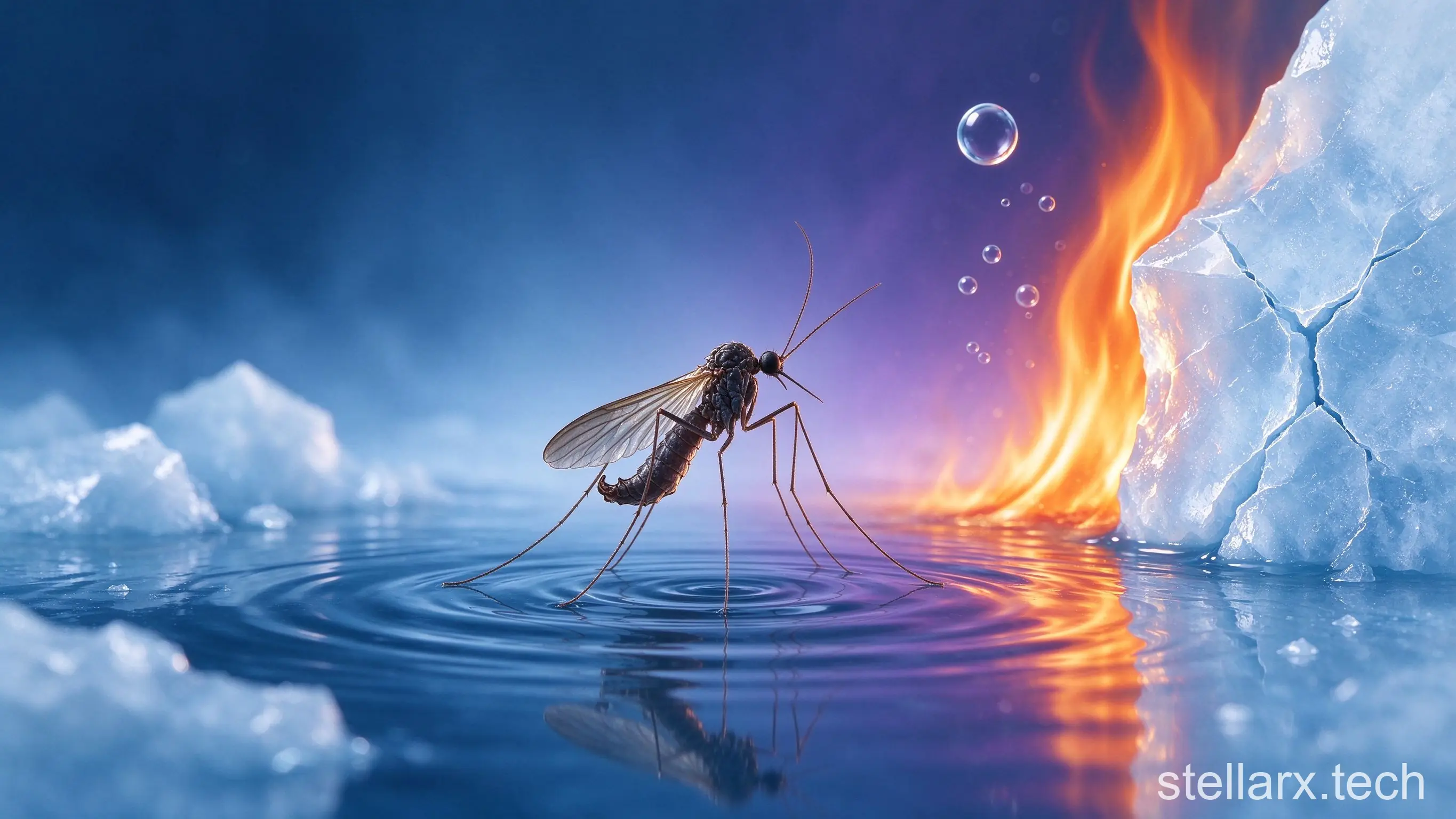
The midge is just a tiny fly you pass by every day. Real strength never advertises itself.
Want to see what an insect body actually looks like — the segments, wing veins, and mouthparts that the myths never mention? WWAI includes a Culex mosquito specimen where body segments, wing veins, and mouthparts are clearly visible. Just search "WWAI" in your app store and download it today.

References:
[1] Scientific American: Fact or Fiction? A Cockroach Can Live without Its Head. https://www.scientificamerican.com/article/fact-or-fiction-cockroach-can-live-without-head/
[2] Penn State Extension: German Cockroaches. https://extension.psu.edu/german-cockroaches
[3] Vitrification Is Essential for Anhydrobiosis in an African Chironomid, Polypedilum vanderplanki. PNAS. https://www.pnas.org/doi/full/10.1073/pnas.0706197105
[4] Anhydrobiosis-Associated Nuclear DNA Damage and Repair in the Sleeping Chironomid: Linkage with Radioresistance. https://pmc.ncbi.nlm.nih.gov/articles/PMC2982815/
[5] Combined Metabolome and Transcriptome Analysis Reveals Key Components of Complete Desiccation Tolerance in an Anhydrobiotic Insect. PNAS. https://www.pnas.org/doi/full/10.1073/pnas.2003650117
All illustrations are AI-generated unless noted.
Related reading

Food Coma: Why Heavy Rice Meals Drain Your Energy


- Ancient Food Was Never Pure: Urine, Lye, and Fake Fish
- When Lockdown Laziness Grew Glowing Algae
- Why a Tick Bite Can Make You Allergic to Red Meat
- Who Has More Legs: House Centipede or Centipede?
- Vibrio vulnificus: Seafood Pricks That Can Turn Fatal
- This Dolphin Makes Fish Vomit to Steal Their Food
- Mercury in 'Baby Cod': A Toddler's Label Trap
- Male Lactation Is Real: Why Females Nurse
- Where the 1.6–2.2 g/kg Protein Rule Comes From
- Why Cockroaches Aren't as Tough as You Think

全部评论