Sweet Potato Leaves: Fiber, Calcium, Lutein in One Green
For a child struggling with constipation, dinner ended with a plate of sautéed sweet potato leaves — and the difference showed by morning. In some markets this green costs the equivalent of 40 dollars a kilo; in others it sells for pocket change, and farmers once fed it to pigs.
The same plant, two very different reputations. The nutrition numbers explain both.
Every vegetable's reputation comes down to what is packed into 100 grams. Sweet potato leaves (also called sweet potato greens, or the tender tips known as "shao jian") carry a profile that quietly outclasses the usual "superfoods" on the shelf.
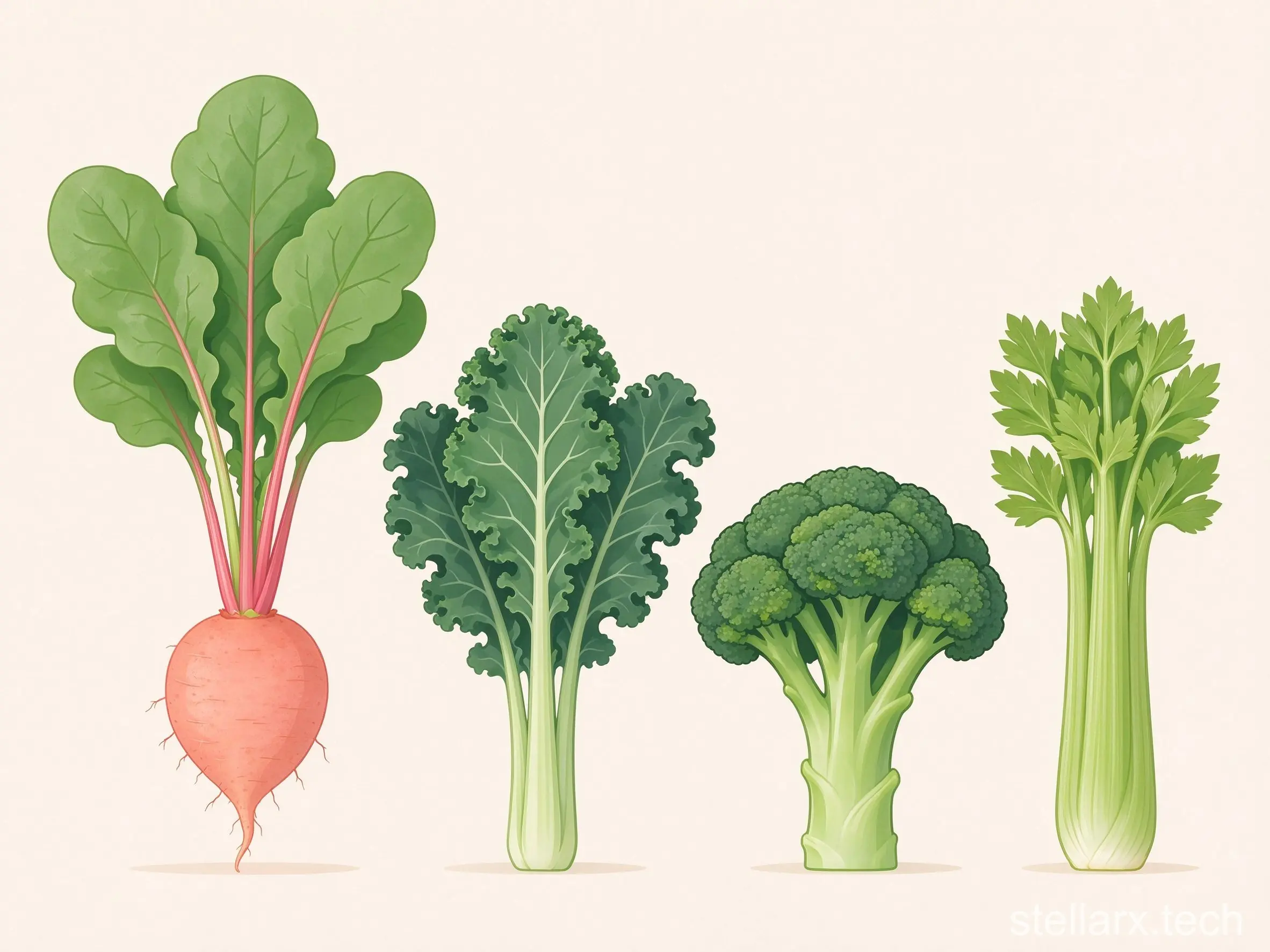
The fiber champion: 5.3 g per 100 g
For constipation, fiber is the mechanism that matters. A 100 g serving of sweet potato leaves delivers 5.3 g of dietary fiber — about twice what you get from sweet potato root itself (2.01–3.87 g/100 g).
To put that in context: kale has 4.1 g per 100 g, broccoli 2.6 g, celery 1.6 g. Among leafy greens, sweet potato leaves sit at the top of the fiber ranking.
In dry autumn weather, children drink less water and move less, and constipation becomes common. A plate of sautéed sweet potato leaves combines high water content with high fiber — the combination pushes intestinal motility and lets the body do the rest.
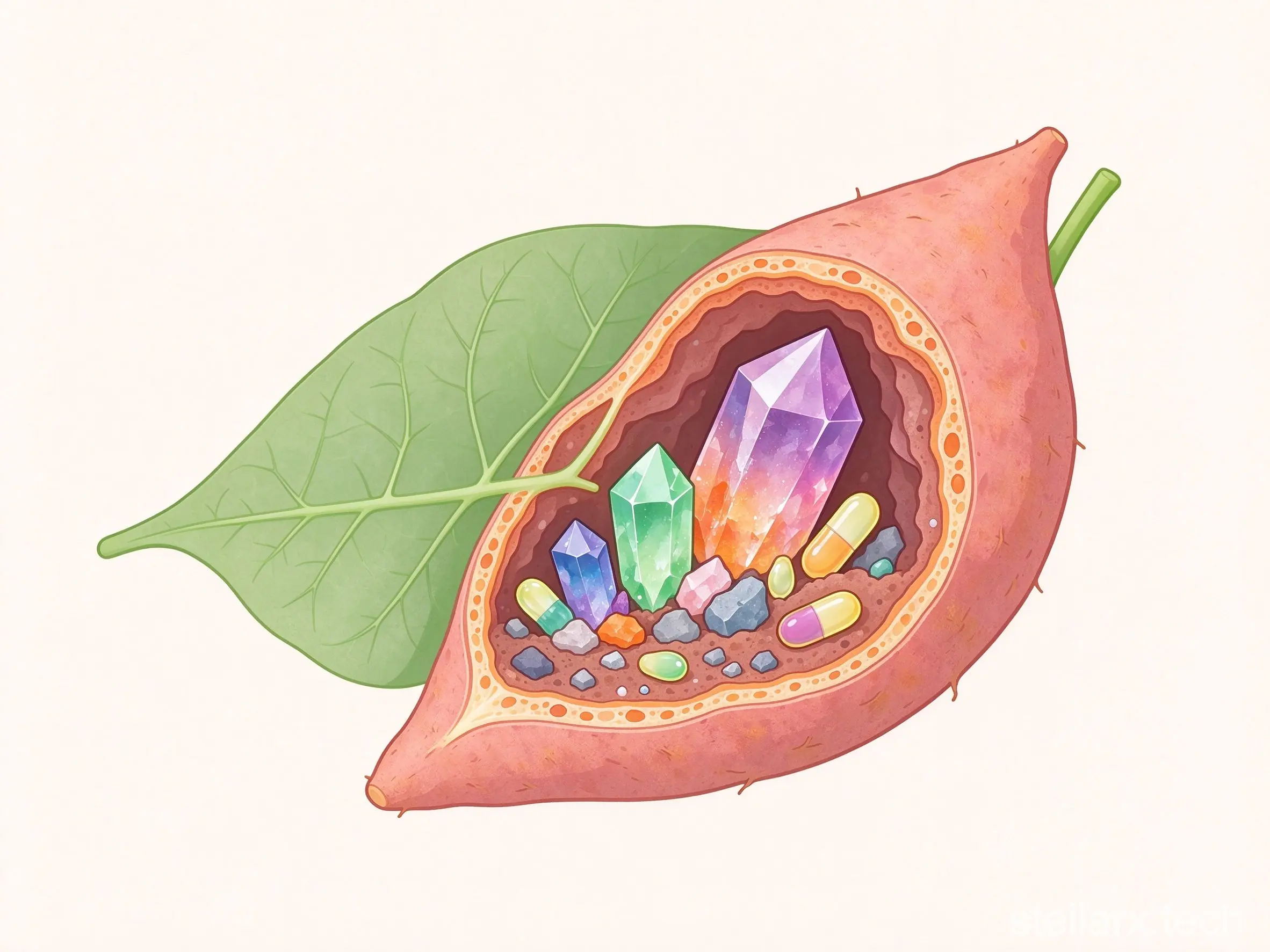
A "little mineral mine": more calcium than milk
The leaves are also unusually rich in protein for a vegetable: 3.1 g per 100 g.
Calcium reaches 180 mg per 100 g — higher than milk. Vegetable calcium is absorbed less efficiently than dairy calcium, but at this density it is a serious dietary source, not a garnish.
Magnesium: 58 mg per 100 g. Potassium: about 115 mg. Vitamin B1: 0.20 mg. And vitamin B2 reaches 0.36 mg — above broccoli and spinach, two greens parents already think of as nutrient-dense.
Carotenoids and lutein: numbers that make eyes widen
Leafy greens are recommended partly for their bioactive compounds — and here sweet potato leaves are exceptional.
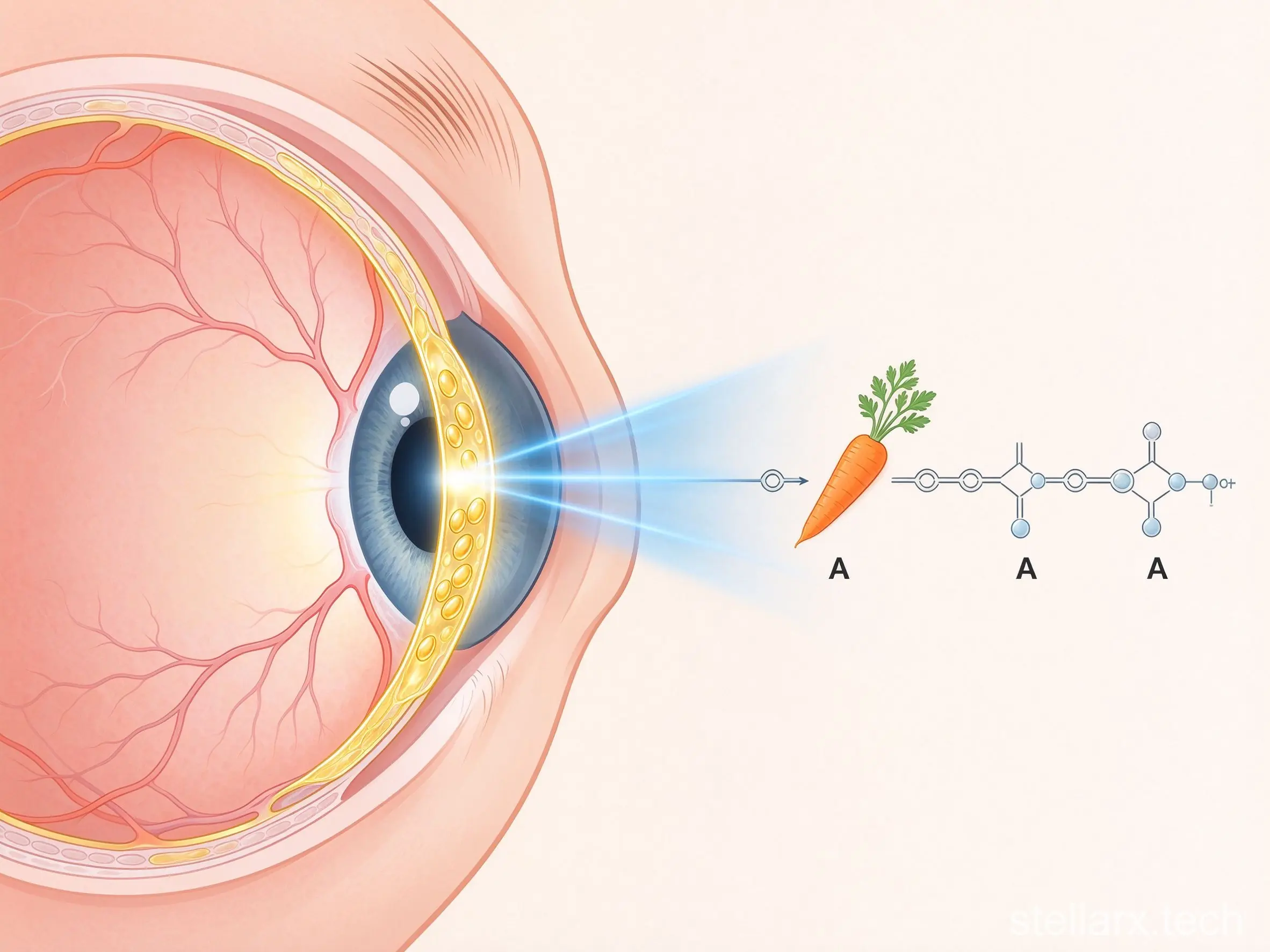
Beta-carotene: 1,351 μg per 100 g — 1.8 times the level in sweet potato root (750 μg). Lutein plus zeaxanthin: 14,700 μg per 100 g — 10.5 times broccoli (1,400 μg) and 1.2 times spinach (12,200 μg).
The body converts beta-carotene into vitamin A, which builds rhodopsin, the pigment behind dark adaptation. Lutein and zeaxanthin absorb blue light — the wavelength closest to ultraviolet — and shield the retina from light damage.
Flavonoids and polyphenols in the leaves (and in their close relatives, purple sweet potato leaves) add anti-inflammatory, antioxidant and neuroprotective effects — useful for children's immunity and adult health alike.
The tender tip: pick young, blanch before eating
Sweet potato leaves are the young shoots at the tip of the vine — the part with the strongest growth advantage. Modern cultivars are grown specifically for these tender tips, which taste clean, crisp and slightly sweet.
When buying, skip stems that are too long — they turn fibrous. The closer to the apical bud, the more tender the leaf.
Three rules before the first bite:
Check for allergy on first introduction. Like any new food, sweet potato leaves deserve a cautious first serving.
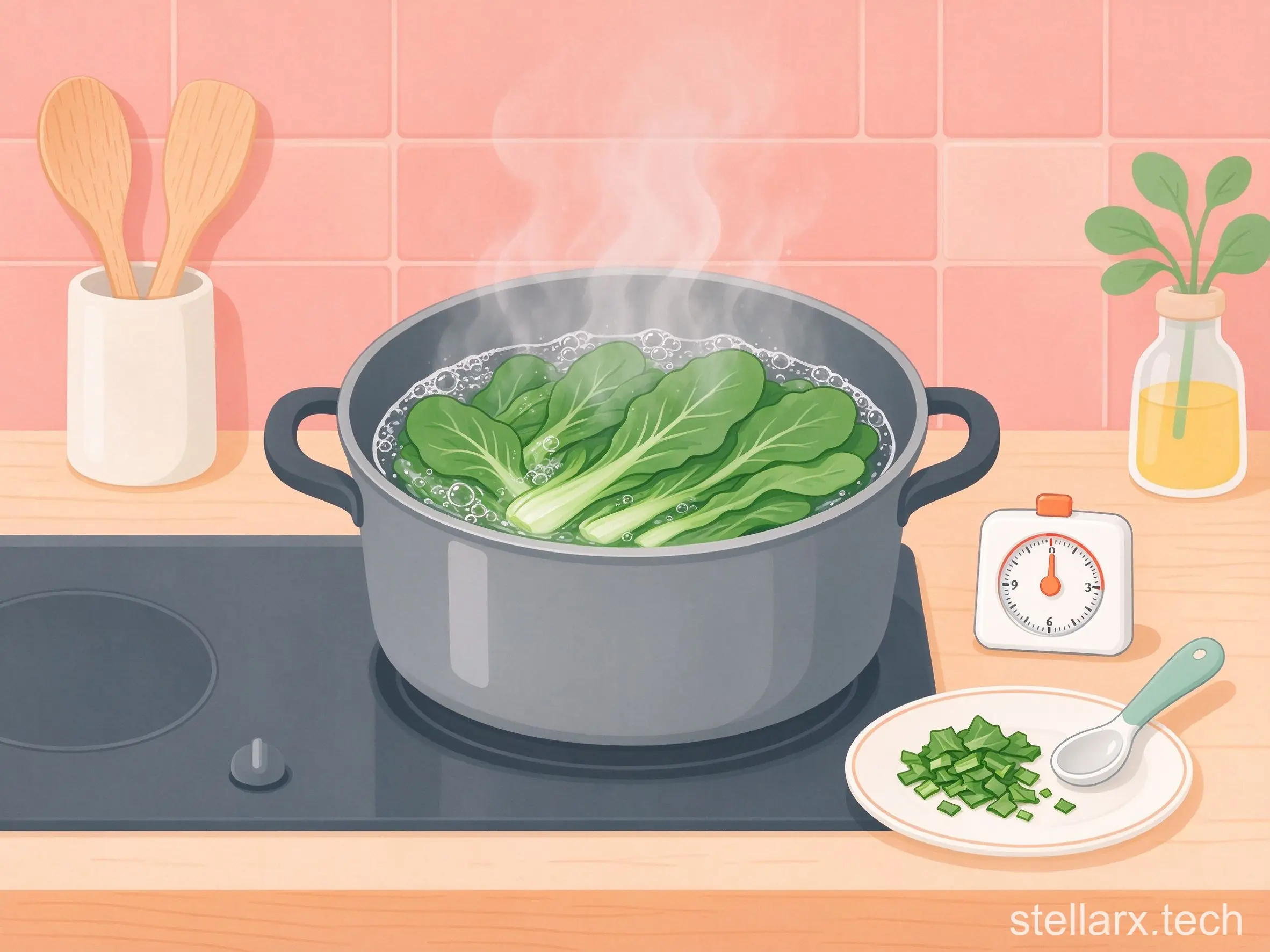
Blanch to remove oxalic acid. The leaves contain oxalic acid; a 30-second to 1-minute dip in boiling water is enough.
Cut for small children. For toddlers, cut the leaves into pieces they can swallow safely — the choking hazard is real.
One more thing: if a sweet potato in the kitchen has started to sprout, it can go into a jar of water instead of the trash. A child can watch the sprout become leaves — and then pick them, wash them, and put the whole cycle on the table.
The same leaf that fattens pigs in one field is a delicacy at 40 dollars a kilo in another. The whole story sits in the numbers.
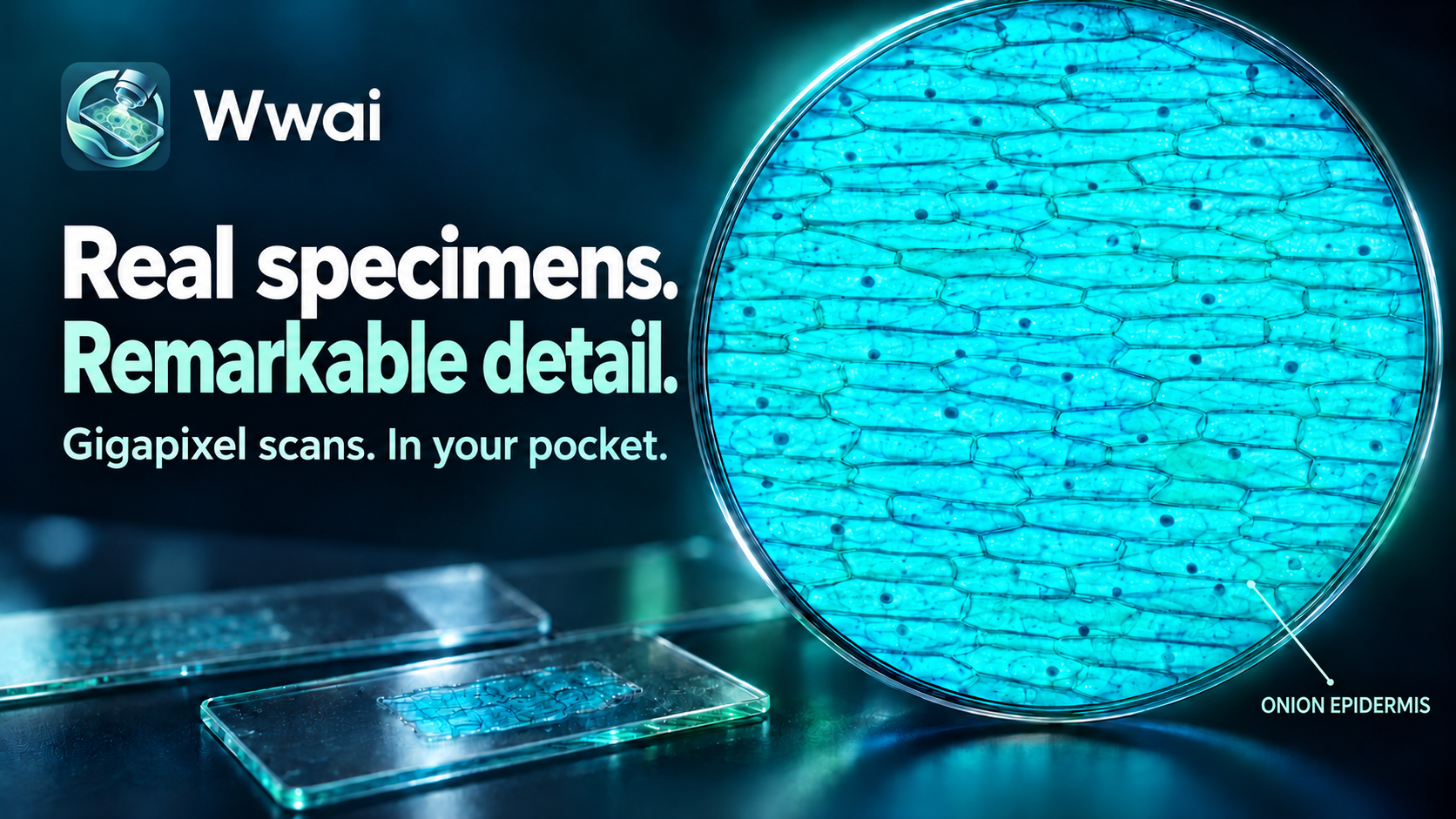
Want to see what a leaf actually looks like up close? Grab a Spinach Leaf Epidermis specimen where epidermal cells and stomata are clearly visible under a virtual microscope — the breathing pores that make leafy greens work.
Related reading

Why Porridge Spikes Blood Sugar Like Soda

Why Constipation Happens: A Colon Story

Fiber and Constipation: Vegetables vs Peanuts
References
1. US Department of Agriculture. FoodData Central: food composition data for vegetables (sweet potato leaves nutrition). https://fdc.nal.usda.gov.
2. Nguyen HC, et al. Bioactive Compounds, Antioxidants, and Health Benefits of Sweet Potato Leaves. Molecules, 2021, 26(7): 1820.
3. Ivane NMA, et al. Harnessing the Health Benefits of Purple and Yellow-Fleshed Sweet Potatoes: Phytochemical Composition, Stabilization Methods, and Industrial Utilization — A Review. Food Chemistry: X, 2024, 23: 101462.
4. Chen CM, et al. Consumption of Purple Sweet Potato Leaves Decreases Lipid Peroxidation and DNA Damage in Humans. Asia Pacific Journal of Clinical Nutrition, 2008, 17(3): 408-414.
5. Chen CM, et al. Consumption of Purple Sweet Potato Leaves Modulates Human Immune Response: T-Lymphocyte Functions, Lytic Activity of Natural Killer Cell and Antibody Production. World Journal of Gastroenterology, 2005, 11(37): 5777-5781.
- 古代食用油那麼貴,窮人為何還吃得起油條?
- In Ancient China, Oil Was Gold — the Poor Ate Fried Dough
- Sweet Potato Leaves: Fiber, Calcium, Lutein in One Green
- 地瓜葉的營養價值:鈣比牛奶高、葉黃素超西蘭花
- 蟑螂粉的真相:71% 粗蛋白不是蛋白
- Why Cockroach "Protein Powder" Isn't Protein
- Autocatalysis in Evolution: From Fish to Humans
- 自催化的演化:從魚到人的 5 億年
- Ectopic Tooth in Eyelid: A World-First Superior Orbit Case
- 眼瞼長牙的真相:全球首例眶上異位牙
全部评论