A 1 cm Thyroid Nodule Turned Out to Be Cancer While a Bigger One Was Fine — Here's the Biology
Li, 29, went for a routine checkup with a coworker. Both were told they had thyroid nodules. The coworker's nodule measured 1.5 cm × 1 cm — larger — and the doctor said it was fine. Li's own nodule was smaller, 0.8 cm × 1 cm, yet it turned out to be thyroid cancer that had already spread to lymph nodes in her neck.
Why isn't bigger automatically worse? The answer is a lesson in biology: organs are made of cells, and what matters is what the cells look like — not just how many of them there are.
First, What Is the Thyroid?
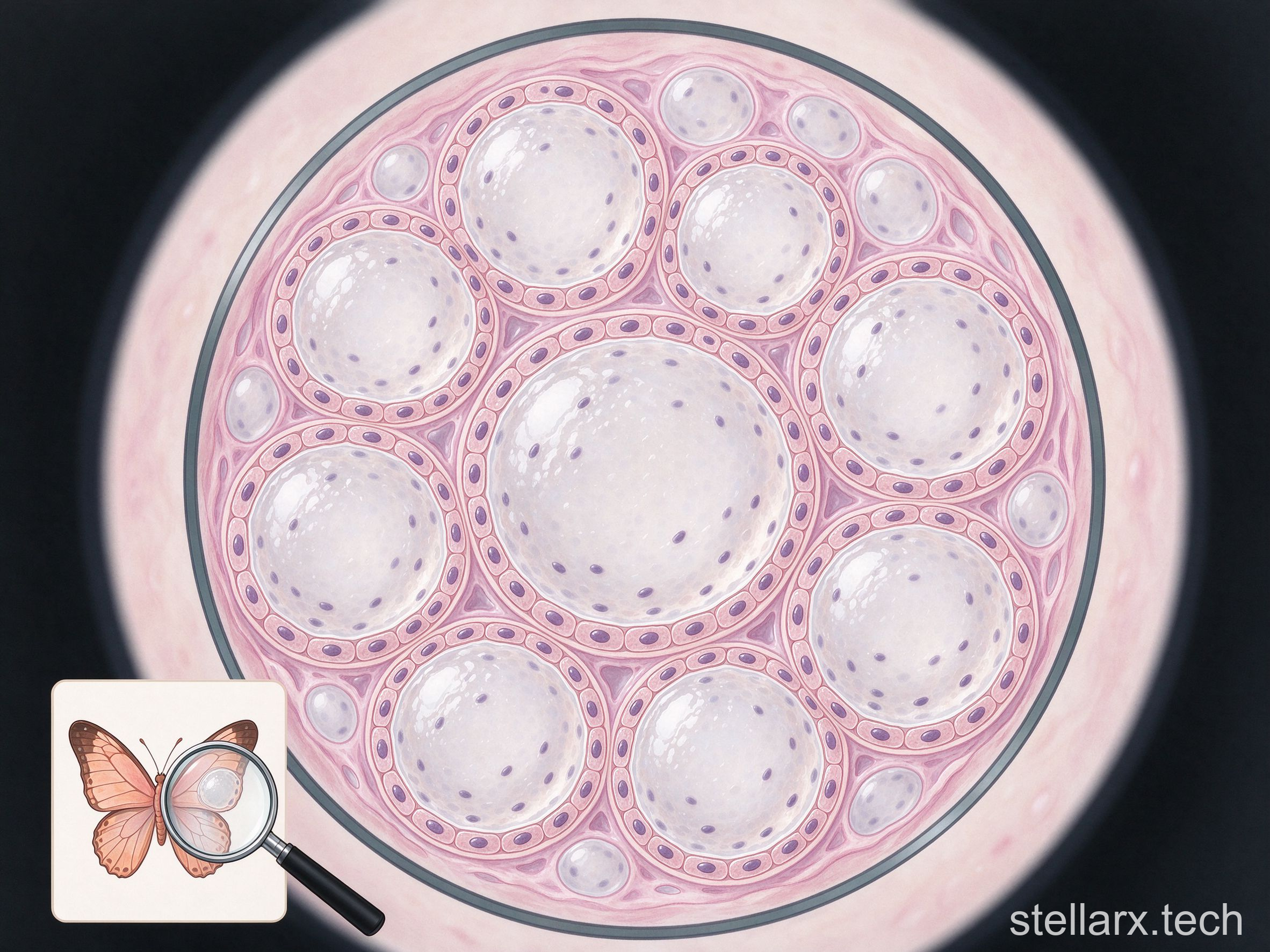
The thyroid is a small, butterfly-shaped endocrine gland in the front of your neck. It produces thyroid hormones that regulate your metabolism — how fast your body burns energy. Look at it under a microscope and you see its working unit: the follicle, a sphere of epithelial cells surrounding a store of colloid, the raw material for thyroid hormones. Thyroid cancer — the most common type being papillary thyroid carcinoma — begins in those follicular epithelial cells.
That is why the first diagnostic question is not "how big?" but "what do the cells look like?"
Why a Nodule's Size Alone Doesn't Tell the Story
In Li's case, the smaller nodule had alarming features on ultrasound: irregular shape, a distorted height-to-width ratio, and a suspicious TI-RADS score of 4A. Her coworker's larger nodule, by contrast, was regular in shape with uniform internal echoes — imaging features consistent with a benign lesion.
So doctors don't judge risk by a single millimeter number. They combine shape, boundary, internal echoes, calcification, and location, then layer in age, history, and the state of the neck's lymph nodes.
The Nodule That Needed a Needle: Fine-Needle Aspiration
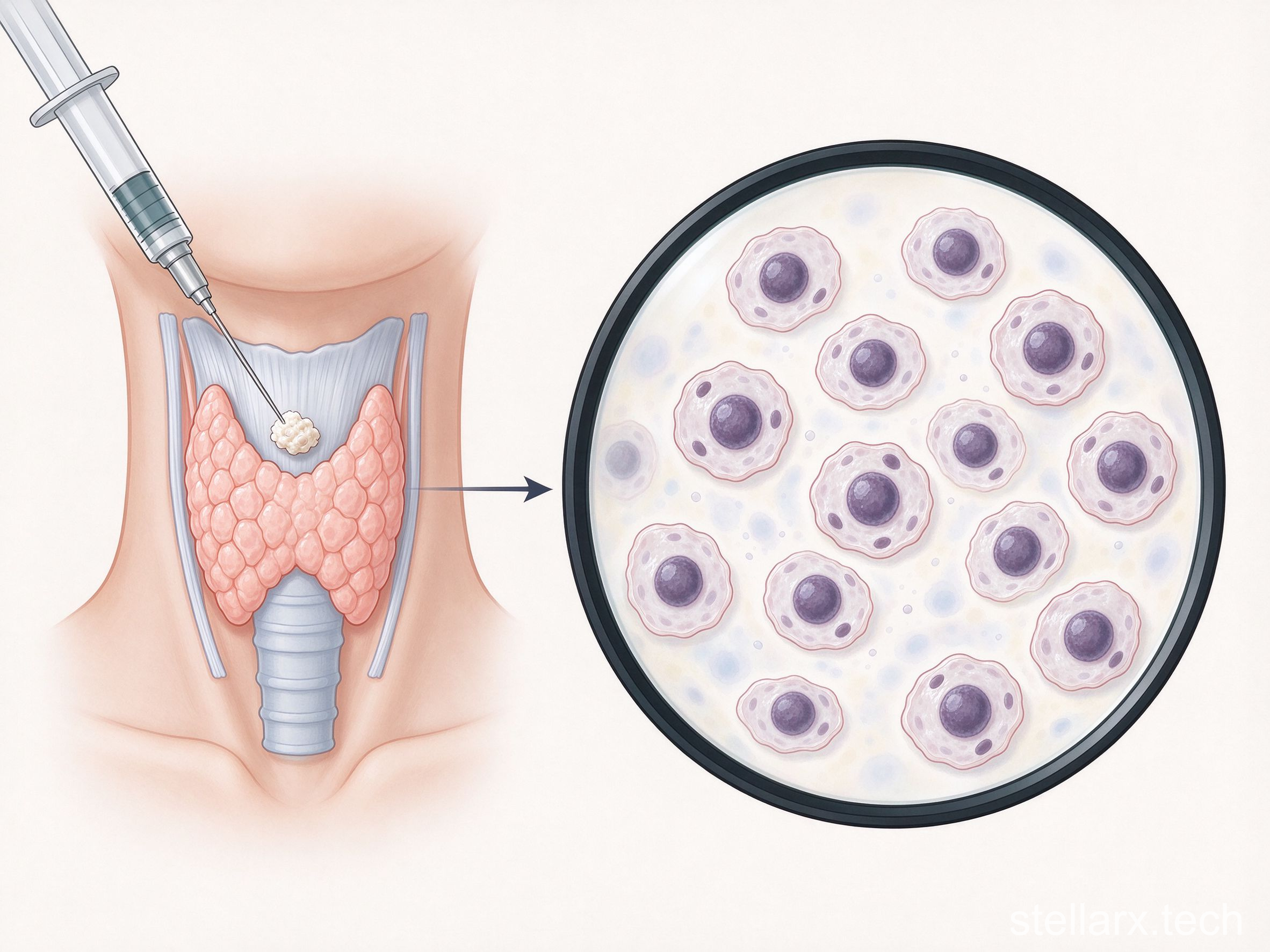
Because Li's nodule looked suspicious, her doctor ordered a fine-needle aspiration (FNA) biopsy: a thin needle collects a tiny sample of cells from the nodule, and a pathologist examines them under a microscope.
This is cytology — the study of individual cells. Malignant thyroid cells show characteristic nuclear features: enlarged, crowded nuclei with a "ground-glass" appearance, grooves, and other signs that trained eyes recognize immediately. The size of the nodule matters far less than these cellular fingerprints.
The "Lazy Cancer" Myth
Some thyroid cancers grow slowly and have an excellent overall prognosis, which is why papillary thyroid carcinoma is sometimes nicknamed the "lazy cancer." But "usually slow" is not "never spreads." The thyroid has a rich lymphatic drainage network, and papillary carcinoma can travel through lymphatics to the cervical lymph nodes — which is exactly what happened in Li's case: of 23 lymph nodes removed during surgery, 5 contained metastasis. The lungs and bones are also common sites for distant spread.
A swollen lymph node in the neck is not automatically cancer — inflammation and infection enlarge nodes too. Determining metastasis requires ultrasound, contrast-enhanced CT, and when necessary, pathology from a biopsy, judged by specialists.
What This Really Teaches Us
Stories like Li's sound intimidating, but the biology underneath is beautiful and inspectable: your body is an assembly of billions of cells, and medicine's most powerful trick is taking a few of them out and looking at them carefully under a microscope.
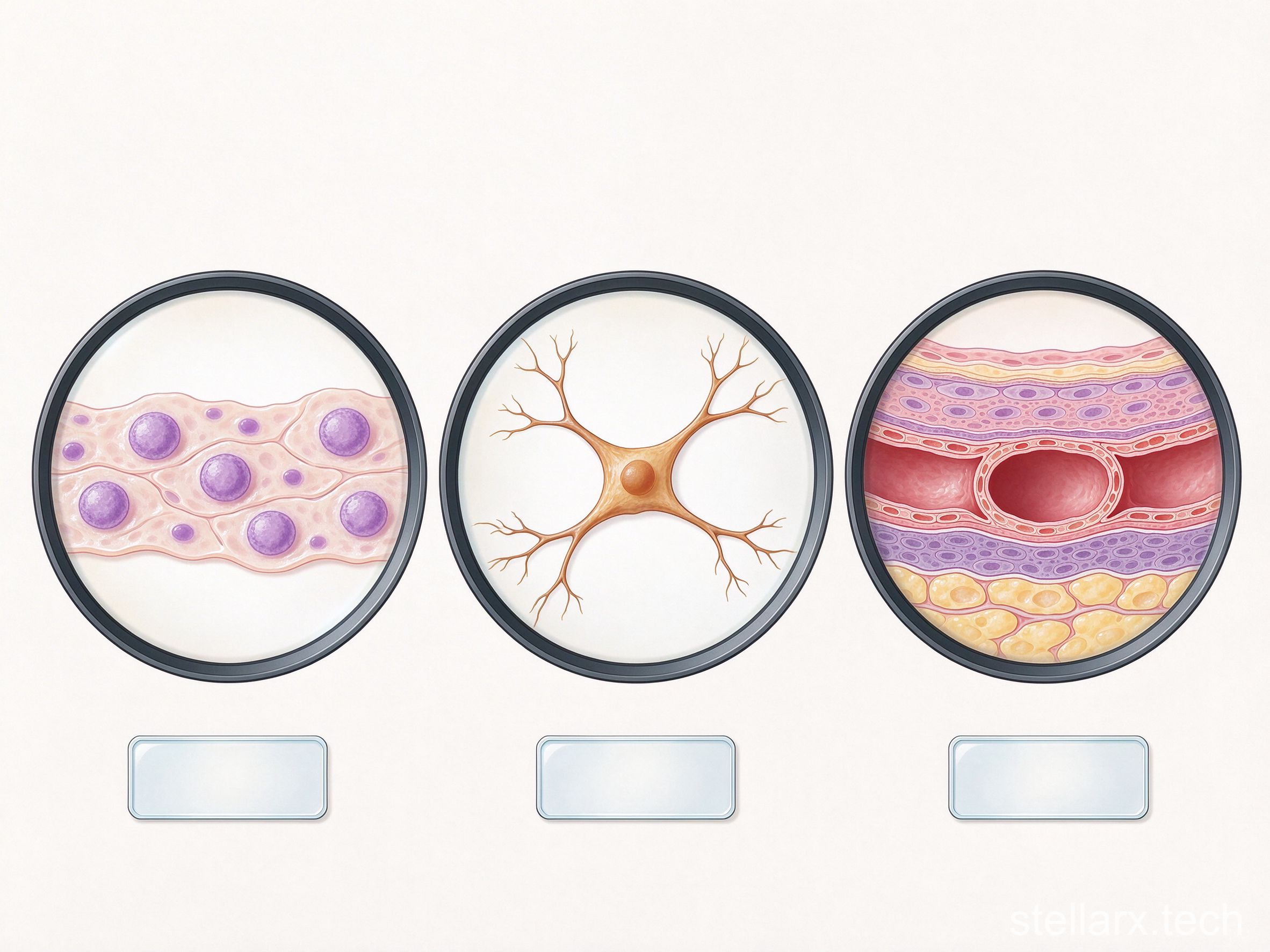
That same curiosity can start at home. Under a microscope, human cells are stunningly clear — an epithelial smear shows flat, tiled cells with round purple nuclei; nerve cells reveal their branching dendrites; blood vessels show their layered walls.
 WWAI is an AI-powered biology encyclopedia that answers your biology questions instantly and lets you observe real microscope slide specimens online — including human cell smears you can explore the same way a pathologist does. Search "WWAI" in your app store and download it today.

References:
[1] All illustrations are AI-generated.
[2] Locally adapted from a public health report on thyroid nodule evaluation and cytological diagnosis, 2026-09-26.
- A 1 cm Thyroid Nodule Turned Out to Be Cancer While a Bigger One Was Fine — Here's the Biology
- Why Are Mysterious Round Holes Appearing on Parked Cars? The Culprit Is a Moth Larva
- The One-Man Physics Encyclopedia That Beats a $20,000 University Course
- OpenAI's Agent Broke Into Australia's Medicare Portal — the World's First Rogue AI Breach
- Why Robots Still Can't Learn to Spin a Pen
- Why "Sugar-Free" Mooncakes Can Still Spike Your Blood Sugar
- White Sugar vs. High-Fructose Corn Syrup: Which Is Actually Healthier?
- Why Does Osmanthus Smell So Sweet? The Science Behind China's Favorite Autumn Flower
- Why a 10-Second Balance Test May Predict Disability and Death Risk
- Babies Age Too — and Monthly Cash Payments Seemed to Slow It Down
全部评论