Why a 10-Second Balance Test May Predict Disability and Death Risk
By the wwai Editorial Team
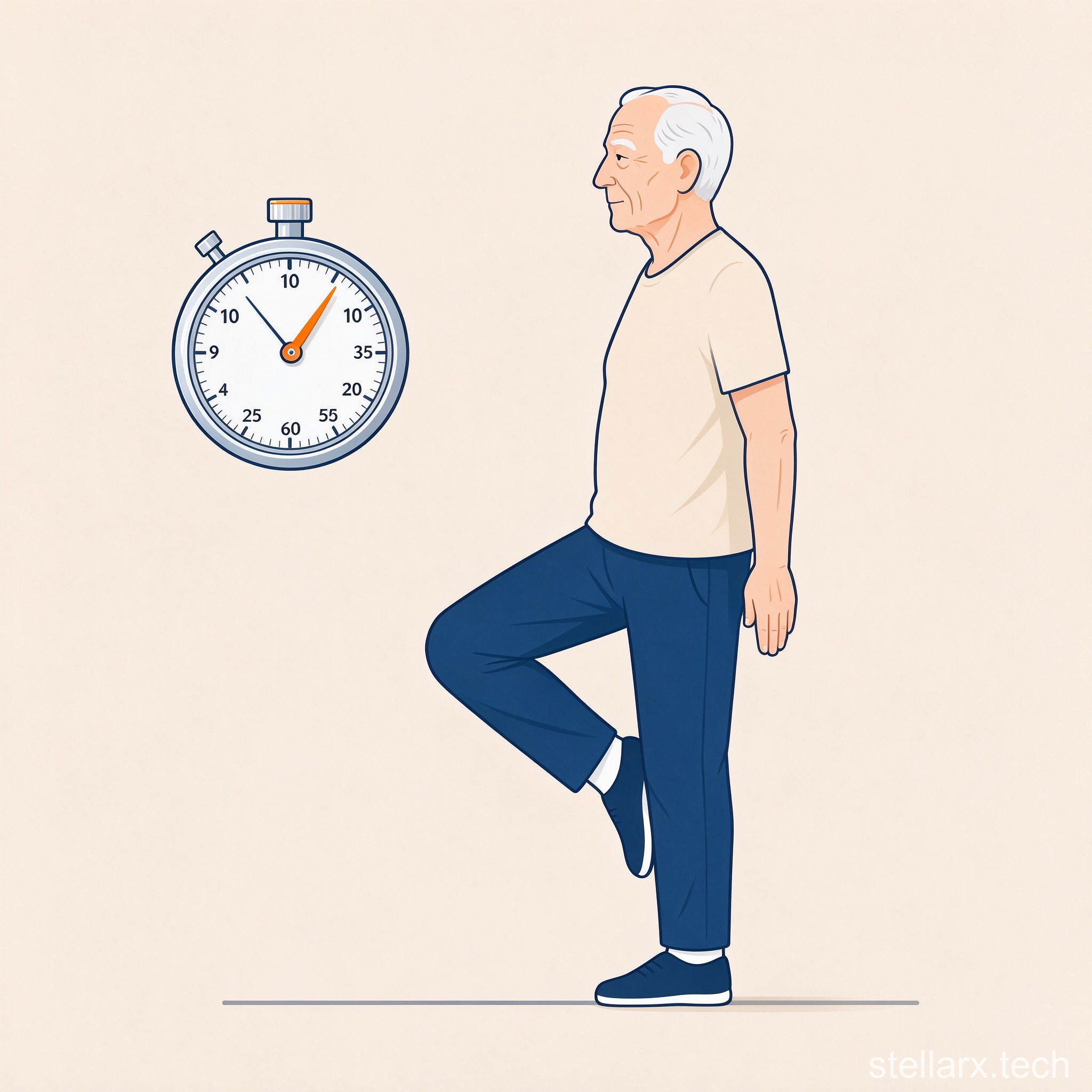
Many of us played "golden rooster" as children — hopping onto one leg and trying to knock each other over. It felt like nothing more than a game. But researchers have found that the same childish move, performed seriously, is a surprisingly strong window into how well you are aging.
The Test: How Long Can You Stand on One Leg?
A Japanese research team, in a study published in the Journal of the American Medical Directors Association (J Am Med Dir Assoc, 2025), analyzed data from the Aizu Cohort Study (LOHAS) of community-dwelling older adults. Their finding: if the weaker side of your one-leg standing lasts less than 10 seconds, your risk of losing independence or dying is 2.17 times higher than someone who can stand on one leg for 30 seconds or more.
The association also followed a clear dose–response pattern: every 10 seconds shorter in one-leg standing time raised the combined risk of "loss of independence or death" by 42%. The team grouped participants by their "secondary" (weaker) side — standing times of ≥30, 20–30, 10–20, and <10 seconds — and adjusted for age, sex, BMI, and multiple chronic conditions to isolate the net effect. A similar negative dose–response relationship held for all-cause mortality alone.
Even a "Strong" Leg Can't Mask a Weak One
Most of us have a preferred leg — the one that stands longer (the dominant side) and one that gives out sooner (the secondary side). You might think: if my good leg can hold 30 seconds, my balance must be fine, right? The researchers anticipated that too, and ran a subgroup analysis on participants whose dominant leg could stand for 30 seconds or more.
The result was blunt: if the other leg still fell short of 30 seconds, the combined risk of disability or death went up anyway. They also regrouped participants into those who could stand 30 seconds on both legs, those who could only manage it on one leg, and those who failed on both. Only "both legs pass" came with the lowest risk. A strong dominant side does not cancel out a weak secondary side.
Why Does Balance Predict Health?
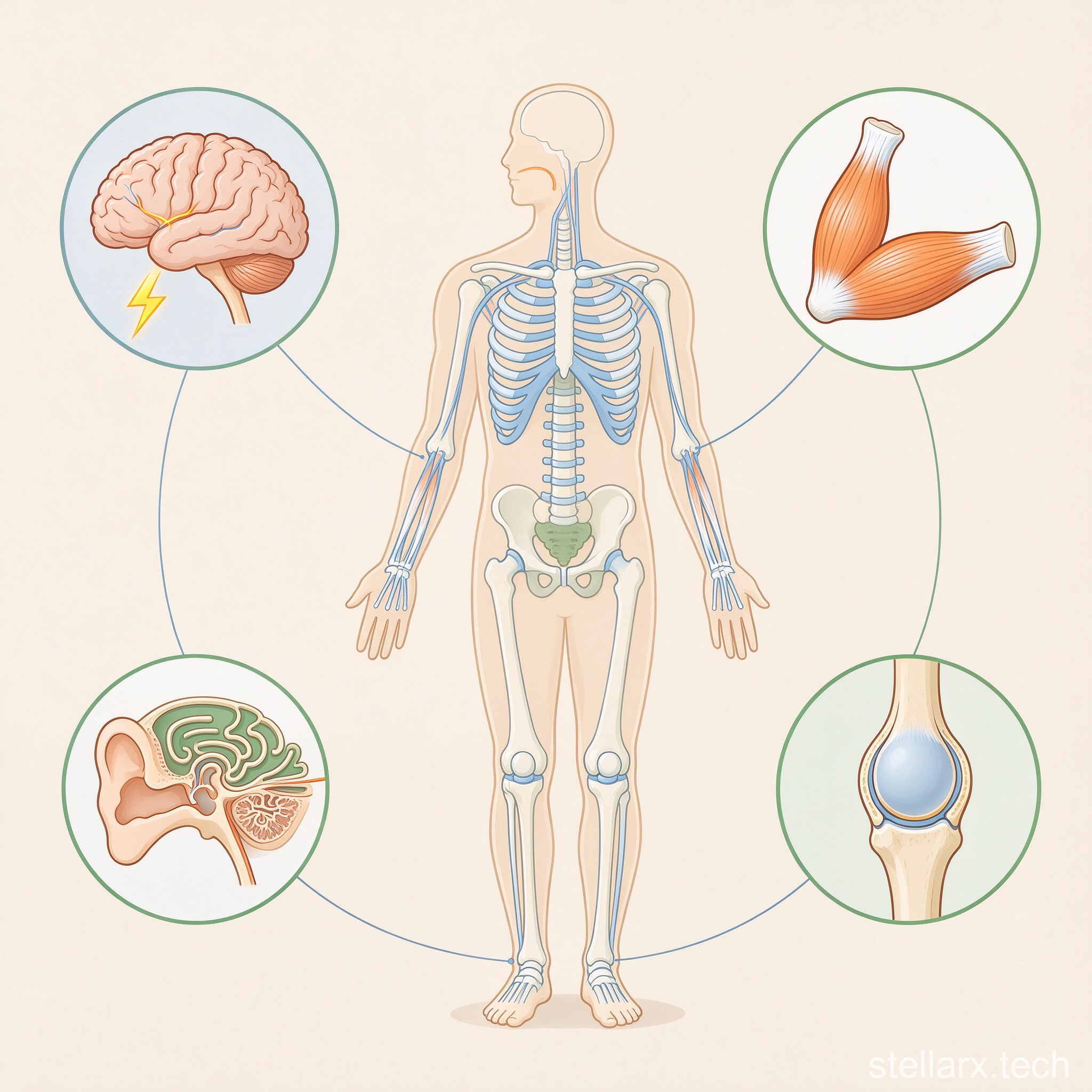
One-leg standing looks simple, but it is a demanding feat of coordination. It requires muscle strength, nerve conduction, vestibular (inner-ear) sensing, proprioception, and joint mobility to work together as a single system. That is why standing time is not just about "leg power" — it is a readout of how well many body systems are cooperating.
Because so many systems are involved, early signs of trouble can surface here first: early neurodegenerative disease, silent cerebrovascular changes, or latent sarcopenia may all show up as a shorter time on the weaker side. Poor balance then raises the risk of falls, which in turn cascade into disability and death. On a deeper level, standing time reflects physiological resilience — the body's reserve for coping with decline and challenges as we age. Stand longer, and your reserve looks healthier; stand shorter, and your reserve may be nearing its limit.
The Good News: Balance Can Be Trained
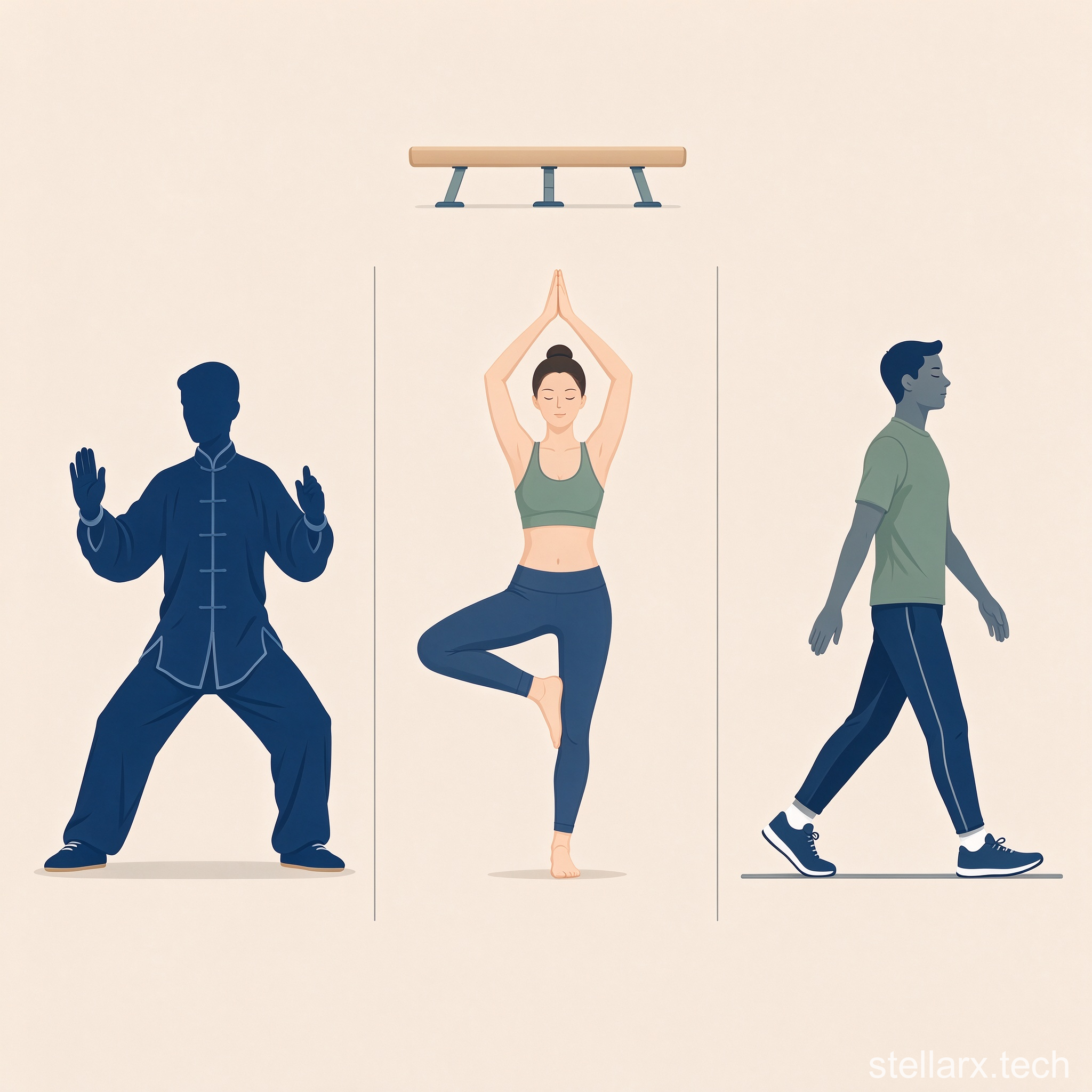
None of this is fate. One-leg standing time is trainable, and simple practices can improve balance: tai chi, yoga, standing with eyes closed, or walking a straight line. And the weaker leg can get extra "homework" — shift your weight toward the weak side during one-leg stands, or practice small repeated squats on that side to gradually close the gap.
A Caveat
This study is an observational cohort study, so it cannot directly establish cause and effect. The link between balance and mortality risk is strong and dose-dependent, but it is a signal to pay attention to, not a verdict.
Want to understand how the vestibular system, proprioception, or muscle decline works — or how your body's systems coordinate for something as simple as standing still? WWAI is an AI-powered biology encyclopedia that answers your biology questions instantly, from human physiology to motor control, and lets you observe real microscope slide specimens online. Just search "WWAI" in your app store and download it today.
References:
[1] Hirayama Y, Yamazaki H, Ogawa Y, Yamada Y, Yamamoto Y. Association of Shorter Secondary One-Leg Standing Time with Loss of Independence or Death in Community-Dwelling Older Adults in the Aizu Cohort Study (LOHAS). J Am Med Dir Assoc. 2025;26:105688.
- White Sugar vs. High-Fructose Corn Syrup: Which Is Actually Healthier?
- Why Does Osmanthus Smell So Sweet? The Science Behind China's Favorite Autumn Flower
- Why a 10-Second Balance Test May Predict Disability and Death Risk
- Babies Age Too — and Monthly Cash Payments Seemed to Slow It Down
- Why Gout Is Surging in Young Men — and Its Link to Erectile Dysfunction
- Why a Batch of Black Sesame Paste Tested 27× the Mold Limit
- Why Are Beijing's Trees Suddenly Full of Fuzzy Caterpillars?
- DeepSeek Harness Desktop Preview Goes Live — Mac and Windows Downloads Available Now
- DeepSeek Harness Just Got a Desktop App — Before Any Official Announcement
- 双十一流量来了,智通SDK也更新了!

全部评论