Why Are Beijing's Trees Suddenly Full of Fuzzy Caterpillars?
By the wwai Editorial Team
Just when everyone expected the cool, pleasant days of autumn to bring fewer bugs, Beijing and other cities suddenly found themselves overrun with caterpillars — white, fuzzy, and frankly creepy. These caterpillars not only chew through leaves, they drop from the trees in droves, leaving a lasting psychological scar on anyone who walks underneath.
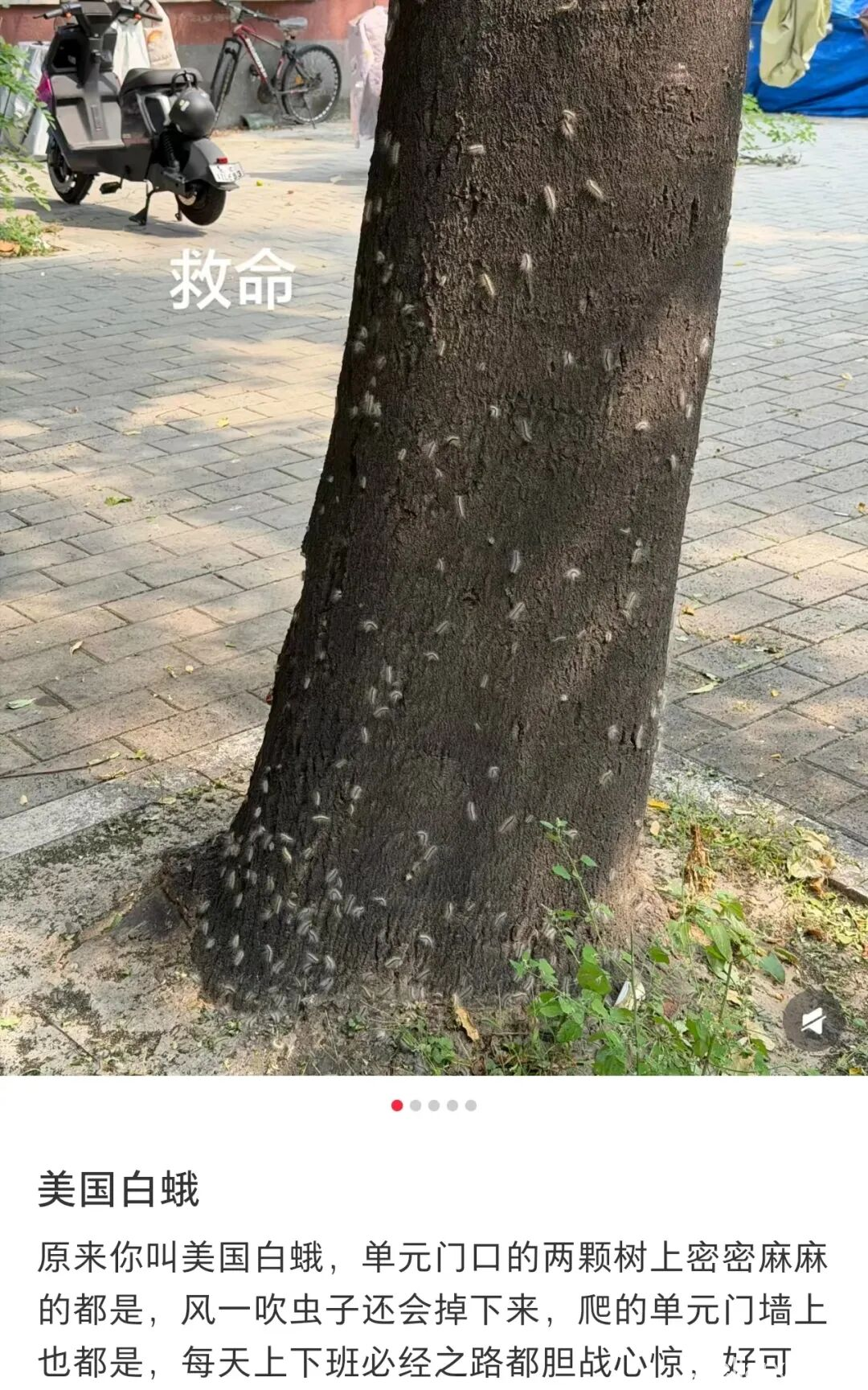
But this caterpillar is no ordinary pest. Beyond terrifying residents, it is a headache for forestry and agriculture workers alike. Its name: the notorious fall webworm (Hyphantria cunea).
A Troublemaker on the Move — and How to Subdue It
The fall webworm is a malignant invasive insect native to North America. It eats almost anything, has a huge appetite, reproduces rapidly, and wreaks havoc wherever it goes. In China, it feeds on more than 100 plant species, including crops, garden plants, flowers, and vegetables — a serious blow to agricultural and forestry production as well as everyday life. The damage it leaves behind is so destructive that it is known as the "smokeless fire."
Since arriving in China in 1979, the fall webworm has kept expanding its range. Forestry researchers have fought it for decades, trying to slow its spread or wipe it out entirely. Years of control efforts have slightly eased the trend, yet in some autumns the population still rebounds in many regions.
Faced with another outbreak, local authorities have stepped up countermeasures — one of which is spraying large amounts of traditional chemical pesticides such as emamectin benzoate, cypermethrin, and deltamethrin. Chemical control is fast and relatively cheap, but it inevitably brings problems of its own: pesticide resistance, residues, and more. Biological control may be a stronger weapon.
Simply put, biological control means using one organism to control another harmful organism. The former is called a biological agent. Common agents include natural-enemy insects and pathogenic microorganisms. When it comes to the fall webworm, the natural enemy to know is the parasitoid wasp Chouioia cunea (white webworm Chouioia wasp).
No Natural Enemies at Home, So the Moth Runs Rampant
In its native North America, the fall webworm has a long list of natural enemies — at least 86 species of predators and parasitoids have been recorded. In Louisiana alone, 16 insect species and 19 spider species feed on fall webworm larvae. Surveys in Illinois found that 34–39% of fall webworm populations were parasitized by native enemies, with slightly more (43%) infected by pathogenic microorganisms.
These native enemies share a long co-evolutionary history with the fall webworm, forming a relatively tight and balanced food chain and food web. Under this natural regulation, North American populations rarely erupt widely and repeatedly over long periods.
But when the fall webworm arrives in a new habitat, the natural enemies it co-evolved with are missing, so its population dynamics are no longer constrained. The balance is broken, and the moth expands and erupts far more easily in its "new home." This phenomenon — known as enemy release — is one of the leading hypotheses in ecology for explaining invasive species outbreaks.
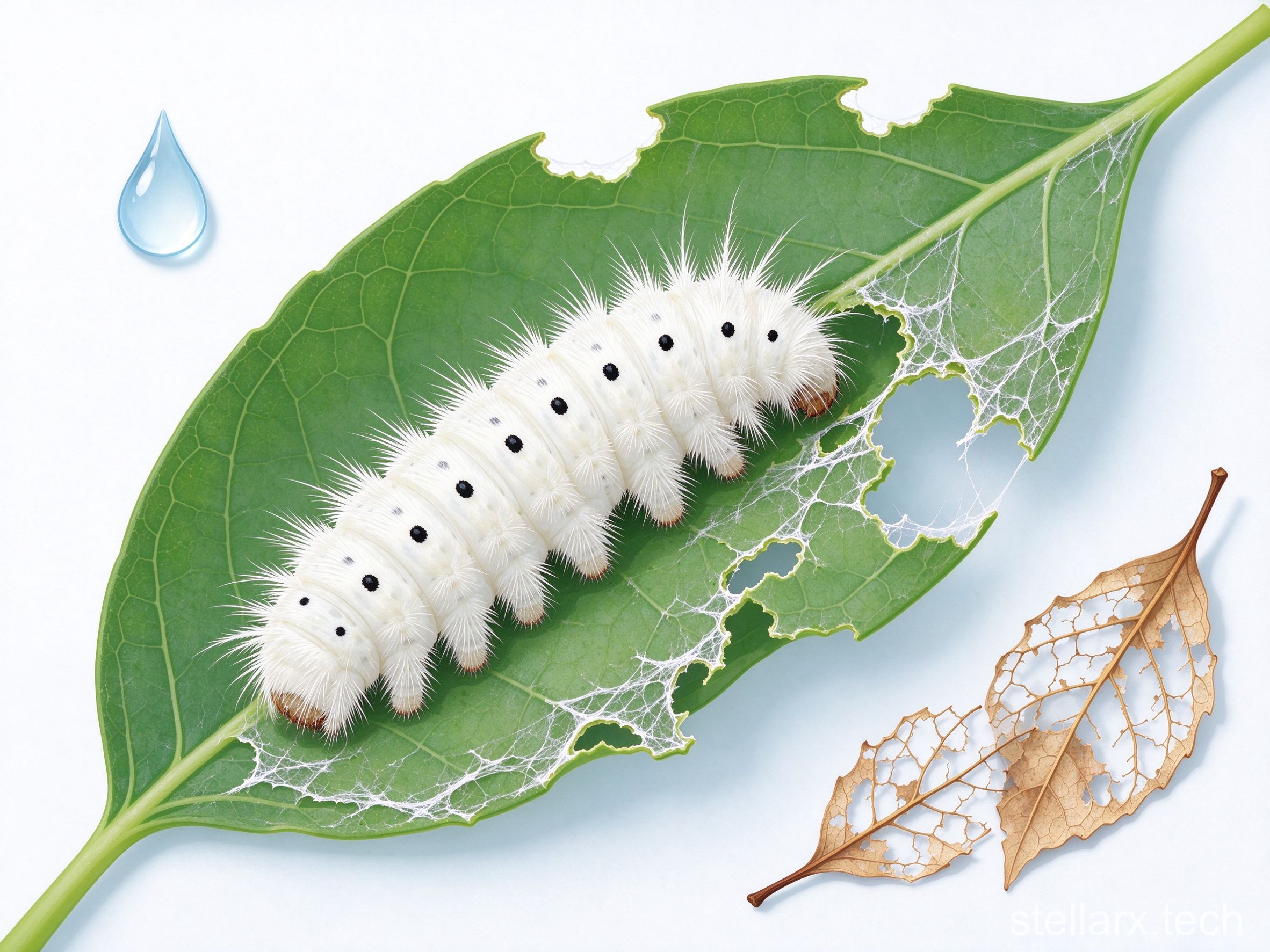
A "Three-High" Wasp: The Fighter Among Fighters
China has spent over 20 years searching for and screening biological agents against the fall webworm. Chinese entomologists have found 37 species of insects that parasitize or prey on it. Among them, the most famous is Chouioia cunea.
Chouioia cunea belongs to the family Eulophidae (order Hymenoptera). Of the 37 candidate natural enemies, only this one stood out, gained wide application, and entered industrial production. The reason comes down to three striking traits, nicknamed the "three highs": high parasitism rate, high offspring output, and a high female-to-male sex ratio.
The earliest study reporting this wasp found that of more than 400 fall webworms collected from the field, over 340 were parasitized — a parasitism rate above 80%. In laboratory rearing, each parasitized pupa hatched more than 200 wasps on average, and the emerging wasps had a sex ratio of 68 females to 1 male.
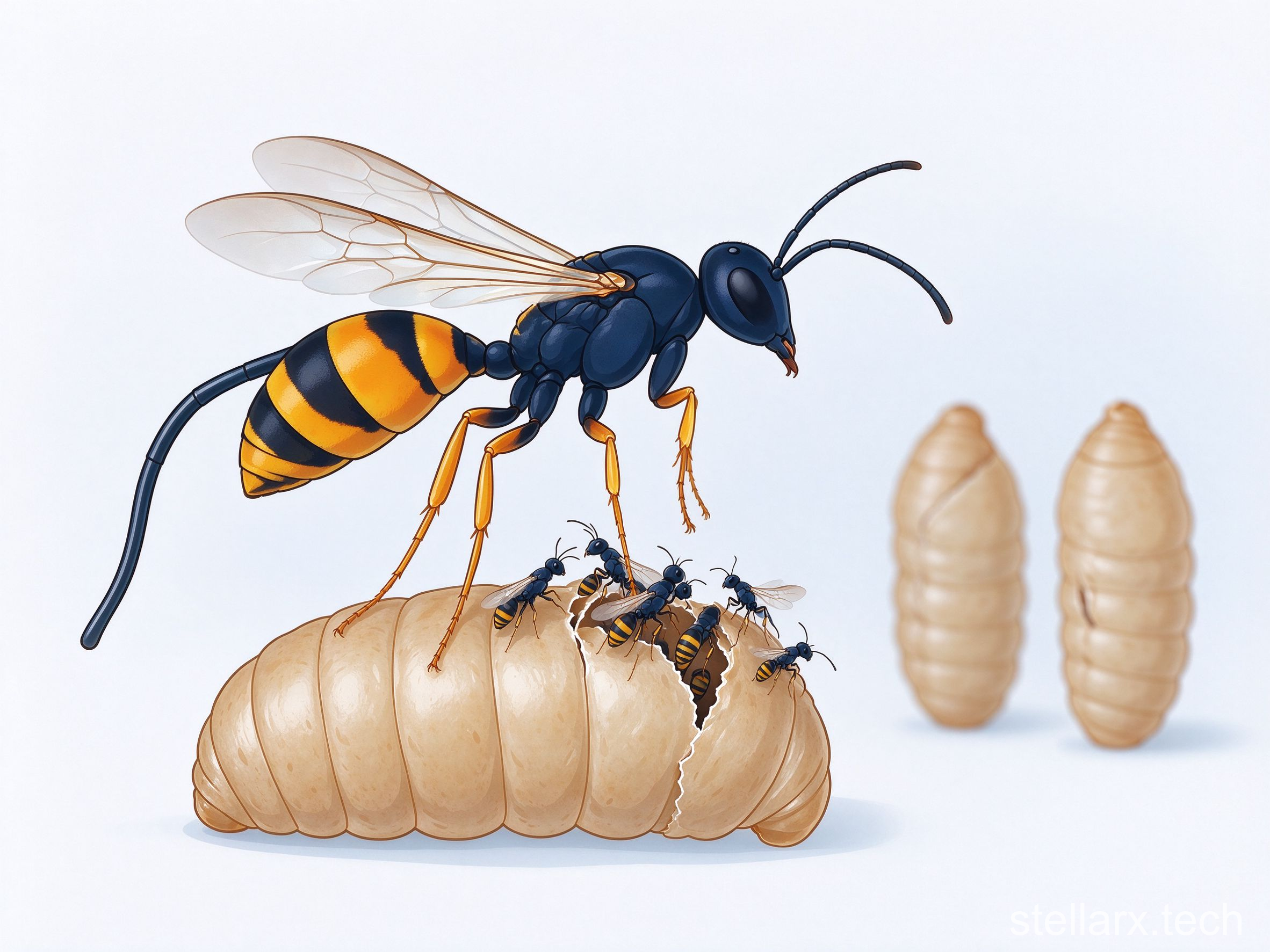
The higher these three indicators, the better Chouioia cunea works as a control agent. Parasitism rate and offspring output are easy to grasp — they win on probability and numbers. The sex ratio refers to the proportion of female to male offspring, and it may be one of the most important metrics for evaluating a parasitoid's effectiveness. Here is why:
Chouioia cunea is a pupal parasitoid. Males only mate; it is the females that quickly locate mature fall webworm larvae and pupae and lay eggs inside them to continue the cycle. Once those eggs hatch, the larvae feed on the webworm pupa. To destroy more webworms, the more females in the next generation, the better.
Further rearing data shows the average sex ratio of Chouioia cunea is 44:1, reaching as high as 96:1. Such an extreme ratio is rare among parasitoid wasps — a trait that benefits pest control itself and also makes artificial rearing far more convenient.
Beyond the "three highs," Chouioia cunea has one more trick that helps it parasitize its host. If a female finds a webworm larva that is "too young" — not yet mature or prepupal — she stings the larva with her ovipositor and injects venom that accelerates the larva's growth and triggers pupation. Stung larvae enter the pupal stage 4 to 6 days earlier. This way, before her short life ends, the female can still lay eggs inside the webworm pupa and complete her mission.
To Fight Bugs with Bugs, First Raise Bugs with Bugs
Once the ideal natural enemy was confirmed, the next challenge was industrial production — finding a way to mass-produce the wasps quickly. Catching fall webworms in the wild yields too few wasps, so a better host insect had to be found to rear the parasitoid in bulk. Which insect would play the role of the willing "fall guy"?
After repeated experiments screening different hosts for rearing efficiency, scientists settled on the tussah silkworm pupa (Antheraea pernyi). Rearing the wasp on tussah pupae is spectacularly effective: up to 100 times the original production volume, with individual records of 16,000–18,000 wasps emerging from a single pupa.
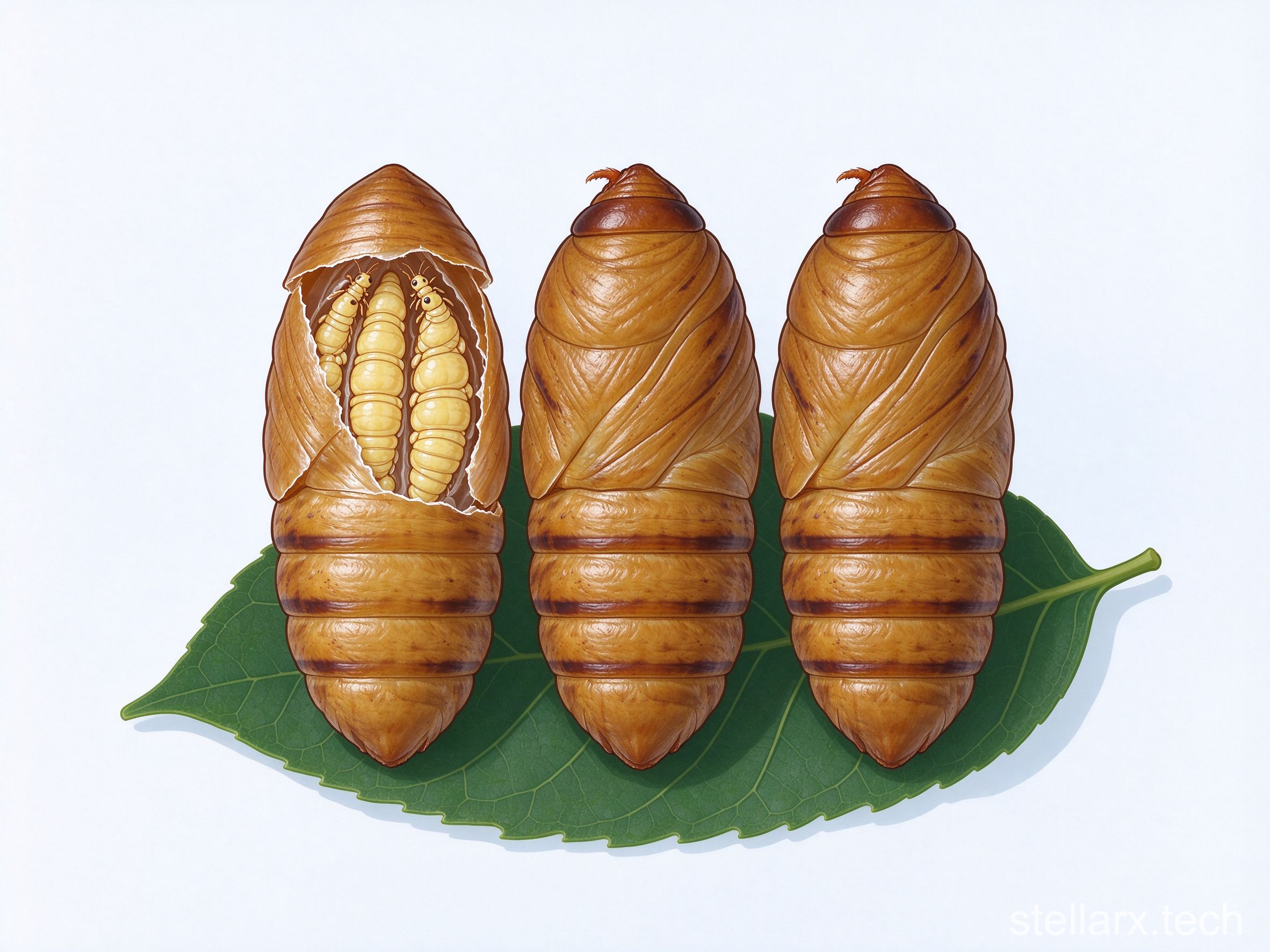
With a suitable host secured, the wasp army could be produced continuously. Using tussah pupae as the rearing host has a history of more than a decade, and the rearing technology keeps maturing. Today, dedicated mass-production facilities operate in Liaoning, Shandong, and Hebei provinces.
Choosing the Right Release Day Matters
After mass production comes field release, and the core question is timing. Since Chouioia cunea is a pupal parasitoid, the optimal release window is when mature webworm larvae are entering the pupation stage. To nail the date, researchers must study the development duration of each fall webworm life stage in the local area, then release the wasps in sync to maximize parasitism.
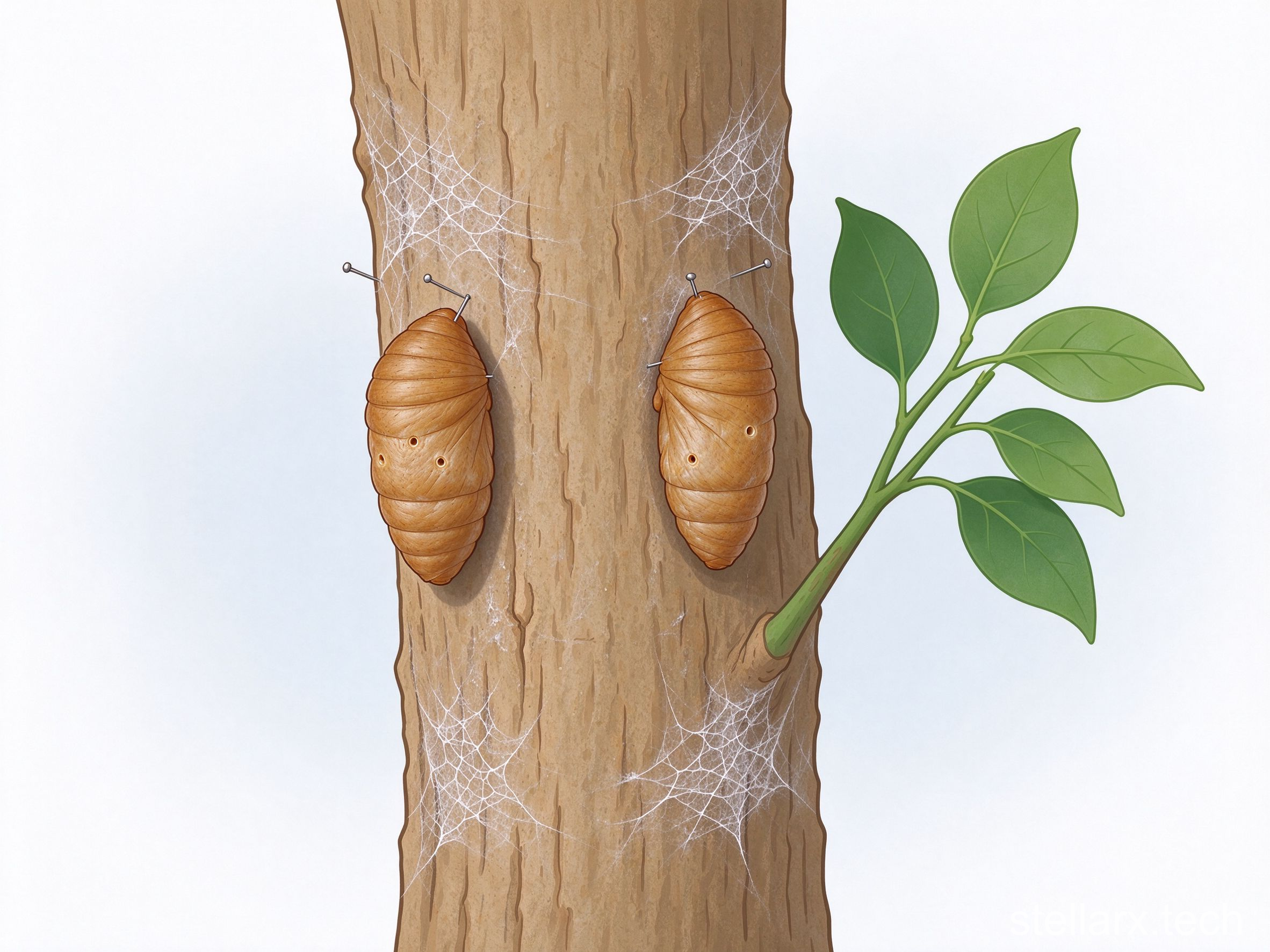
Even with the right timing, field releases suffer losses from weather and other organisms. Data from the forestry department in Luohe, Henan, shows that roughly 10% of released tussah pupae were wasted in 2018–2019, taken by ants and birds.
By every measure, Chouioia cunea is the top natural enemy of the fall webworm. Yet its path to the market still faces hurdles: live products are hard to store (so production is order-based), transport is inconvenient, prices are relatively high, and the operational bar is higher than spraying pesticides. One estimate puts the share of natural enemies in China's pest-control applications at under 1%. Biological control by "fighting bugs with bugs" can therefore only be a supplement, not the main measure.
Winning the War Takes a Full Toolbox
Successfully controlling a malignant invasive insect cannot rely on chemical pesticides or biological control alone. China now fights the fall webworm with a combination of measures: chemical pesticides, natural enemies, and — guided by the webworm's biology — manual removal of web nests, pheromone attractants, synthetic biological agents, and more. With this integrated management in place, the hope is that the rebounding webworm population will be fully contained and the "smokeless fire" finally put out.
Fun fact: The "Chouioia" in the wasp's Chinese name (Zhou's) honors Prof. Zhou Yao (Chou Yao), the renowned Chinese insect taxonomist and a founder of modern Chinese entomology. The discoverer and namer of Chouioia cunea, Prof. Yang Zhongqi, was Zhou's student — he named the wasp after his mentor as a mark of respect and remembrance.
Explore the Natural World Under the Microscope with WWAI
Want to see what a fall webworm larva actually looks like up close, or identify the caterpillars crawling through your neighborhood? WWAI is an AI-powered biology encyclopedia that answers your biology questions instantly — from species identification to ecological curiosities — and lets you observe real microscope slide specimens online. Just search "WWAI" in your app store and download it today.
\
References:
[1] Morris, R. F. (1972). Predation by wasps, birds, and mammals on Hyphantria cunea. The Canadian Entomologist, 104(10), 1581-1591.
[2] Nordin, G. L., Rennels, R. G., et al. (1972). Parasites and pathogens of the fall webworm in Illinois. Environmental Entomology, 1(3), 351-354.
[3] Yang, Z. Q., Wei, J. R., Wang, X. Y. (2006). Mass rearing and augmentative releases of the native parasitoid Chouioia cunea for biological control of the introduced fall webworm Hyphantria cunea in China. Biocontrol, 51(4): 401-418.
[4] 闫丰军, 郑泽玉, 苑芳义, 等. 山东日照地区美国白蛾发生规律、预测预报及防治历的研究[J]. 防护林科技, 2021(05): 40-42.
- Bill Gates Warns AI Could Kill a Billion People — and Says Self-Regulation Has Failed
- The "Textbook Diet": 7 Nutrition Rules Most Diet Advice Misses
- Flu Season Is Back: Why the Annual Flu Shot Is a Biology Lesson Worth Taking
- Matcha Benefits: What 3 Grams of Matcha Powder Actually Contains
- The 60-cm Long Egg Tart Is Delicious for 3 Bites — Then Sickeningly Rich. Here's the Biology
- Pepino Melon Is Sweet, Low-Calorie, and 94% Water — If You Buy It Ripe
- Old Phone to USB Drive: How to Turn a Dead Phone's Chip Into a Fast Flash Drive | yunpoly
- Trump Wants to Rename AI to "SI" — Because "Artificial" Makes Intelligence Sound Fake
- A 1 cm Thyroid Nodule Turned Out to Be Cancer While a Bigger One Was Fine — Here's the Biology
- Why Are Mysterious Round Holes Appearing on Parked Cars? The Culprit Is a Moth Larva

全部评论