Matcha Benefits: What 3 Grams of Matcha Powder Actually Contains
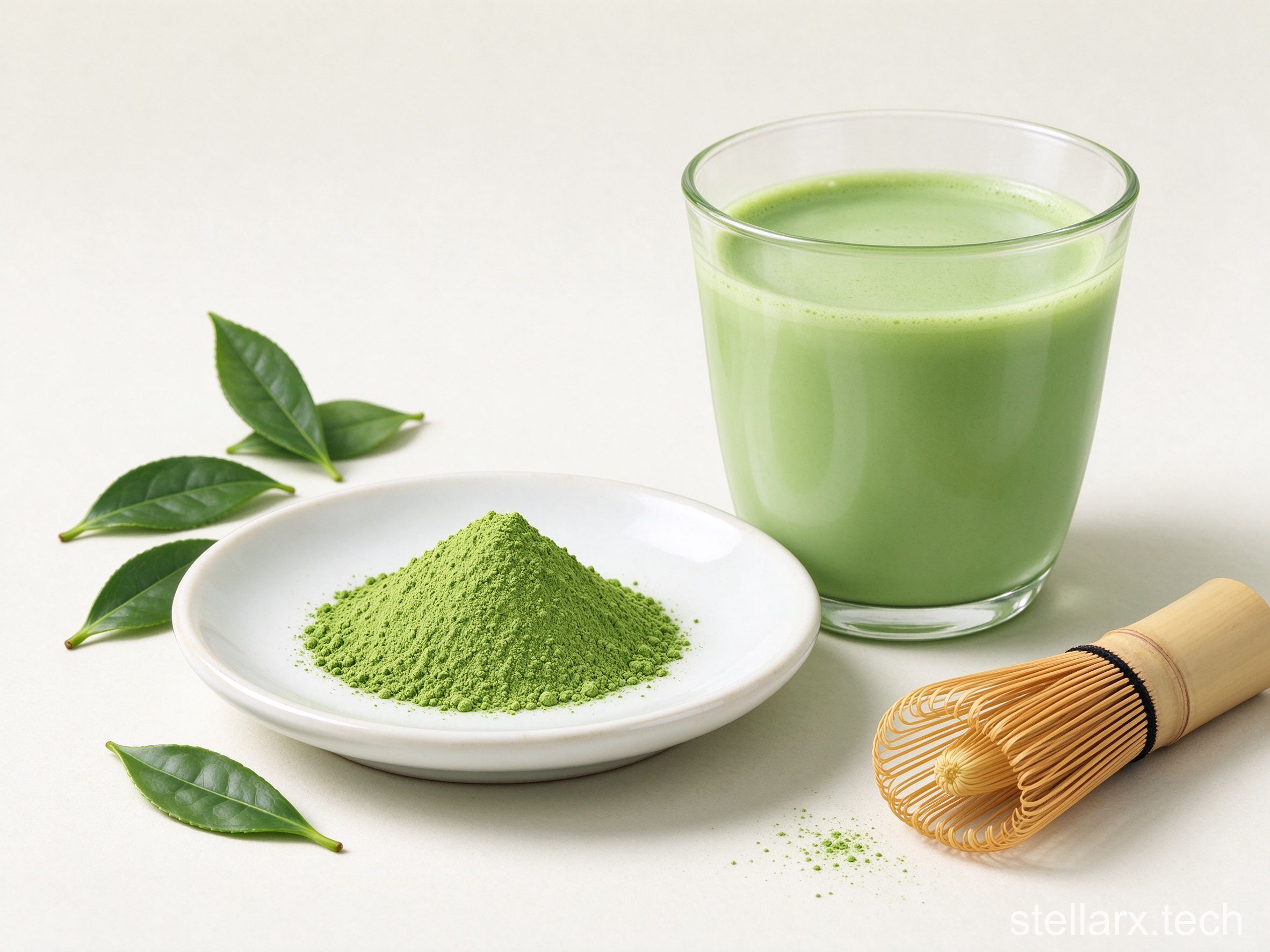
You want a drink that tastes rewarding but does not wreck your diet. Milk tea is sugar and cream; coffee after lunch risks a sleepless night; bottled sodas are mostly sweetener. That is why matcha — powdered green tea — has quietly taken over as the drink of the season, from Asia to Western café menus.
Matcha is not marketing fluff. One small packet (about 3 grams) carries roughly 3 kcal of energy, yet it delivers fiber, antioxidants, and vitamin K in amounts that are hard to match from everyday foods. Here is the biology behind the green powder.
What Matcha Actually Is
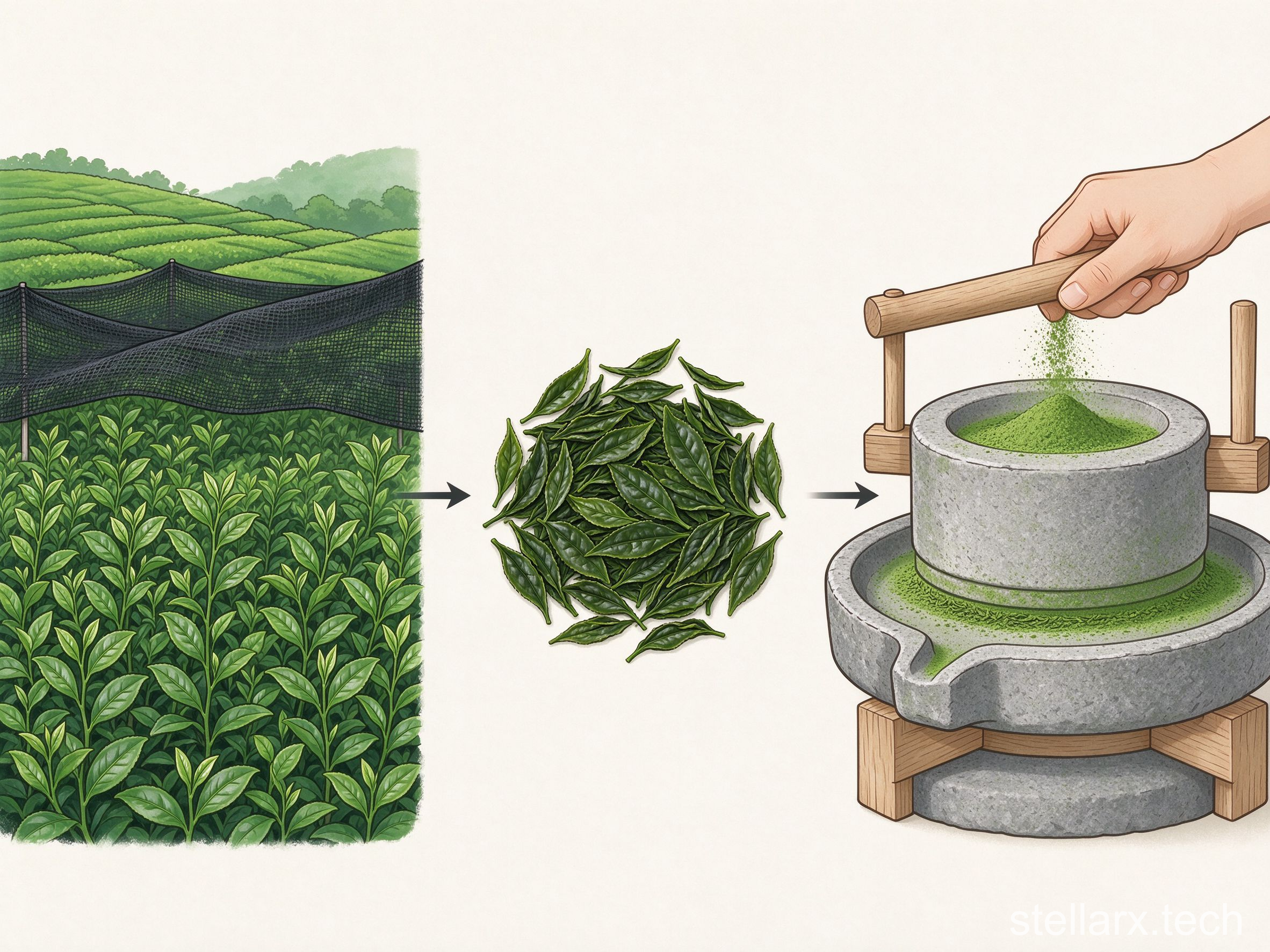
Matcha is made from tea leaves (Camellia sinensis) that are shade-grown for the final weeks before harvest, then steamed, dried, and stone-milled into a fine powder. The shade forces the plant to produce more chlorophyll and L-theanine — which is why matcha is so vividly green and noticeably more savory (umami) than regular green tea.
The critical difference from ordinary tea: you drink the whole leaf. With brewed tea, the leaves are discarded after steeping, taking most of the fat-soluble goodness — chlorophyll, beta-carotene, and other antioxidants — with them. With matcha, nothing is thrown away. Every gram of the leaf is eaten.
Three Things 3 Grams of Matcha Delivers
Fiber. Matcha powder is about half dietary fiber by weight. Two small packets (3 g) contribute roughly 1.7 g of fiber — a respectable dose for something that dissolves into a cup of water. Fiber feeds gut bacteria, supports regular digestion, and helps steady blood sugar.
Antioxidants. Green tea is already rich in catechins, and matcha is the concentrated form. The standout is EGCG (epigallocatechin gallate), whose concentration in matcha can reach levels reported at up to 137 times that of ordinary green tea. Because you consume the ground leaf rather than an infusion, you get the fat-soluble antioxidants that normally stay behind in the spent leaves.
Vitamin K. Matcha is an outlier here: about 2,960 micrograms of vitamin K per 100 g. Three grams covers roughly 87 micrograms — more than the adult daily recommendation of 80 micrograms. Vitamin K supports blood clotting, bone calcification, and normal nervous-system function, and deficiency is surprisingly common (estimates put it at 8–31% of healthy adults). In one randomized, double-blind, controlled trial, daily consumption of 3 g of matcha was associated with higher dietary vitamin K intake and improved cognitive-test scores.
The Green Color Is Chlorophyll Biology
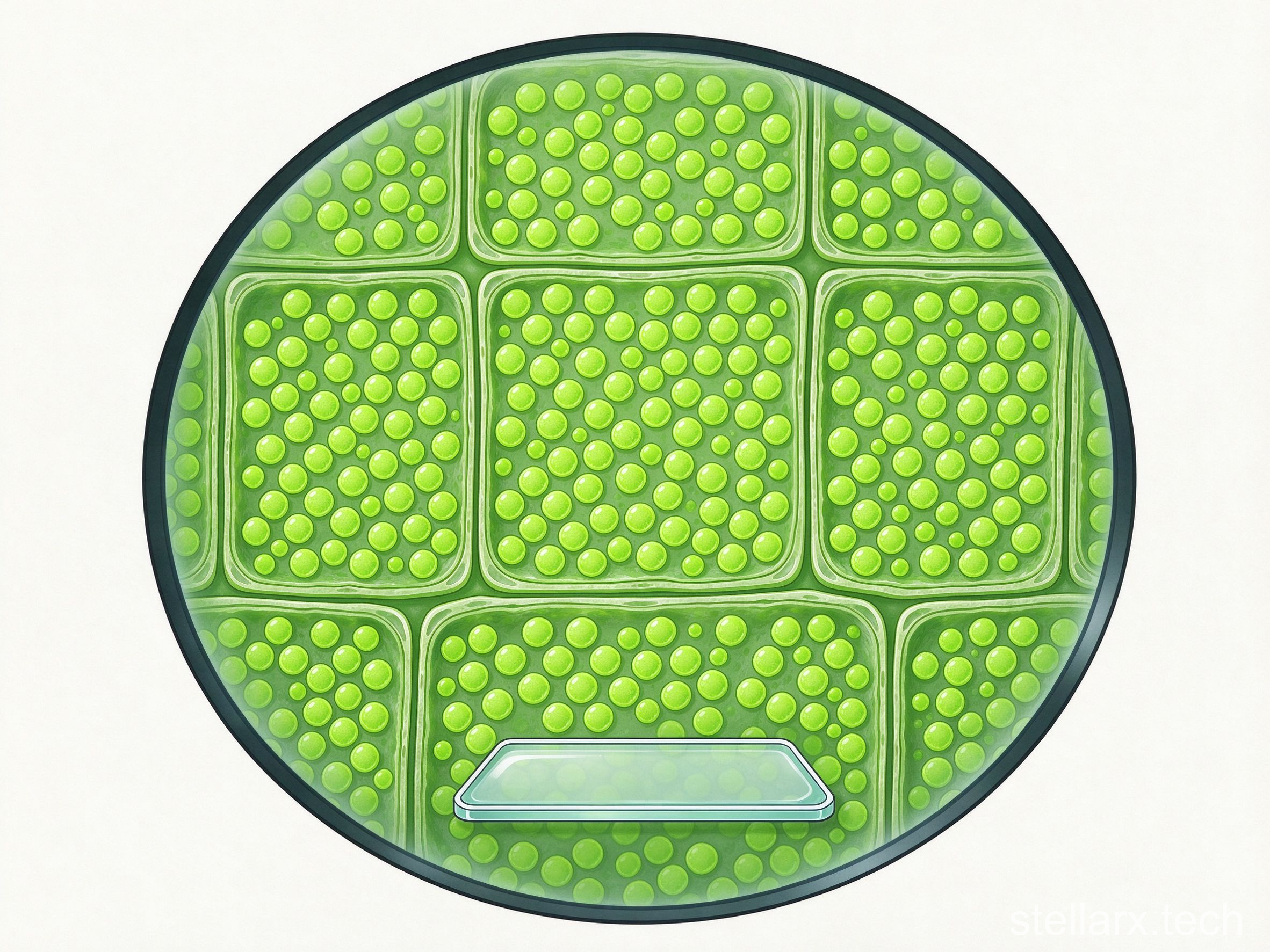
That signature jade color is not a dye. It is chlorophyll — the pigment inside the chloroplasts of leaf cells, the organelles where plants capture light energy. Shade-grown tea accumulates extra chlorophyll in its chloroplasts, and stone-milling preserves it intact.
Under a microscope, living plant leaves show this directly: rows of green cells, each packed with bright green chloroplasts moving within the cell. It is the same cellular machinery that powers photosynthesis — and the reason a cup of matcha looks the way it does.
One Caveat: Not Every "Matcha Drink" Is Matcha
The benefits above describe pure matcha powder. Many commercial "matcha lattes" and "matcha drinks" are mostly sugar, milk, and flavoring, with matcha as a tiny accent — or none at all. If your goal is the nutrition, check the ingredient list and choose products where matcha is an actual main ingredient.
Want to see the chloroplasts behind the green color with your own eyes? WWAI is an AI-powered biology encyclopedia that answers your biology questions instantly and lets you observe real microscope slide specimens online — including a living hydrilla leaf specimen where chloroplasts are clearly visible inside leaf cells. Search "WWAI" in your app store and download it today.
References:
[1] All illustrations are AI-generated.
[2] Nutrition data adapted from a public science article on matcha (Camellia sinensis powder) by a Chinese health research account, 2026-09-26.
- Bill Gates Warns AI Could Kill a Billion People — and Says Self-Regulation Has Failed
- The "Textbook Diet": 7 Nutrition Rules Most Diet Advice Misses
- Flu Season Is Back: Why the Annual Flu Shot Is a Biology Lesson Worth Taking
- Matcha Benefits: What 3 Grams of Matcha Powder Actually Contains
- The 60-cm Long Egg Tart Is Delicious for 3 Bites — Then Sickeningly Rich. Here's the Biology
- Pepino Melon Is Sweet, Low-Calorie, and 94% Water — If You Buy It Ripe
- Old Phone to USB Drive: How to Turn a Dead Phone's Chip Into a Fast Flash Drive | yunpoly
- Trump Wants to Rename AI to "SI" — Because "Artificial" Makes Intelligence Sound Fake
- A 1 cm Thyroid Nodule Turned Out to Be Cancer While a Bigger One Was Fine — Here's the Biology
- Why Are Mysterious Round Holes Appearing on Parked Cars? The Culprit Is a Moth Larva
全部评论