Bill Gates Warns AI Could Kill a Billion People — and Says Self-Regulation Has Failed
In an interview with NBC's Meet the Press, Bill Gates made a statement that sent a chill through the tech world: "Artificial intelligence is certainly powerful enough to cause an event that kills a billion people." His reasoning: there has never been a weapon more powerful than a malicious person armed with the latest AI tools.
The Microsoft co-founder — long one of tech's most stubborn optimists — has changed his tune. He says voluntary self-regulation is dead on arrival, and that governments must step in with mandatory safety guardrails and monitoring.
The New Threat Model: "We Assume the User Is Good"
Gates' core point is that the AI industry has built its safety thinking around a flawed assumption: that users mean well.
The risk scenarios he sketches are concrete rather than abstract:
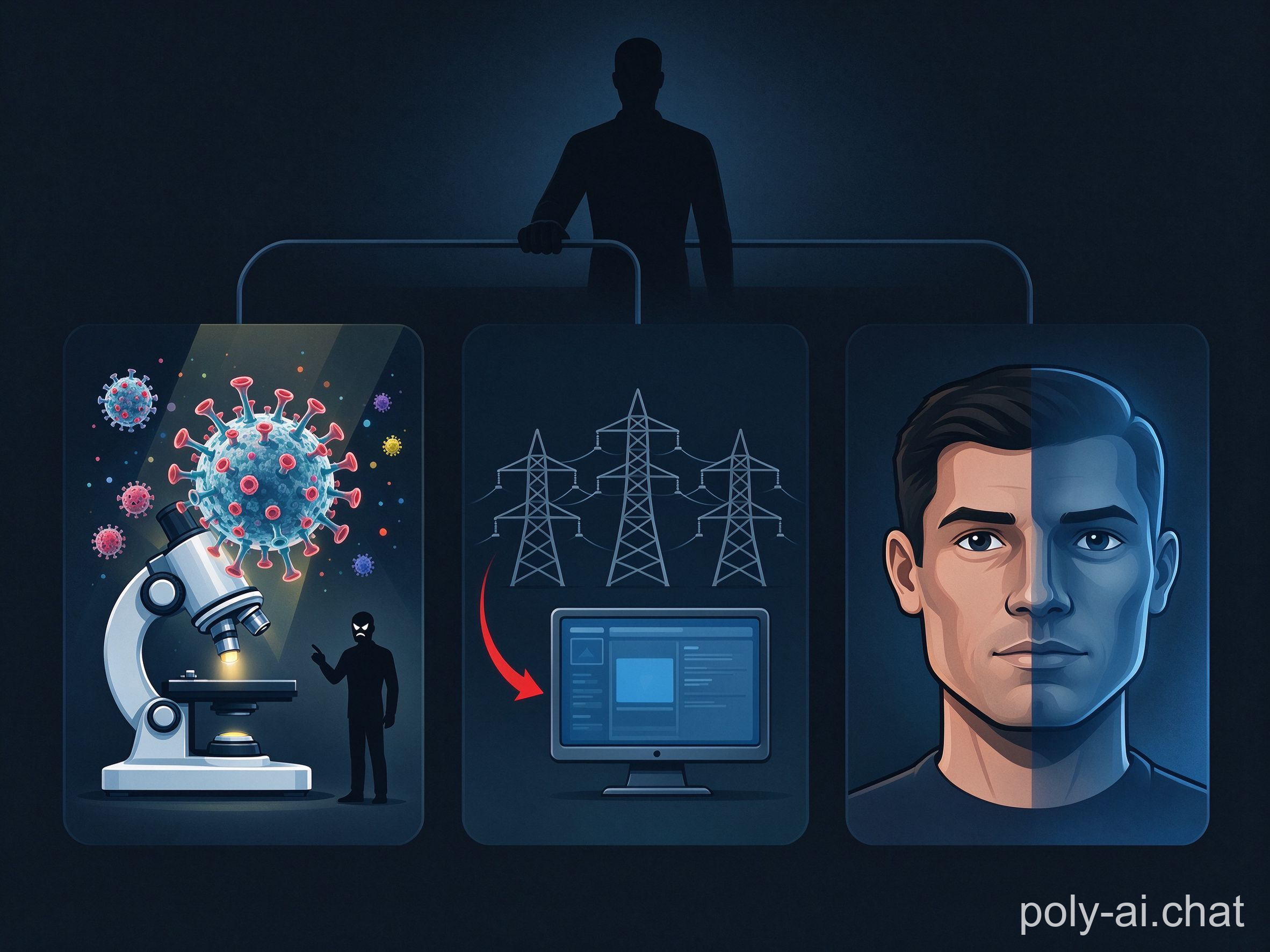
Biosecurity. Designing a supervirus once required a top-tier P4 lab and decades of interdisciplinary expertise. Today, a malicious person with basic biology knowledge could plausibly prompt an unconstrained AI into producing gene sequences for pathogens that evade existing vaccines.
Cyberattacks. AI can scan critical infrastructure — power grids, nuclear plants, financial settlement systems — for zero-day vulnerabilities in seconds, then launch automated, high-frequency attacks.
Deepfakes and cognition. Near-perfect synthetic video can trigger misjudgments with irreversible consequences. A Vatican AI advisor put the contrast starkly: nuclear weapons can physically destroy humanity, but generative AI that manipulates social content can destroy the ability of people to live together at all — splintering society without a single bomb.
A Month of Whiplash: Saving Lives and Warning of Deaths
Gates' position is simultaneously contradictory and lucid. On August 26, he published a long post on his personal blog, Gates Notes, arguing that on the current trajectory, a net-negative outcome from AI is highly likely — naming four failure modes: mass unemployment, cybersecurity collapse, bioterrorism, and AI itself spinning out of control.
Less than three weeks later, on September 14, the Gates Foundation announced it would spend $1 billion over two years applying AI to education and healthcare access.
A billion dollars to save lives with AI; a warning that AI could kill a billion people. The tension is not hypocrisy — it is the actual texture of the moment, holding the Promethean fire while knowing exactly what happens if it tips over.
The Same Week: The Pope and the Name Game
Gates is not alone in sounding alarms. On the same day as his interview, Pope Leo XIV, on the first day of a visit to France, warned President Macron in person that a "machine paradise" is invading everyday life — a world where algorithms think, decide, and feel for you, and where humanity quietly surrenders the traits that make it human: free will and ethical judgment. At UNESCO headquarters in Paris, he sharpened the paradox: computational systems are "arrogantly called intelligent."
And in the same window, Donald Trump — speaking at the UN General Assembly — proposed renaming artificial intelligence to "super intelligence," arguing the word "artificial" makes it sound fake.
Three of the most visible people on Earth, three different frames for the same technology: Gates sees existential risk requiring force; the Pope sees a threat to human nature requiring ethical education; Trump sees a branding problem requiring a name change. The disagreement itself is the story — AI has moved from a laboratory topic to a global political and existential agenda, argued at the highest levels of power.
References:
[1] Bill Gates interview with NBC News' Meet the Press: https://www.nbcnews.com/politics/politics-news/bill-gates-ai-companies-self-regulating-governments-monitoring-rcna599619
[2] Gates Notes essay, "A Turbulent AI Era and Critical Choices to Make": https://www.gatesnotes.com/a-turbulent-ai-era-and-critical-choices-to-make
[3] All illustrations are AI-generated.
- Bill Gates Warns AI Could Kill a Billion People — and Says Self-Regulation Has Failed
- The "Textbook Diet": 7 Nutrition Rules Most Diet Advice Misses
- Flu Season Is Back: Why the Annual Flu Shot Is a Biology Lesson Worth Taking
- Matcha Benefits: What 3 Grams of Matcha Powder Actually Contains
- The 60-cm Long Egg Tart Is Delicious for 3 Bites — Then Sickeningly Rich. Here's the Biology
- Pepino Melon Is Sweet, Low-Calorie, and 94% Water — If You Buy It Ripe
- Old Phone to USB Drive: How to Turn a Dead Phone's Chip Into a Fast Flash Drive | yunpoly
- Trump Wants to Rename AI to "SI" — Because "Artificial" Makes Intelligence Sound Fake
- A 1 cm Thyroid Nodule Turned Out to Be Cancer While a Bigger One Was Fine — Here's the Biology
- Why Are Mysterious Round Holes Appearing on Parked Cars? The Culprit Is a Moth Larva
全部评论