Pepino Melon Is Sweet, Low-Calorie, and 94% Water — If You Buy It Ripe
If you grew up watching the classic Chinese TV series Journey to the West, you probably had a vision of the pepino melon (人参果) — the legendary fruit so precious that even the Monkey King craved it. Then the real thing showed up in supermarkets: a pale, smooth, expensive fruit that tasted like absolutely nothing.
Countless buyers have been betrayed. Under the trending hashtag "the worst fruit you've ever eaten," pepino melon consistently ranks in the top three.
Here is the plot twist: the fruit is actually delicious. It is sweet, fragrant, and famously juicy — most people just buy it unripe.
What Is Pepino Melon, Biologically Speaking?
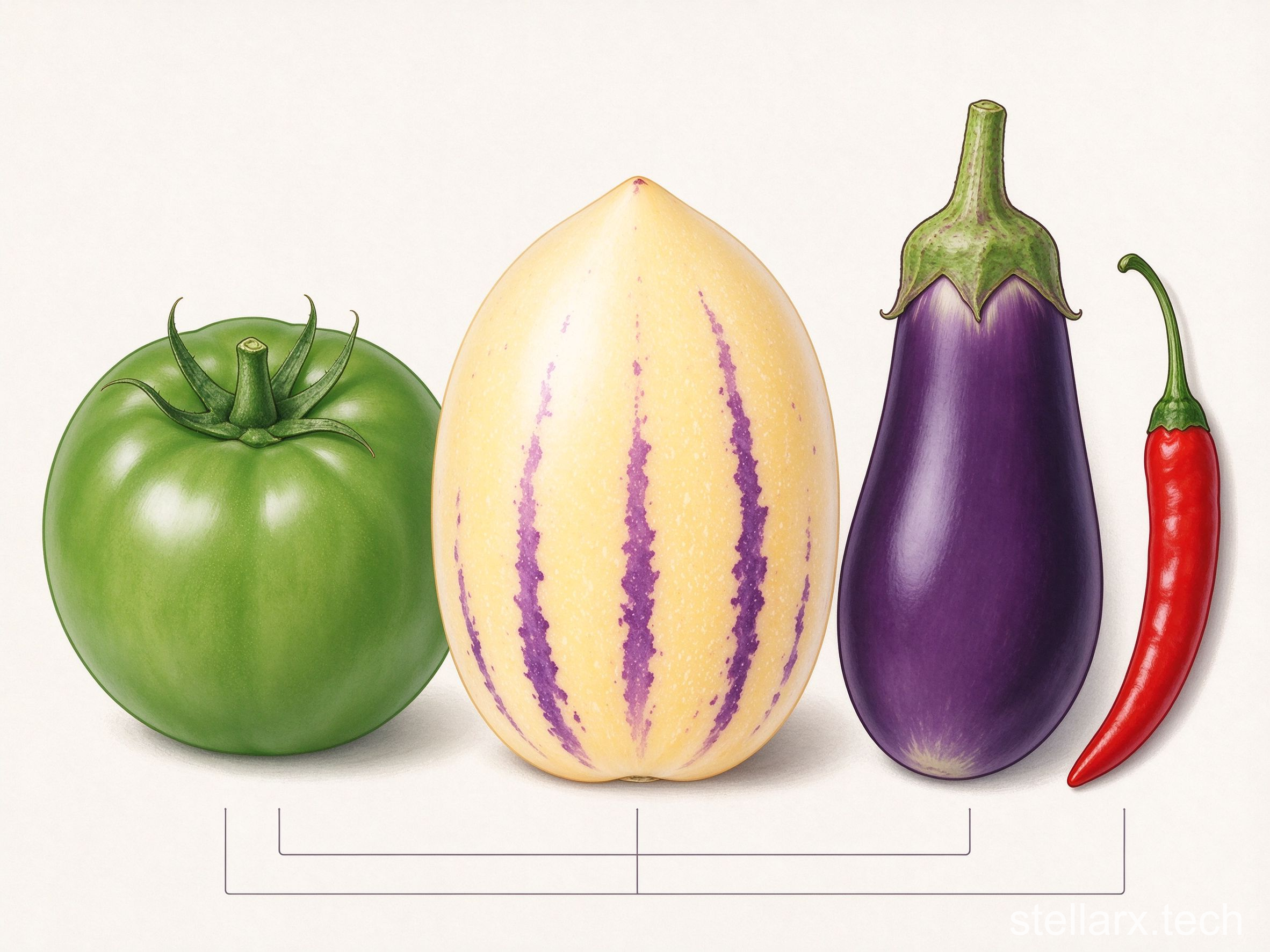
Pepino melon, also called pepino dulce or melon pear, is botanically Solanum muricatum — a member of the nightshade family (Solanaceae), the same family as tomatoes, eggplants, and peppers. Its Chinese common name literally means "fragrant-melon eggplant." That family connection matters: like a tomato, its edible flesh is a soft, water-packed tissue made of thin-walled parenchyma cells, each holding a large central vacuole full of water.
This is the microscopic secret of its famous juiciness. Bite through the thin skin and you burst a balloon of water — the vacuoles of thousands of parenchyma cells releasing at once. No wonder fans call it "the soup dumpling of fruits."
Why Does It Taste Like Nothing? Ripeness, Not the Fruit
The flavor of pepino melon is locked in at harvest — it barely improves after picking, unlike kiwifruit or mangoes, which ripen and sweeten off the vine. The fruit takes about 60 days from flower to maturity, with most sugar and aroma compounds accumulating in the final couple of weeks.
Commercially, growers often pick fruit early because a fully ripe pepino is thin-skinned and fragile: it bruises in transit and turns black in the cold. The result is what you find in stores: pale white fruit picked before it reached 8/10 ripeness. It will never get sweet on your counter, no matter how long you wait.
Signs of a good one: yellowish flesh and purple streaking — the classic markers of maturity. Some sellers also use post-harvest ripening tricks that turn the skin yellow and the flesh soft, but the flavor and sweetness stay flat.
Where it grows matters too. In China, the best pepino melons come from Shilin in Yunnan (round fruit) and Minqin in Gansu (elongated fruit) — climates with big day-night temperature swings and strong sunlight that push sugar and aroma accumulation.
The Nutrition Numbers That Made It a Diet Favorite
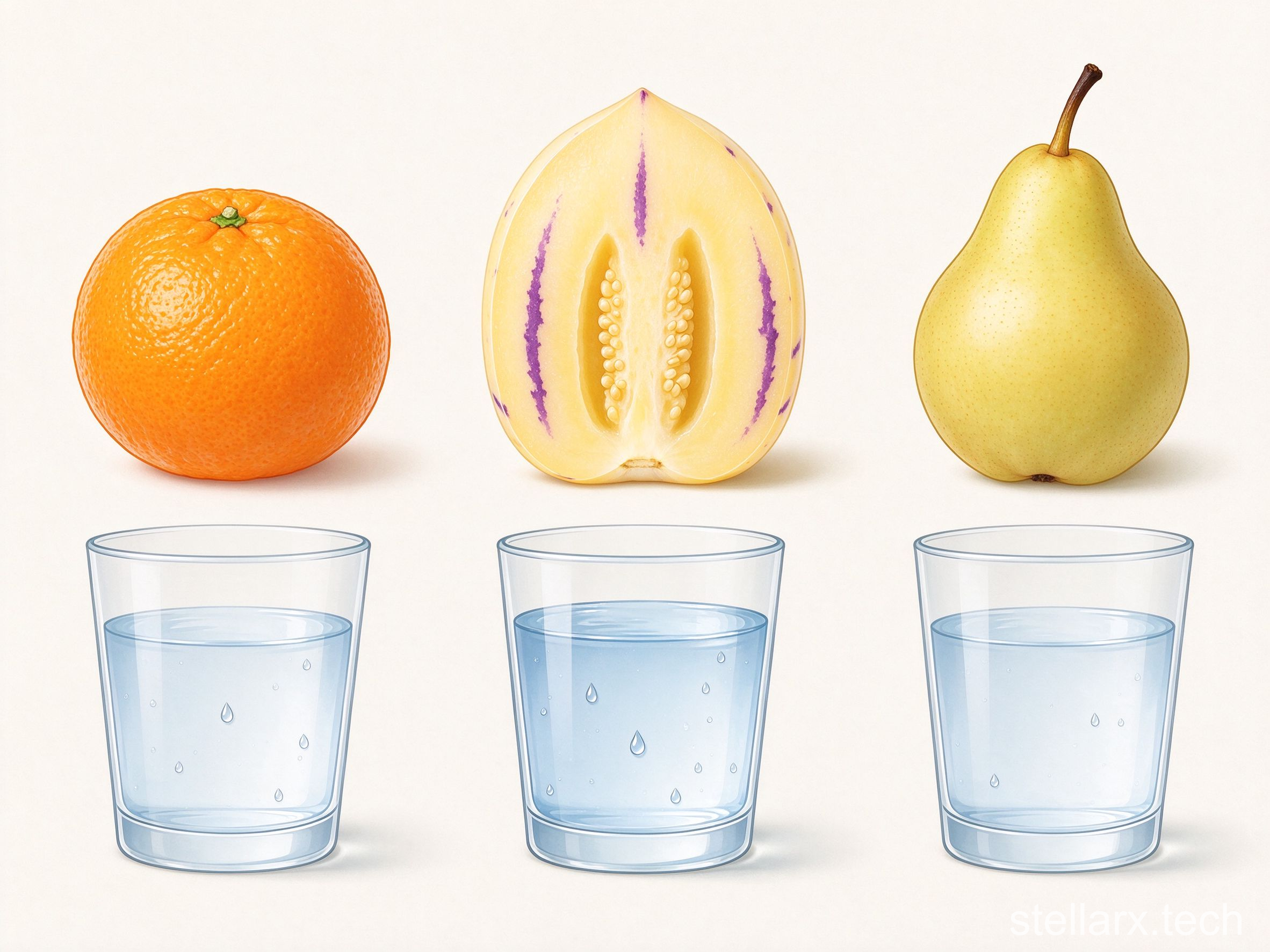
Compared with the usual autumn fruits, pepino melon is remarkably hydrating:
| Fruit | Water content |
|---|---|
| Pepino melon | 91–94% |
| Orange | 84–89% |
| Pear | 87–89% |
Its sugar content sits at just 4–8% — noticeably sweet without being cloying. For the same 100 kcal, you could eat 4 winter jujubes (88 g), 2–3 small pears (238 g), or a half-full portion of pepino melon (roughly 300–500 g).
It also carries a surprising amount of vitamin C — up to 98.5 mg per 100 g depending on origin and freshness, several times more than citrus and more than ten times a pear or apple. A few fruits cover your daily need.
Autumn is the natural peak season, which pairs nicely with dry weather: after a long day, a water-logged pepino melon is a genuinely hydrating snack.
The Microscopic View: Why "Juicy" Is a Cell-Level Story
That burst of juice is not magic — it is plant cell biology. The flesh of pepino melon, like tomato, is made of parenchyma cells with enormous water-filled vacuoles, surrounded by thin primary cell walls. Under a microscope, these cells look like a honeycomb of clear, tiled boxes — the structural reason a fruit that is over 90% water can still hold its shape.
Want to see exactly this under a microscope? WWAI is an AI-powered biology encyclopedia that answers your biology questions instantly and lets you observe real microscope slide specimens online — including the tomato pulp specimen, a fellow nightshade whose flesh shows the same large parenchyma cells and vacuoles you would see in a pepino melon. Search "WWAI" in your app store and download it today.
References:
[1] All illustrations are AI-generated.
[2] Nutrition data compiled from a public science article on pepino melon (Solanum muricatum) by a Chinese nutrition research account, 2026-09-26.
- Bill Gates Warns AI Could Kill a Billion People — and Says Self-Regulation Has Failed
- The "Textbook Diet": 7 Nutrition Rules Most Diet Advice Misses
- Flu Season Is Back: Why the Annual Flu Shot Is a Biology Lesson Worth Taking
- Matcha Benefits: What 3 Grams of Matcha Powder Actually Contains
- The 60-cm Long Egg Tart Is Delicious for 3 Bites — Then Sickeningly Rich. Here's the Biology
- Pepino Melon Is Sweet, Low-Calorie, and 94% Water — If You Buy It Ripe
- Old Phone to USB Drive: How to Turn a Dead Phone's Chip Into a Fast Flash Drive | yunpoly
- Trump Wants to Rename AI to "SI" — Because "Artificial" Makes Intelligence Sound Fake
- A 1 cm Thyroid Nodule Turned Out to Be Cancer While a Bigger One Was Fine — Here's the Biology
- Why Are Mysterious Round Holes Appearing on Parked Cars? The Culprit Is a Moth Larva
全部评论