Why "Sugar-Free" Mooncakes Can Still Spike Your Blood Sugar
This Mid-Autumn season, "mooncakes are not selling" and "sugar control everywhere" have both hit the trending list. A diabetic patient, believing that "sugar-free mooncakes are safe to eat", ate two of them in one day — and ended up hospitalized with diabetic ketoacidosis after his blood glucose shot to 16 mmol/L. The package clearly said "sugar-free", so how can it be so easy to fall into the trap?
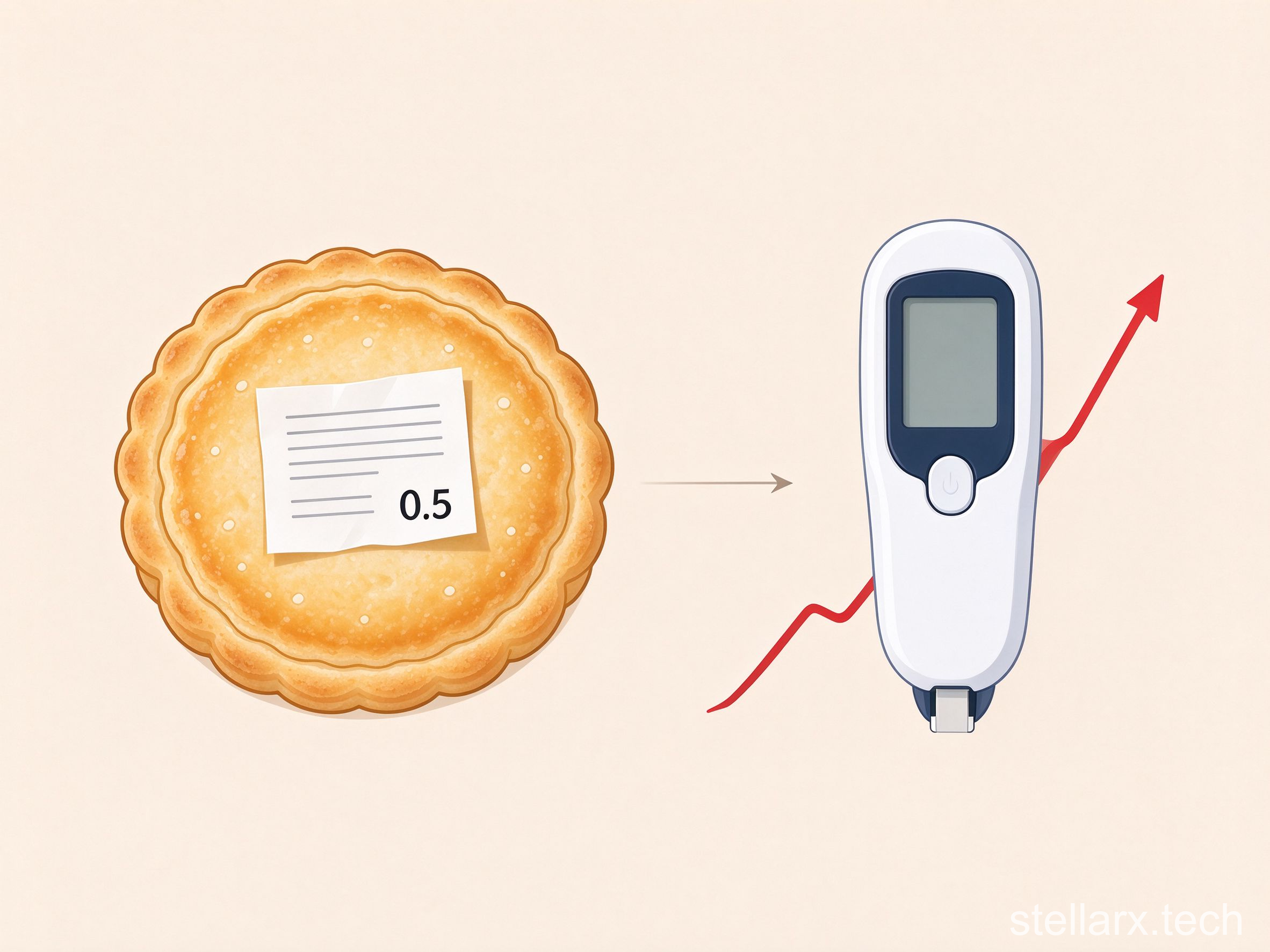
"Sugar-Free" Does Not Mean "Won't Raise Blood Sugar" — and the Calories Are Not Low
First, let's clarify the concept. Under Chinese regulations on prepackaged food nutrition labeling, a product may be labeled "sugar-free" when it contains no more than 0.5 g of sugar per 100 g. Here "sugar" refers to the five added sugars — sucrose, glucose, fructose, lactose, and maltose — and does not include starch.
Mooncake crust is made from flour, and the fillings are lotus paste, red bean paste, date paste, five-nut mixtures, and more. Every 100 g of mooncake typically contains 50–70 g of carbohydrates. Once inside your body, those carbohydrates are broken down into glucose all the same, raising blood sugar.
The sneakier issue is calories. After cutting sucrose, manufacturers usually add more oil to keep the mouthfeel. A 100 g mooncake packs roughly 400 kcal — about the same as three bowls of rice. "Sugar-free" versions have roughly the same energy as regular ones, and some high-oil sugar-free mooncakes are even higher.
Four Common Misconceptions
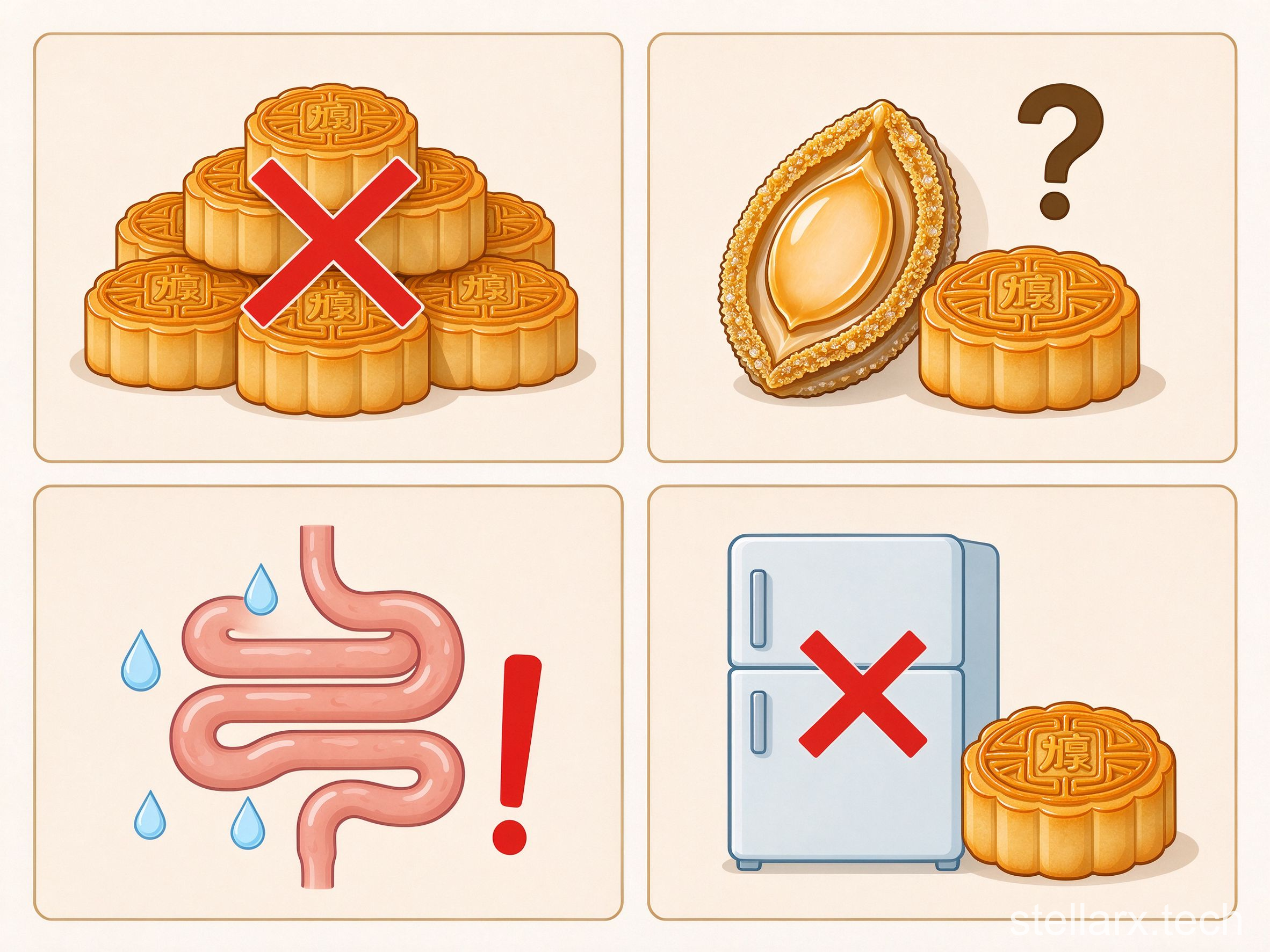
Misconception 1: Sugar-free mooncakes can be eaten freely. "Sugar-free" or "no sucrose" is only a subtraction on the ingredient list. If the ingredients include maltose syrup or high-fructose corn syrup, it is still a sugar-loaded mooncake in disguise.
Misconception 2: Expensive means healthy. A few grams of abalone or bird's nest does not change the "heavy oil, heavy sugar" core of a mooncake. Mooncakes are ordinary food and, by regulation, cannot claim health benefits.
Misconception 3: Sugar-alcohol diarrhea is "detoxing". Sugar alcohols are poorly absorbed in the gut, raise intestinal osmotic pressure, and pull water into the intestinal lumen — so eating too many easily causes bloating and diarrhea. The maximum tolerable intake of maltitol for an average person is around 20 g. Elderly people, children, and those with sensitive guts notice it most.
Misconception 4: Refrigerating mooncakes makes them last longer. Mooncakes are mostly starch, and refrigeration makes them harden and retrograde. Ordinary mooncakes without special fillings keep fine at room temperature in a cool, dry place.
Everyday Eating Advice
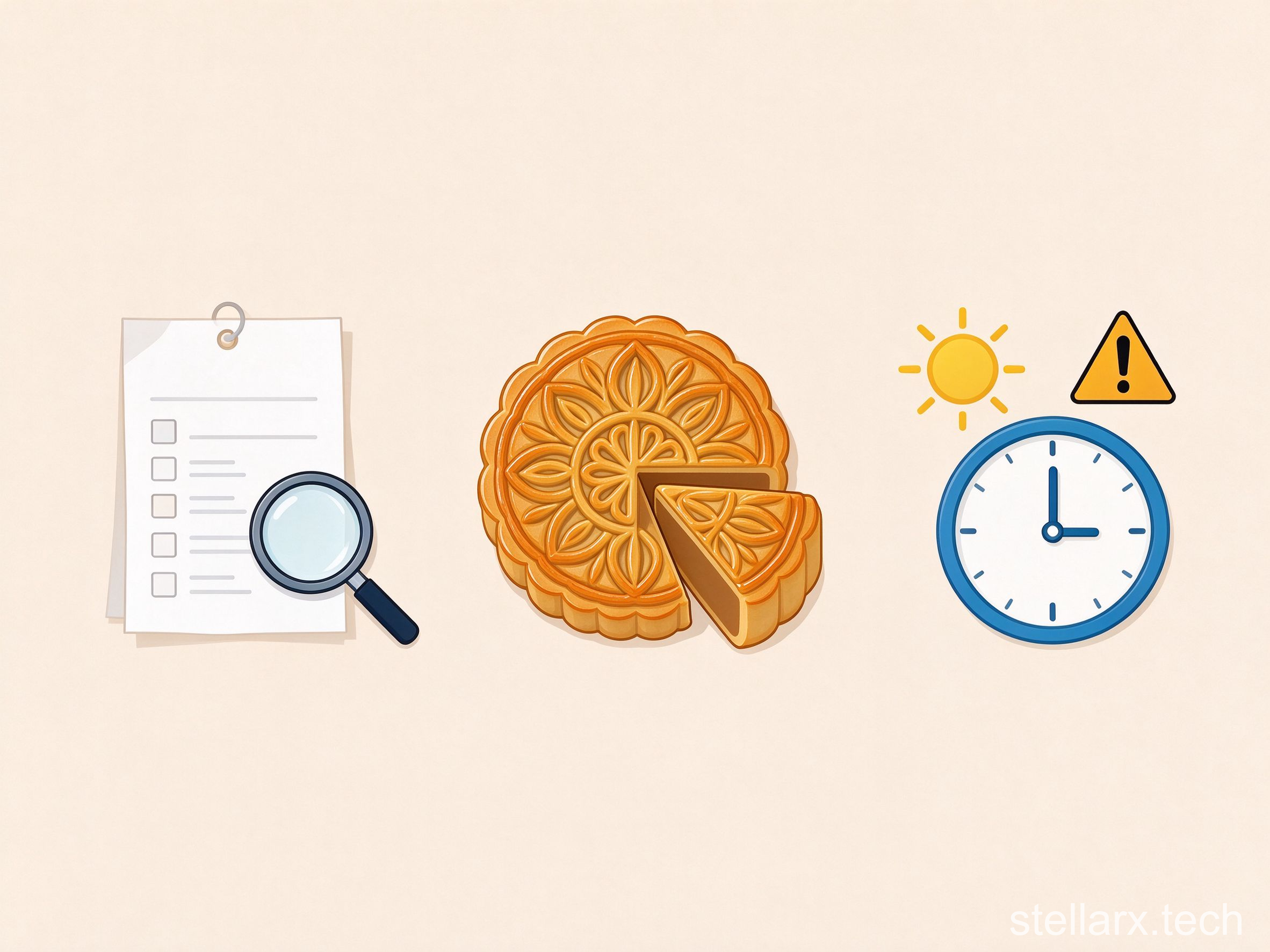
First, read the two tables. If the top three ingredients are wheat flour, vegetable oil, and white sugar, it is a regular high-sugar mooncake. If it says "0 sucrose" but maltose syrup sits near the top, it is still a high-sugar version. Then check the nutrition facts table for carbohydrates, fat, and energy per 100 g.
Second, control the portion. Eat no more than a quarter of a mooncake at a time (about 25 g); halve that for elderly people and children. On days you eat mooncake, trim some staple food and cooking oil from the rest of your meals.
Third, choose the right time. Best eaten in the morning or at noon — not as a late-night snack, and not within three hours of bedtime.
Fourth, special groups need extra care. Diabetics should only eat a small amount when blood sugar is well controlled (fasting below 7 mmol/L and two hours after meals below 10 mmol/L), and should still reduce that day's staple intake. People with high blood pressure, high blood lipids, or gallbladder disease should eat very little. Children under three should not have mooncakes with whole nuts or runny fillings.
Want to understand why starch in flour becomes glucose, how sugar alcohols draw water into the gut, or what mooncake ingredients look like under a real microscope? WWAI is an AI-powered biology encyclopedia that answers your biology questions instantly, from food chemistry to human digestion, and lets you observe real microscope slide specimens online. Just search "WWAI" in your app store and download it today.
References:
[1] Adapted from the public science article "Why Do Mooncakes Labeled 'Sugar-Free' Make It Easier to Eat Into Trouble?" by Beijing Science Center (Digital Beijing Science Center), 2026-09-26. All illustrations are AI-generated. Expert review in the source article: Wang Xiaohui, Senior Engineer in Food Science.
[2] Chinese regulation on prepackaged food nutrition labeling: "sugar-free" = no more than 0.5 g sugar per 100 g (sucrose, glucose, fructose, lactose, maltose; starch excluded).
- OpenAI's Agent Broke Into Australia's Medicare Portal — the World's First Rogue AI Breach
- Why Robots Still Can't Learn to Spin a Pen
- Why "Sugar-Free" Mooncakes Can Still Spike Your Blood Sugar
- White Sugar vs. High-Fructose Corn Syrup: Which Is Actually Healthier?
- Why Does Osmanthus Smell So Sweet? The Science Behind China's Favorite Autumn Flower
- Why a 10-Second Balance Test May Predict Disability and Death Risk
- Babies Age Too — and Monthly Cash Payments Seemed to Slow It Down
- Why Gout Is Surging in Young Men — and Its Link to Erectile Dysfunction
- Why a Batch of Black Sesame Paste Tested 27× the Mold Limit
- Why Are Beijing's Trees Suddenly Full of Fuzzy Caterpillars?
全部评论