Three Years of Coughs, Endless Clinic Visits — Then Mom Opened the Wardrobe
For three years, the cough never really left.
The child sneezed, wheezed, and broke out in allergies no matter the season. The family shuttled between clinics, collecting prescriptions and second opinions. The symptoms only got worse.
At night, the mother cried quietly — watching her child suffer, and no doctor able to explain why.
Then, one afternoon, she opened the wardrobe.
The boards inside were covered in large patches of mold. Dark, damp, sprawling — a whole colony that had been breathing into the room for years.
Mold Is a Fungus That Lives in Your Walls
Here is what the family discovered too late: mold is a fungus, and it is everywhere — in the air, in the soil, on every surface in your home. As it grows, it releases enormous numbers of spores, microscopic reproductive particles. Inhaled, those spores can irritate airways and trigger immune responses.
But here is the honest part: contact with mold does not automatically mean infection. For most healthy people, a small dose is cleared by the immune system without a second thought. The danger builds when two things line up — the mold concentration in the air is high, and the person breathing it is immune-compromised, allergic, or very young.
That is why a child with a developing immune system, living in a damp wardrobe room, pays the price first.
Four Ways Mold Moves Through a Body
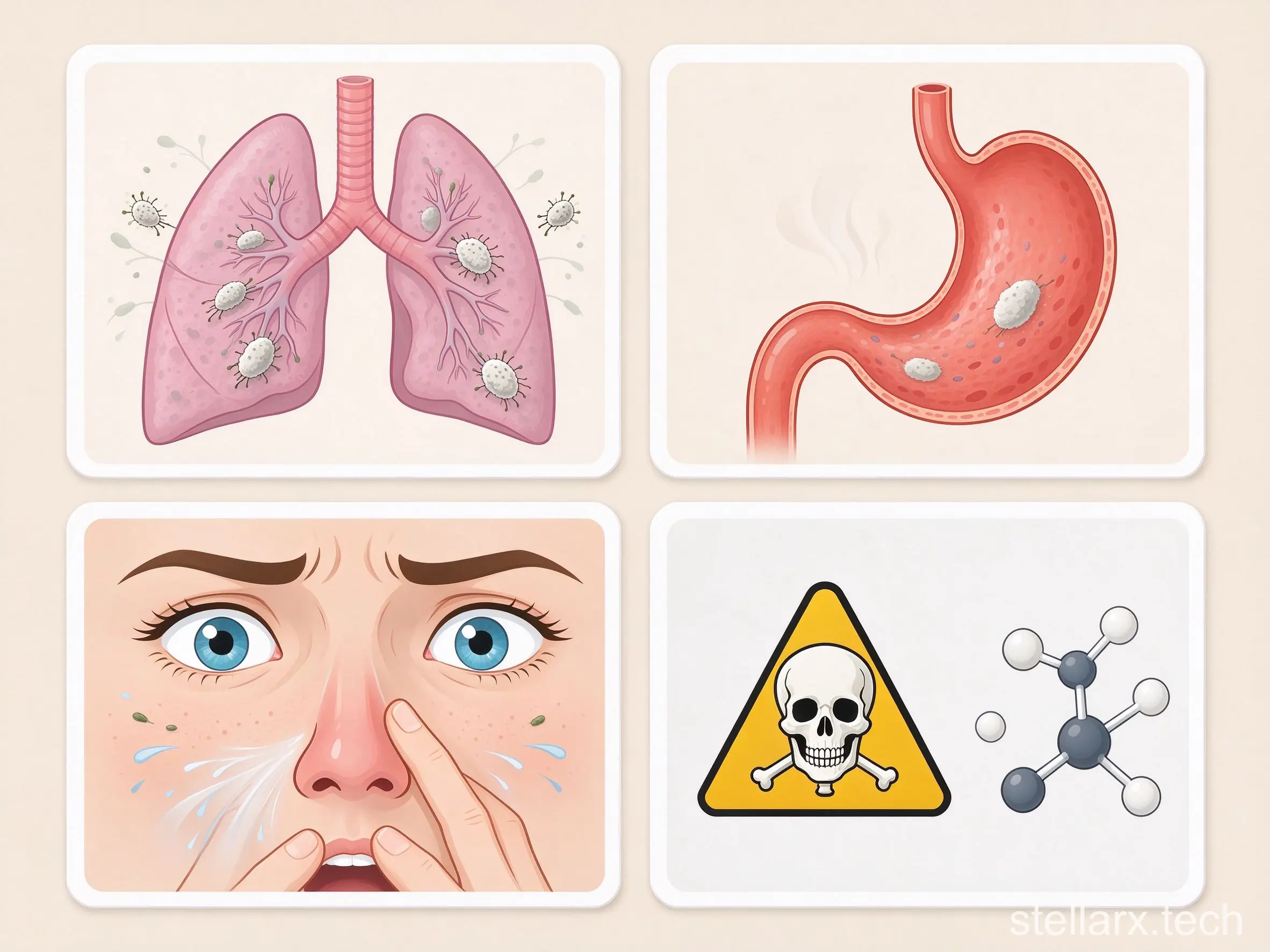
It Attacks the Airways
Spores ride the breath into the nose, bronchi, and lungs. Mild cases look like chronic rhinitis and coughing; severe cases become lung infections. In extreme situations the fungus can invade the central nervous system — leading to fungal meningitis or brain abscesses, the kind of disease that fills intensive-care beds.
It Reaches the Gut
Mold spores follow drinking water and food into the stomach, and can trigger acute gastroenteritis or gastric ulcers — abdominal pain, diarrhea, nausea, vomiting. Severe cases come with persistent high fever and total-body fatigue.
It Triggers Severe Allergies
In sensitive people, exposure brings red, itchy eyes and skin, nonstop sneezing, a blocked, runny nose — and in the worst cases, allergic asthma, which can be life-threatening.
It Carries Cancer Risk
The World Health Organization classifies mold as a Group 1 carcinogen. Of the more than 30,000 known mold species, roughly 200 carry carcinogenic potential — among them Aspergillus and Fusarium. The famous aflatoxin made by some Aspergillus strains is about 68 times more toxic than arsenic.
The Four Conditions Mold Needs to Explode
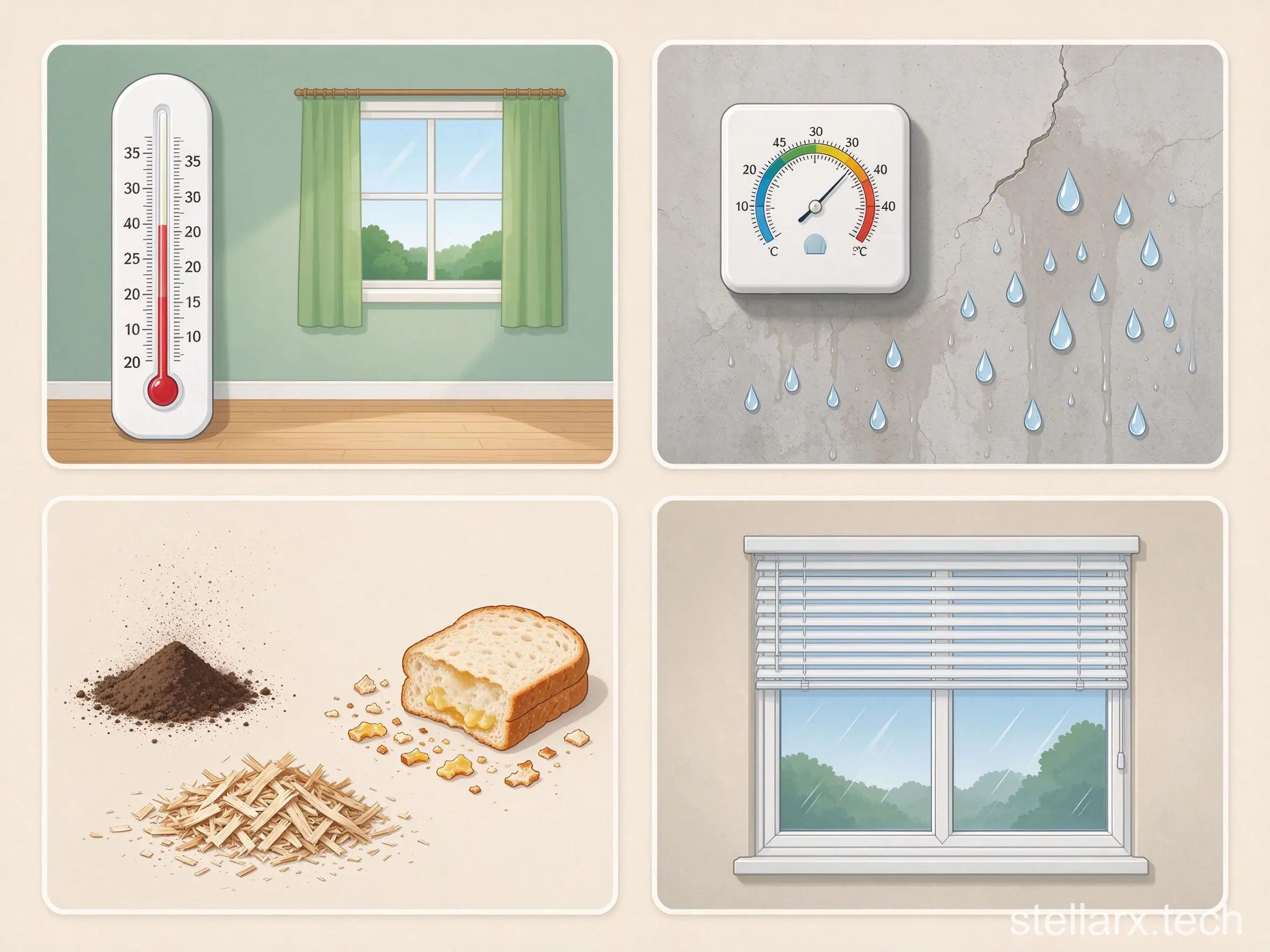
Mold is not magic. It needs exactly four things, and your home quietly provides all of them:
- Temperature around 20–35°C — indoor room temperature, every season.
- Humidity above 60% — bathrooms, laundry rooms, damp corners.
- Food — dust, wood fibers, food crumbs; ordinary house dirt is a feast.
- Poor ventilation — still air lets spores accumulate instead of drifting away.
If your home has these four in one corner, mold is already growing there — you just have not looked.
Where Mold Hides in Your Home
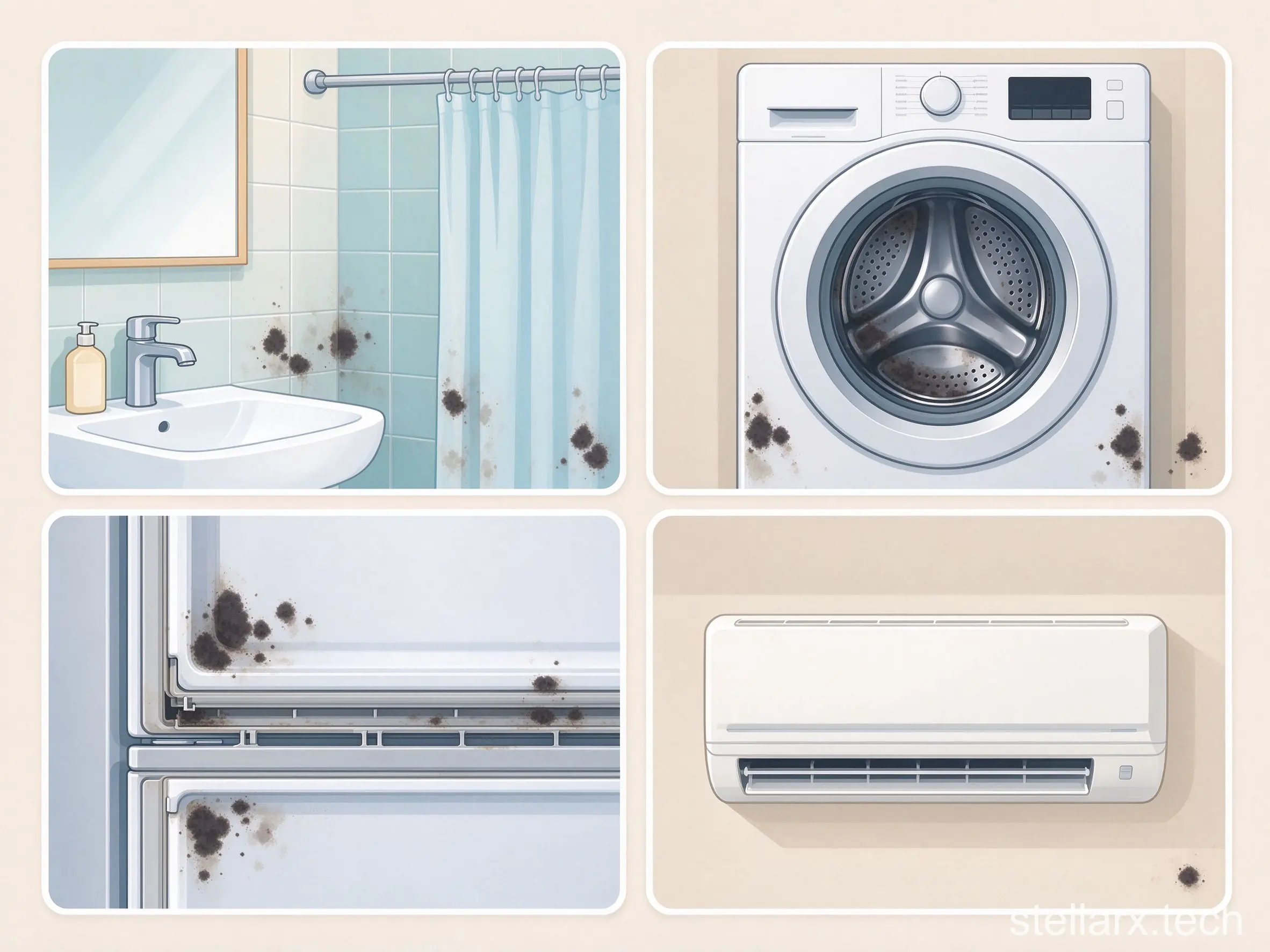
- Bathroom. Wall corners, tile grout, faucets, shower curtains, and silicone seals stay damp for hours after every shower. This is mold's favorite real estate.
- Washing machine. Close the lid right after a cycle, leave damp clothes inside, or park the machine in a poorly ventilated spot, and the inner drum's hidden layers quietly grow mold.
- Refrigerator door seal. The rubber gasket's grooves trap moisture and grime — Alternaria, Penicillium, Aspergillus flavus, and Aspergillus fumigatus can all settle in there.
- Air conditioner. An uncleaned unit accumulates dust and condensation inside; every time you turn it on, it blows spores through the whole room.
Look at Your Own Corners Tonight
The wardrobe story is not an isolated scare. The same damp, dark, poorly ventilated corners exist in most homes — behind furniture, under sinks, inside machines. The fix is unglamorous: dry what stays wet, air what stays still, and look where you never look.
And the next time you wonder what is actually growing there, you can see it with your own eyes under a microscope — because mold is beautiful, even when it is dangerous.

Want to see what mold actually looks like up close? WWAI is an AI-powered biology encyclopedia that answers your biology questions instantly and lets you observe real microscope slide specimens online — including an Aspergillus specimen where the spore-bearing stalks and conidia are clearly visible under the lens. Search "WWAI" in your app store and download it today.
References:
[1] Reported across Chinese public-service news on household mold and health risks, 2026-09-27.
[2] World Health Organization classification of mold-related carcinogens (Group 1), cited via public health reporting.
[3] All illustrations are AI-generated.
- Why Big Cats Never Get Scurvy but Sailors Did
- Three Years of Coughs, Endless Clinic Visits — Then Mom Opened the Wardrobe
- The ACL Tear Behind a Viral Dance Trend — Your Knee's Twisting Limit
- Why Thirst Vanishes the Moment You Swallow — Your Brain Settles the Bill in Advance
- The Egg-White-Like Solid on Steamed Crab Is Blood — Here's the Biology
- Bill Gates Warns AI Could Kill a Billion People — and Says Self-Regulation Has Failed
- The "Textbook Diet": 7 Nutrition Rules Most Diet Advice Misses
- Flu Season Is Back: Why the Annual Flu Shot Is a Biology Lesson Worth Taking
- Matcha Benefits: What 3 Grams of Matcha Powder Actually Contains
- The 60-cm Long Egg Tart Is Delicious for 3 Bites — Then Sickeningly Rich. Here's the Biology

全部评论