The ACL Tear Behind a Viral Dance Trend — Your Knee's Twisting Limit
A short clip of a "step-back" move from Anhui flower-drum dance went viral, and thousands of fans started copying it. Days later, orthopedic and sports-medicine clinics in several cities reported a wave of young patients with the same story: no collision, no fall — just a sharp twist on a planted foot, a muffled "pop" in the knee, swelling, and a diagnosis of cruciate ligament sprain, some with partial tears.
The dance itself is not the problem. The problem is what the knee is asked to do — and what most of us don't know about its anatomy.
The Knee's "Seatbelt": Cruciate Ligaments and Menisci
The knee is where the femur (thigh bone) meets the tibia (shin bone), with the patella (kneecap) gliding in front. Stability is not built into the bones — it comes from soft tissue. Inside the joint, two cruciate ligaments cross each other in an X: the anterior cruciate ligament (ACL) and the posterior cruciate ligament (PCL). They act like a seatbelt, stopping the shin from sliding forward or backward against the thigh bone. Between the bones sit two C-shaped menisci — shock-absorbing cartilage pads that spread load across the joint.
Ligament tissue is tough but poorly supplied with blood. That is why a torn ACL rarely heals on its own: the cells simply do not get the repair materials they need.
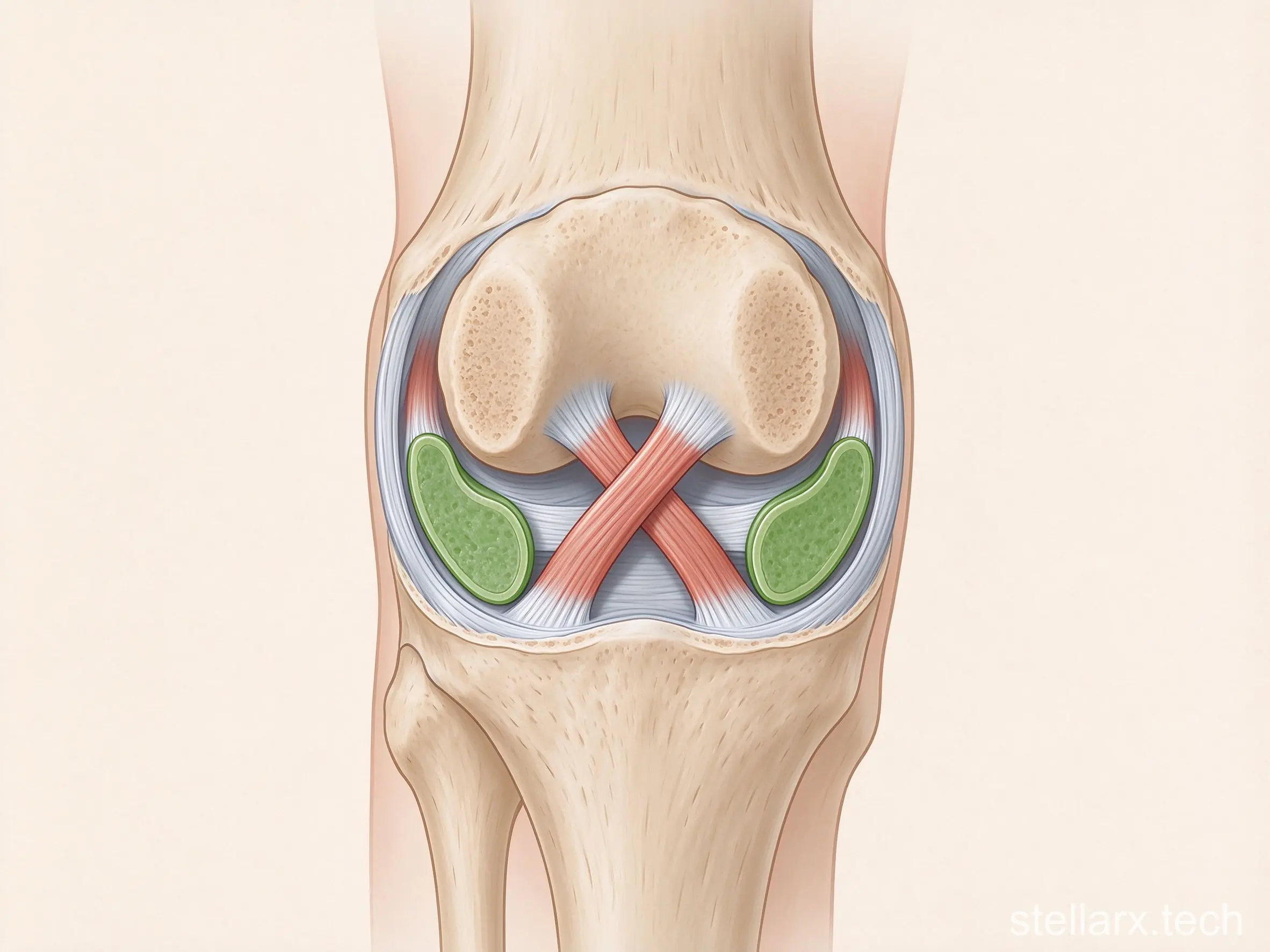
Why a Planted Foot + Sudden Twist Tears the ACL
Here is the physics behind the "step-back" injuries. The viral move looks simple: feet planted, upper body whips around, center of mass shifts sharply. That combination forces the knee into hyper-rotation beyond its safe range. The femur rotates over a locked tibia, and the shear force concentrates on the ACL — a non-contact ACL tear, the same mechanism sports doctors describe for pivoting athletes.
Professional dancers do not get hurt doing this because they hold their center of mass with their core and leg muscles; amateurs copy the surface pose, skip the warm-up, and let weak stabilizing muscles hand the whole load to the ligament. One sudden twist can stretch or tear the "seatbelt."
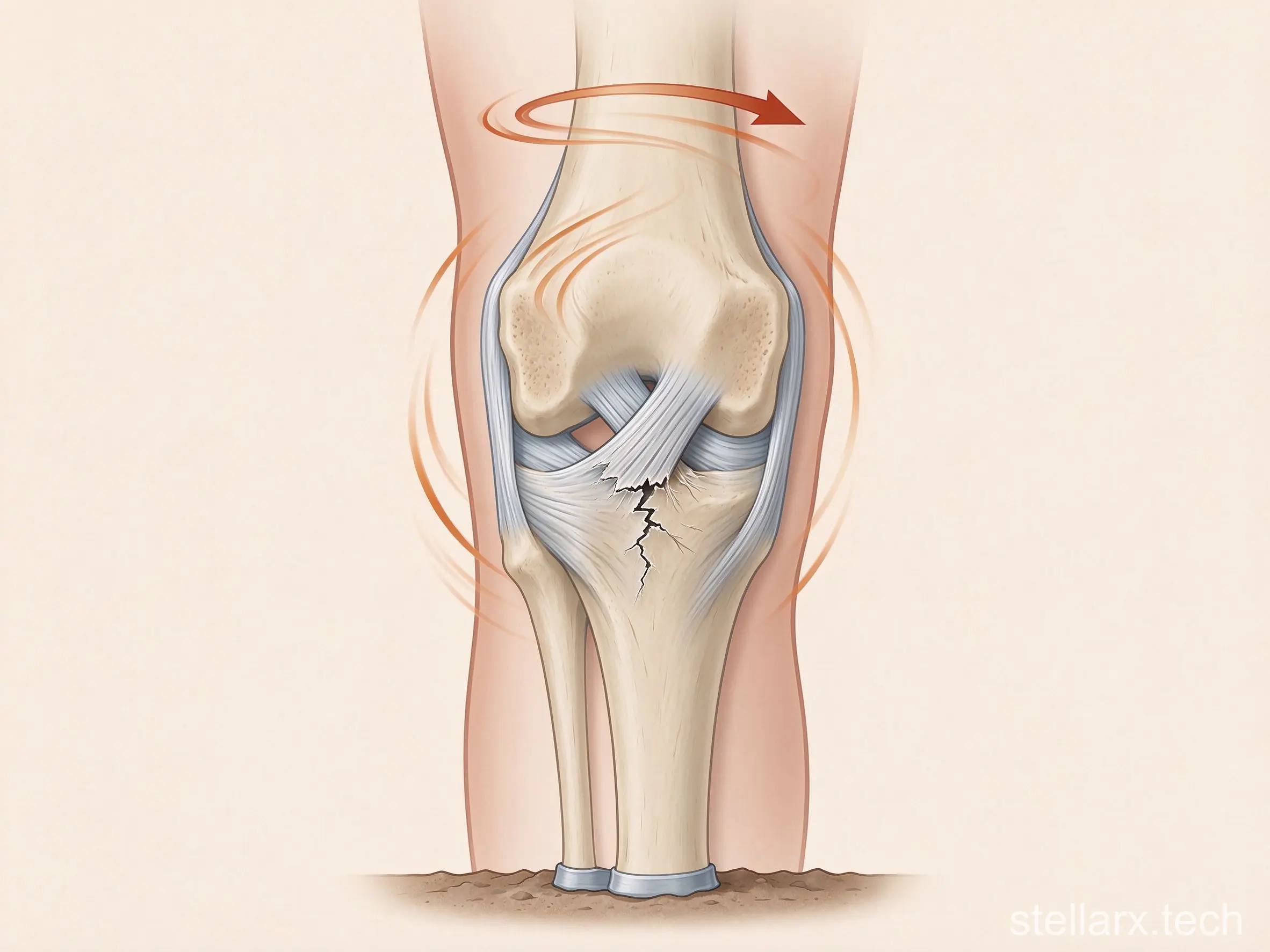
Other Viral Challenges, Same Knee Physics
The same anatomy explains the other challenges circulating online:
- The chair challenge — legs wedged into armrests or head into a plastic stool: no knee torque, but people routinely get stuck, and wrenching free strains the joint.
- The tree-leg-wrap challenge — legs twisted around a pole like a rope: body weight locks the knee, hip, and ankle in a compressed, rotated position, straining ligaments and menisci.
- The "lying fish" challenge — a Peking-opera pose of deep knee flexion under load with rotation: the meniscus and ligaments take huge shear forces, risking meniscal tears, ligament injury, or even patellar dislocation.
The knee allows only a small amount of rotation. Stack deep bending, weight, and twisting, and something gives — usually the soft tissue, not the bone.
Four Things That Actually Protect Your Knees
- Watch your weight. The knee is the body's main load-bearing joint: every extra 5 kg of body weight adds roughly 15 kg of load on the knee. Long-term overload accelerates cartilage wear and joint degeneration.
- Balanced diet for calcium and vitamin D. Milk, fish, eggs, and soy products cover the needs of healthy adults. Postmenopausal women, people with osteoporosis, and older adults with poor absorption should take calcium and vitamin D supplements under medical guidance — and get sunlight.
- Keep the joint warm. Cold seasons: thermal leggings or knee pads. Summer air-conditioning and fans can chill the knee too; a light blanket over the knees helps.
- Avoid long fixed postures. Standing, walking, and especially squatting for long periods — scrubbing floors on your knees or sitting on low stools for hours — raises joint load and accelerates degeneration.
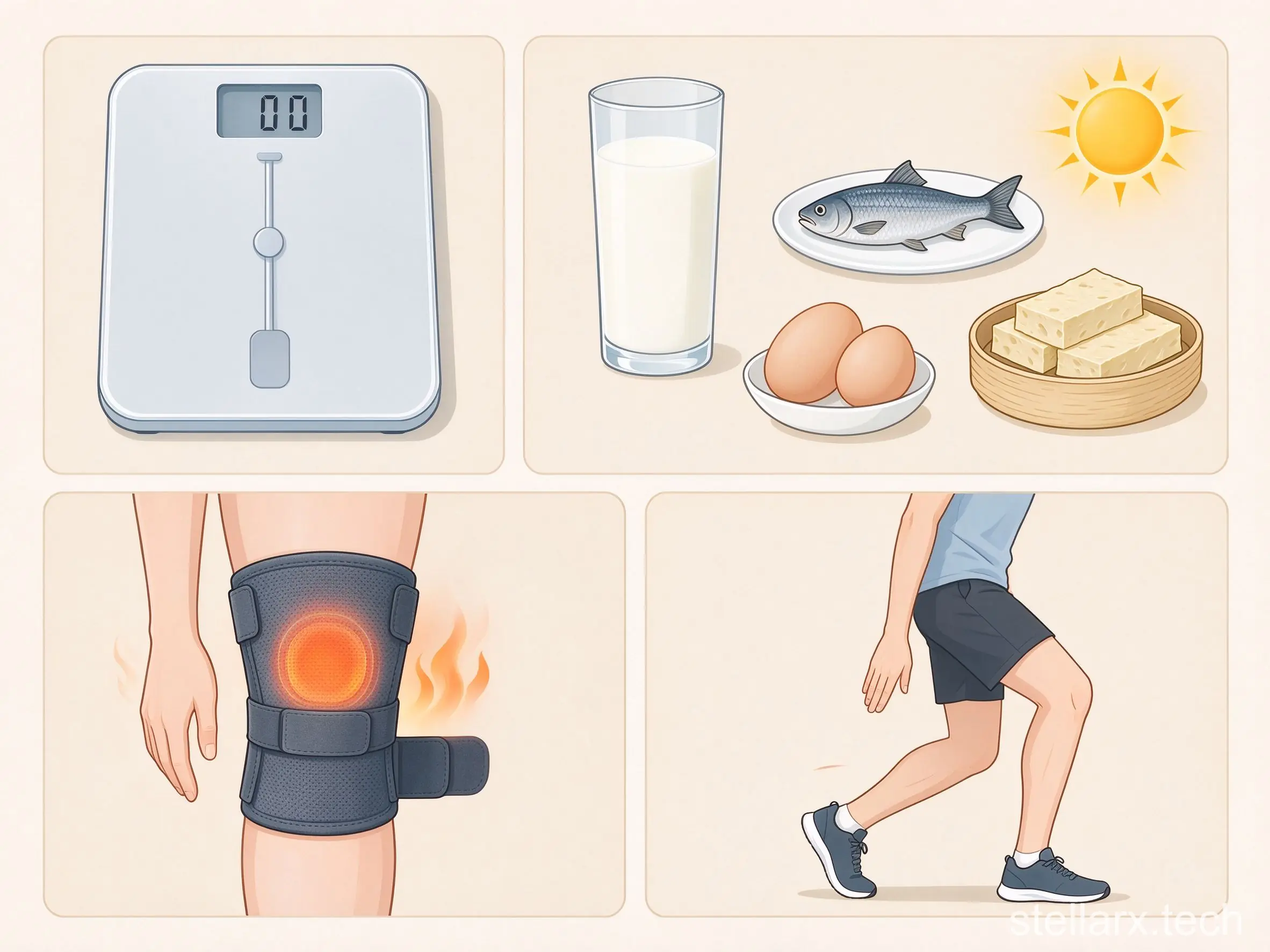
The Cartilage You Wear Down Every Day
Every step you take is cushioned by a thin layer of hyaline cartilage — the smooth, glassy tissue covering the ends of the femur and tibia. It has no blood vessels and no nerves; it wears down silently over years, and it does not grow back. When it thins, bone meets bone: that is osteoarthritis. Understanding the anatomy of your own knee is the first step to protecting it.
Want to see the shock-absorbing tissue inside your joints? WWAI is an AI-powered biology encyclopedia that answers your biology questions instantly and lets you observe real microscope slide specimens online — including a human hyaline cartilage specimen where the cells and matrix of joint cartilage are clearly visible. Search "WWAI" in your app store and download it today.
References:
[1] Reported across Chinese news sources on the "step-back" (shanshenbu) viral dance trend and knee injuries, 2026-09-27.
[2] All illustrations are AI-generated.
- Why Big Cats Never Get Scurvy but Sailors Did
- Three Years of Coughs, Endless Clinic Visits — Then Mom Opened the Wardrobe
- The ACL Tear Behind a Viral Dance Trend — Your Knee's Twisting Limit
- Why Thirst Vanishes the Moment You Swallow — Your Brain Settles the Bill in Advance
- The Egg-White-Like Solid on Steamed Crab Is Blood — Here's the Biology
- Bill Gates Warns AI Could Kill a Billion People — and Says Self-Regulation Has Failed
- The "Textbook Diet": 7 Nutrition Rules Most Diet Advice Misses
- Flu Season Is Back: Why the Annual Flu Shot Is a Biology Lesson Worth Taking
- Matcha Benefits: What 3 Grams of Matcha Powder Actually Contains
- The 60-cm Long Egg Tart Is Delicious for 3 Bites — Then Sickeningly Rich. Here's the Biology
全部评论