The Egg-White-Like Solid on Steamed Crab Is Blood — Here's the Biology
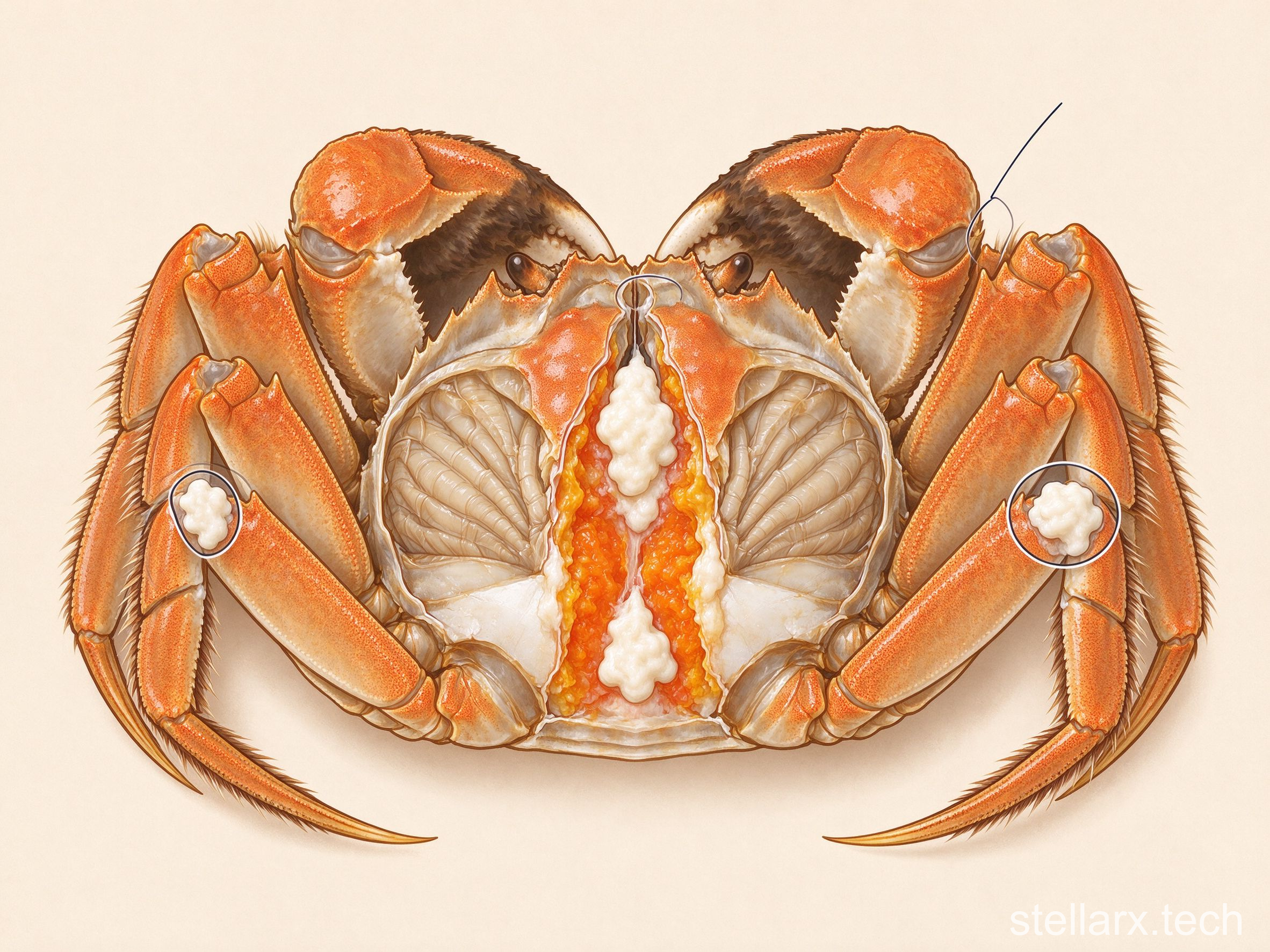
You steam a crab, put it on the table — and the first thing everyone notices is not the golden roe but the clumps of white, egg-white-like solid wedged in the shell seams and leg joints. Is it dirt? A disease? Or just protein that happens to look underwhelming?
It is blood. Real, cooked blood — and here is the biology that makes it look nothing like the blood you are thinking of.
What Is That White Solid on Cooked Crab?
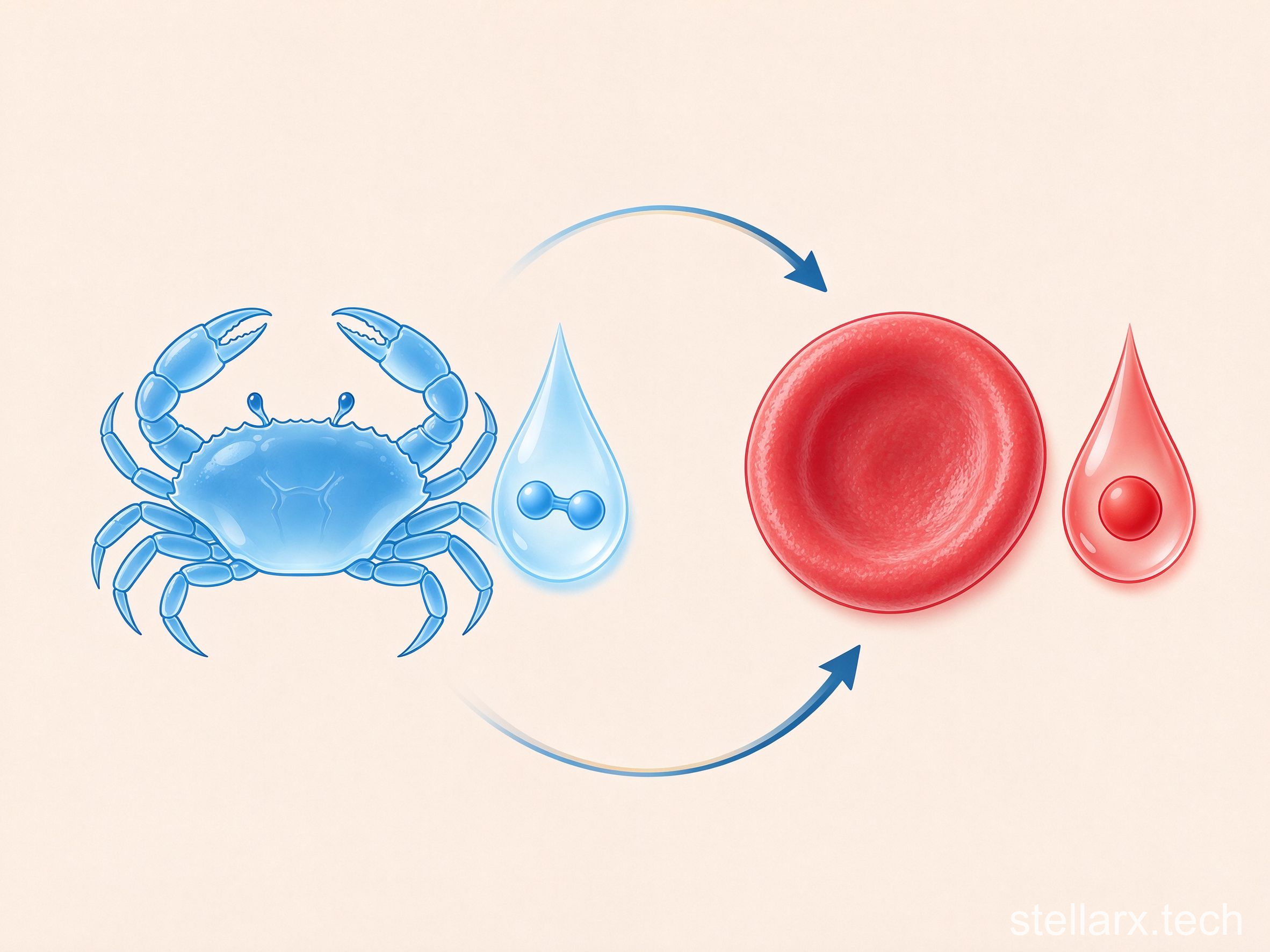
Crab "blood" is not like ours. Humans move oxygen through hemoglobin, an iron-based protein inside red blood cells — that is why our blood is red. Crabs (and insects, spiders, and other arthropods) use hemocyanin, a copper-based protein dissolved directly in the plasma, not packaged in cells.
While the crab is alive, hemocyanin is nearly colorless or carries a faint blue-gray tint. It only turns blue when oxygenated — think of the blue-tinged fluid in a live crab's joints. Then the heat of steaming denatures the protein, coagulating it into the solid white lumps you find in the shell seams. It is perfectly edible and harmless; it just tastes bland — the texture is the only thing "egg-white-like" about it.
Why Crab Blood Isn't Red: Hemocyanin vs. Hemoglobin
The contrast is one of the neatest lessons in animal physiology. Both proteins transport oxygen; the difference is the metal and the packaging:
- Hemoglobin (humans): iron-based, packaged inside red blood cells, turns blood red; an open circulatory system is not needed — ours is a closed, pressurized system.
- Hemocyanin (crabs): copper-based, dissolved freely in plasma, colorless to pale blue; two copper atoms bind each oxygen molecule, which is why oxygenated hemolymph looks bluish.
Arthropods run an open circulatory system: hemolymph bathes organs directly rather than staying inside vessels. That is also why a crab's "blood" can pool loosely in body cavities and, once cooked, set into those white lumps instead of staying liquid.
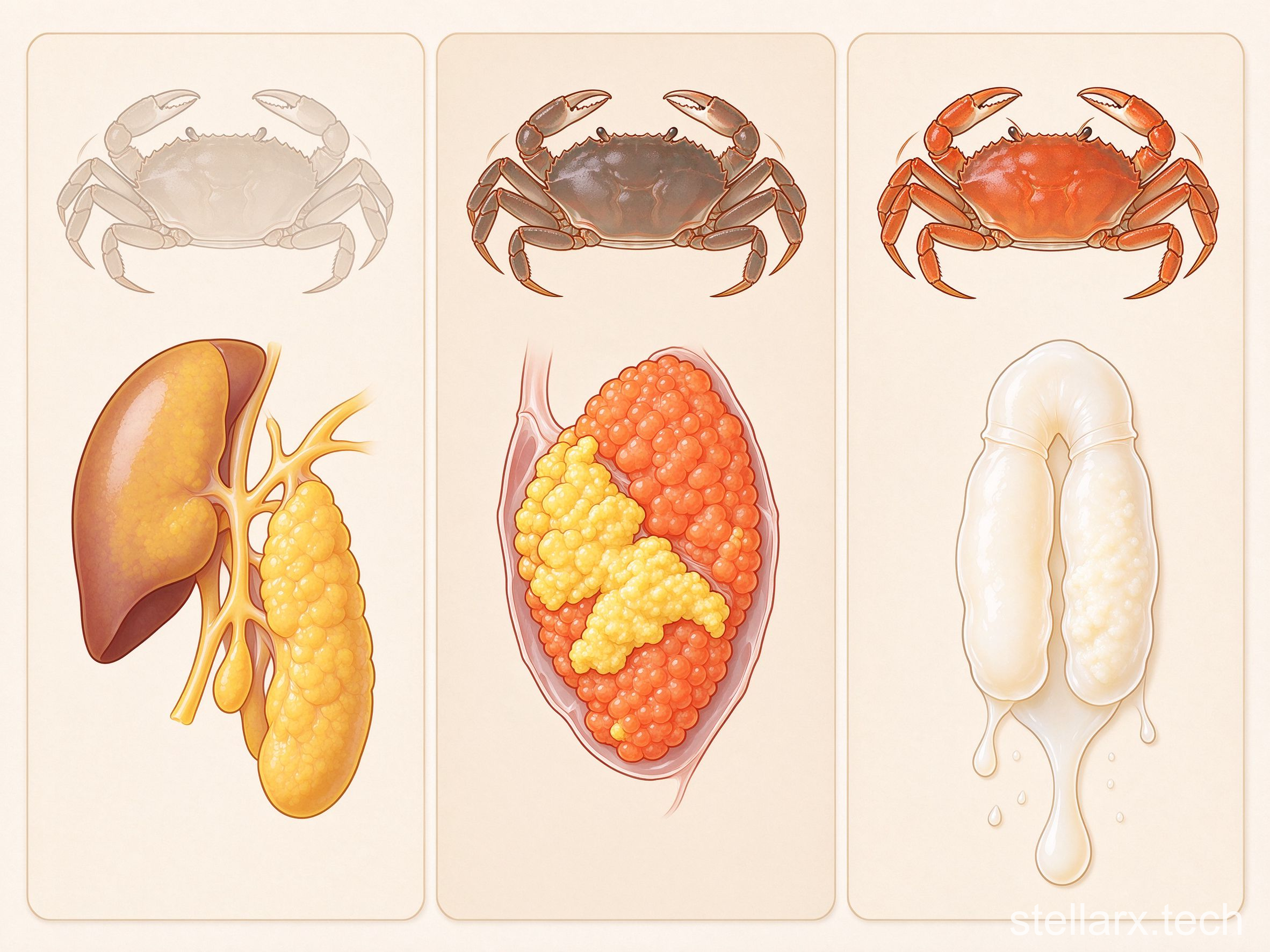
The Crab's "User Manual": What Each Part Actually Is
The white lumps are just the start. Most of us follow handed-down crab-eating steps without knowing what we are actually eating.
The intestine (蟹肠). "The gutless gentleman," as the crab is nicknamed, does have an intestine — a short midgut and a longer hindgut hidden at the belly flap. When you snap off the crab's abdomen, the black thread-like line you see is the intestine, and it carries waste: do not eat it. The gills and the stomach are also places where debris collects, best avoided.
The yellow "soft roe" (软黄). Most of the yellow you find is not roe at all — it is the hepatopancreas, the crab's digestive and immune-detoxification organ, combining functions of our liver and pancreas. Rich in unsaturated fatty acids and amino acids, it turns intensely savory when cooked — and both males and females have it. Because it is also a detox organ, heavy metals and toxins from polluted water accumulate there, which is exactly why you should buy crabs from reputable, clean-water farms.
The orange "hard roe" (硬黄). This is a mature ovary — the delicacy unique to female crabs. It is higher in cholesterol, so if you have high blood pressure or blood lipids, taste it lightly. The crab paste (蟹膏) from males is the sperm sac and accessory sex glands with their secretions, a creamy white jelly that many consider the peak of the crab. Male gonads mature later than female ones — hence the old saying: "ninth-month females, tenth-month males."
See Your Own Blood Under a Microscope
The same curiosity that makes you ask "what is that white lump?" is exactly what a microscope answers in seconds. A smear of your own blood shows the flattened, disc-shaped red blood cells — anucleate, biconcave, packed with iron-based hemoglobin — the very reason your blood runs red while a crab's runs blue. There is no waiting three days for a microscope to arrive, no glass slides to prepare: you can look right now.
Want to see red blood cells up close? WWAI is an AI-powered biology encyclopedia that answers your biology questions instantly and lets you observe real microscope slide specimens online — including a red blood cell smear where the biconcave cells are clearly visible. Search "WWAI" in your app store and download it today.

References:
[1] All illustrations are AI-generated.
[2] Locally adapted from a public science article on crab anatomy and hemocyanin, 2026-09-27.
- Why Big Cats Never Get Scurvy but Sailors Did
- Three Years of Coughs, Endless Clinic Visits — Then Mom Opened the Wardrobe
- The ACL Tear Behind a Viral Dance Trend — Your Knee's Twisting Limit
- Why Thirst Vanishes the Moment You Swallow — Your Brain Settles the Bill in Advance
- The Egg-White-Like Solid on Steamed Crab Is Blood — Here's the Biology
- Bill Gates Warns AI Could Kill a Billion People — and Says Self-Regulation Has Failed
- The "Textbook Diet": 7 Nutrition Rules Most Diet Advice Misses
- Flu Season Is Back: Why the Annual Flu Shot Is a Biology Lesson Worth Taking
- Matcha Benefits: What 3 Grams of Matcha Powder Actually Contains
- The 60-cm Long Egg Tart Is Delicious for 3 Bites — Then Sickeningly Rich. Here's the Biology
全部评论