Why Does Rhinitis Keep Coming Back? Frequent Sneezing and Runny Nose May Be an Overreaction of the Immune System
Why Do You Start Sneezing Repeatedly Right After Waking Up?
Many people have experienced something like this:
You have just gotten out of bed when your nose suddenly starts to itch. Then you sneeze several times in a row, and your nose starts running continuously.
This can become even more noticeable after making the bed, cleaning the room, or entering a dusty environment.
At that point, it is easy to think:
“Am I catching a cold?”
But if similar symptoms happen repeatedly and seem connected to certain environments, allergic rhinitis may be one possible explanation.
What Happens After Allergens Enter the Nose?
Every day, we come into contact with tiny particles in the air.
For most people, many of these substances cause no obvious problems. But in people with allergies, substances such as dust mites, pollen, and animal dander may be recognized by the body as threats.
These substances are known as allergens.
When allergens enter the nasal passages, the immune system may trigger a series of reactions.
Something that is normally harmless can suddenly be treated by the body like an “enemy” that requires a strong defense.
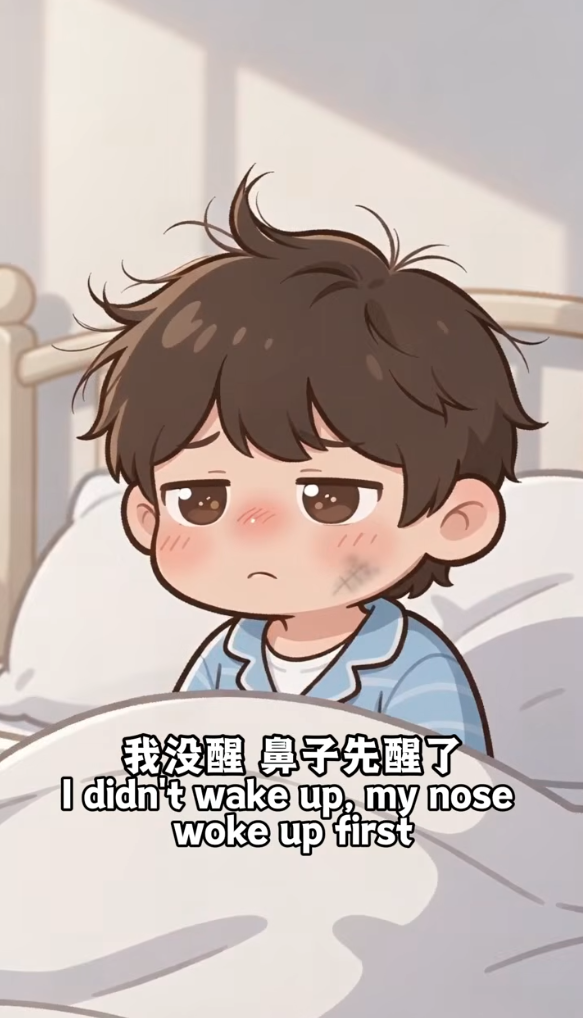
Rhinitis Symptoms May Be the Result of the Immune System Overreacting
In the video, allergens and the immune system are personified in a humorous way:
The allergen seems to be simply “passing by,” while the immune system immediately sounds the alarm and launches a major “battle.”
This is actually a very clear way to explain one of the key features of allergic rhinitis: the immune system overreacts to substances that are normally harmless.
During this process, the body releases substances involved in allergic reactions, such as histamine.
This can then trigger changes in the nasal lining, leading to symptoms such as:
itchy nose, repeated sneezing, clear runny nose, and nasal congestion.
Some people may also experience itchy or watery eyes at the same time.
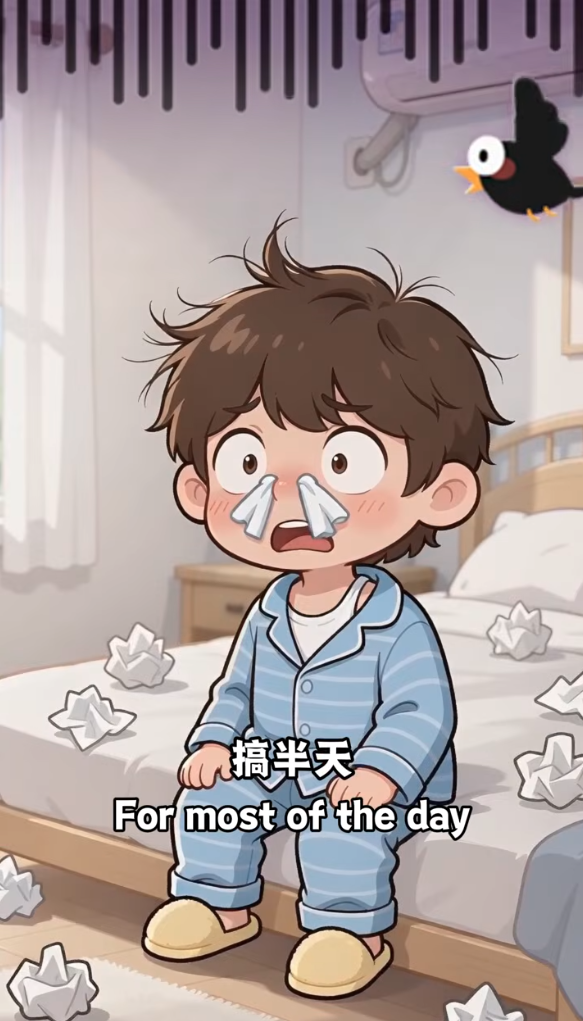
Why Does Your Nose Suddenly Produce So Much Mucus?
During an allergic reaction, the lining of the nasal passages becomes irritated.
Blood vessels can widen, the nasal tissues can swell, and mucus production may increase significantly.
That leads to a familiar situation:
You keep reaching for tissues, but the runny nose seems endless.
At the same time, swollen nasal tissues can narrow the airway, causing noticeable congestion and difficulty breathing through the nose.
So allergic rhinitis is not just about “sneezing a few extra times.” In more severe cases, it can interfere with sleep, concentration, study, work, and daily life.
Why Does Cleaning the Bedroom Make Rhinitis Worse?
The bedroom setting in the video highlights another common issue: allergic symptoms can be closely related to the living environment.
Mattresses, bedding, pillows, carpets, and dusty areas may contain dust mites and related allergens.
When you make the bed, shake blankets, or clean dusty surfaces, tiny particles can become airborne again.
For people who are sensitive to dust mites, this can make nasal itching, sneezing, and runny nose much more likely.
Of course, not everyone is allergic to the same things.
Some people are more sensitive to dust mites, while others may react to pollen, animal dander, or other allergens.

Why Does Rhinitis Feel Like It Gets Better and Then Comes Back Again?
One of the most frustrating questions is:
“Why does it get better for a while and then return?”
An important reason is that if the actual trigger remains present, the nasal passages may continue to be exposed and irritated repeatedly.
For example, if someone is sensitive to dust mites but the relevant allergens remain in their living environment, symptoms may return each time they are exposed.
That is why managing recurrent allergic rhinitis is not only about asking:
“How do I stop the runny nose this time?”
It is also important to understand:
“What is triggering my symptoms in the first place?”

Finding Your Own Allergens Is More Useful Than Avoiding Everything
Different people can have completely different allergy triggers.
That is why it can be helpful to pay attention to patterns in your symptoms.
For example:
Do you start sneezing whenever you clean your room?
Do your symptoms become worse during high-pollen seasons?
Does your nose become uncomfortable after contact with certain animals?
Observing these patterns can help identify possible triggers.
If symptoms are persistent, severe, or clearly affecting daily life, it is a good idea to seek medical advice. A healthcare professional can assess the situation and, when appropriate, recommend allergy testing and suitable treatment.
Not Every Sneeze Means You Have a Cold
Both colds and allergic rhinitis can cause sneezing, runny nose, and nasal congestion, so the two are easy to confuse.
But they are not the same condition.
Allergic rhinitis is often linked to specific allergens, may occur repeatedly, and is commonly associated with symptoms such as nasal itching, repeated sneezing, and clear watery nasal discharge.
So, if you always start sneezing when entering a certain room or your nose “loses control” every time the seasons change, it may not simply mean that you have caught another cold.
Sometimes, the real problem is not a virus.
It may be your immune system overreacting to certain allergens.
Understanding the cause and identifying your triggers can help you respond to recurring nasal symptoms in a more targeted and informed way.



- Why Big Cats Never Get Scurvy but Sailors Did
- Three Years of Coughs, Endless Clinic Visits — Then Mom Opened the Wardrobe
- The ACL Tear Behind a Viral Dance Trend — Your Knee's Twisting Limit
- Why Thirst Vanishes the Moment You Swallow — Your Brain Settles the Bill in Advance
- The Egg-White-Like Solid on Steamed Crab Is Blood — Here's the Biology
- Bill Gates Warns AI Could Kill a Billion People — and Says Self-Regulation Has Failed
- The "Textbook Diet": 7 Nutrition Rules Most Diet Advice Misses
- Flu Season Is Back: Why the Annual Flu Shot Is a Biology Lesson Worth Taking
- Matcha Benefits: What 3 Grams of Matcha Powder Actually Contains
- The 60-cm Long Egg Tart Is Delicious for 3 Bites — Then Sickeningly Rich. Here's the Biology
全部评论